240+ Japanese Names Inspired by Death, Darkness and Rebirth
Searching for japanese names inspired by death darkness and rebirth usually means you want more than a pretty sound — you want a story. In Japan, darkness is rarely just frightening. Night, shadow and silence can stand for rest, privacy and quiet strength, while death is often treated as a passage rather than a final stop, and rebirth — a dawn, a lotus opening, cherry blossom returning — promises that every ending makes room for a beginning. This guide brings those three threads together in one place, with traditional names, folklore figures and carefully built modern combinations, each explained by its actual elements so you can tell a genuinely meaningful name from a random dark-sounding one. Whether you are naming a baby, a novel’s anti-hero, a game character or even yourself, start with the quick picks, then explore the theme that pulls you most: the dark, the departed, or the dawn that follows.
A note on accuracy before you dive in: Japanese names are written in kanji, and the same sound can carry completely different meanings depending on the characters chosen. Some names below are long-established given names, some are folklore and mythology figures, and some are modern combinations built from real Japanese elements — the meaning given is the meaning of those elements. Always check the exact kanji before using a name for a real child.
Quick Picks: Top 15
| Name | Origin | Meaning | Short note |
|---|---|---|---|
| Ankoku | Japanese | darkness, blackness | The strongest single word for total dark; bold for a character, symbolic for a baby. |
| Kurogane | Japanese | black steel, iron | Hard, warrior-like image of iron that has survived fire. |
| Amaya | Japanese | night rain | Soft and lyrical; rain at night that washes the world clean. |
| Kagerou | Japanese | heat haze; mayfly | A shimmer that vanishes quickly — a symbol of life’s brevity. |
| Mikage | Japanese | sacred shadow, spirit’s shade | The honoured shadow of a deity or ancestor. |
| Reika | Japanese | spirit flower | A flower linked to the soul; beauty returning after loss. |
| Rinne | Japanese | cycle of rebirth, samsara | The Buddhist wheel of death and rebirth. |
| Shinsei | Japanese | new life, rebirth | Direct, hopeful and easy to understand. |
| Akatsuki | Japanese | dawn, daybreak | The moment light breaks — rebirth after the darkest hour. |
| Yoake | Japanese | dawn | Literally ‘night opens’; simple and poetic. |
| Tsukuyomi | Japanese | moon-reading god | Shinto moon god who rules the night sky. |
| Izanami | Japanese | she who invites | Creator goddess who became queen of the land of the dead. |
| Shinrei | Japanese | spirit, soul of the dead | A reverent word for the spirits of ancestors. |
| Seimei | Japanese | life, vitality | Pure life-force; the bright opposite of death. |
| Kurayami | Japanese | pitch darkness | Complete darkness with no light at all. |
Boy Names of Darkness and Night
These names draw on kuro (black), yami (darkness), kage (shadow) and yoru (night). They suit villains and anti-heroes, but several — Kuro, Kage, Yoru, Tetsuya — are short and wearable enough for real life.
| Name | Origin | Meaning | Short note |
|---|---|---|---|
| Kuro | Japanese | black | Short, striking and timeless. |
| Kuroki | Japanese | black tree, dark wood | A dark forest in two syllables. |
| Kuroda | Japanese | black field | Earth darkened and ready for new growth. |
| Kuroto | Japanese | black + person | A modern combination meaning ‘dark one’. |
| Kurohiko | Japanese | black prince | Noble and unmistakably dark. |
| Kuroji | Japanese | dark path | For a character who walks a shadowed road. |
| Kurota | Japanese | black + sturdy | Grounded, strong and masculine. |
| Kuroishi | Japanese | black stone | Unmoving strength, like obsidian. |
| Kuroba | Japanese | black feather | A raven-like image; also read as ‘black place’. |
| Kurosawa | Japanese | black marsh | A famous surname that also works as a moody place-name style pick. |
| Yami | Japanese | darkness | The core word for darkness itself. |
| Yamito | Japanese | darkness + person | ‘Person of darkness’ in a modern compound. |
| Yamihiko | Japanese | prince of darkness | Regal villain or anti-hero energy. |
| Yamiji | Japanese | path of darkness | A journey through the unknown. |
| Kage | Japanese | shadow | Minimalist and cool. |
| Kageo | Japanese | shadow man | Classic -o ending gives it a vintage feel. |
| Kagehiro | Japanese | spreading shadow | A shadow that widens over everything. |
| Kagenobu | Japanese | shadow + faith | Loyalty hidden in the dark. |
| Kageyama | Japanese | shadow mountain | Immovable and quietly powerful. |
| Kagetora | Japanese | shadow tiger | Fierce, stealthy and memorable. |
| Yoru | Japanese | night | Clean and easy for non-Japanese speakers. |
| Yoruji | Japanese | ruler of the night | Commands the dark hours. |
| Yoruichi | Japanese | night + one, first | ‘First of the night’; sharp and distinctive. |
| Yoruhiko | Japanese | prince of the night | Elegant counterpart to Yamihiko. |
| Tetsuya | Japanese | iron night | With the night kanji, a tough nocturnal image. |
| Meito | Japanese | dark, underworld + person | Mei points to the world beyond the living. |
| Anji | Japanese | dark + govern | To rule quietly from the shadows. |
| Anri | Japanese | dark truth | Short, modern and unisex-leaning. |
| Anzan | Japanese | dark mountain | Brooding and solid. |
| Shikkoku | Japanese | jet black | The deepest black in the Japanese colour vocabulary. |
Girl Names of Darkness and Night
Feminine dark names in Japanese often soften the theme with -ko (child), -ka (flower/fragrance), the moon, snow or flowers that bloom at night.
| Name | Origin | Meaning | Short note |
|---|---|---|---|
| Yamiko | Japanese | child of darkness | The clearest feminine form of the darkness theme. |
| Kuroko | Japanese | black child | Also the word for kabuki stagehands dressed in black — unseen movers. |
| Kuroha | Japanese | black feather; black leaf | Raven feather or dark leaf, depending on kanji. |
| Kurohana | Japanese | black flower | Dark beauty in full bloom. |
| Kurotsuki | Japanese | black moon | A moon eclipsed or hidden. |
| Kurohime | Japanese | black princess | Royalty of the night. |
| Kuroka | Japanese | black flower, dark fragrance | Softer than Kurohana, with ka for scent. |
| Kurone | Japanese | black root; dark sound | Deep roots hidden underground. |
| Kageko | Japanese | shadow child | Gentle rather than frightening. |
| Kagemi | Japanese | shadow beauty | Beauty seen only in half-light. |
| Yoriko | Japanese | child of the night | Classic -ko ending, nocturnal meaning. |
| Yorina | Japanese | night + greens | Night paired with fresh growth — dark moving toward rebirth. |
| Yorumi | Japanese | beauty of the night | For a calm, moonlit character. |
| Yoruka | Japanese | night fragrance | The scent of night-blooming flowers. |
| Tsukiko | Japanese | moon child | The moon that returns every night — quiet rebirth. |
| Tsukina | Japanese | moon + vegetable greens | Moonlight over new shoots. |
| Tsukiyo | Japanese | moonlit night | A whole night lit by the moon. |
| Shizuka | Japanese | quiet, calm | The stillness of night and of death, without fear. |
| Rin | Japanese | dignified, cold, severe | A crisp chill; elegant and widely used. |
| Yukiko | Japanese | snow child | Snow that covers the dark earth and melts into spring. |
| Meika | Japanese | dark flower; underworld flower | A bloom imagined in the world of spirits. |
| Meiko | Japanese | dark child; child of the underworld | Soft sound, deep meaning. |
| Reiko | Japanese | spirit child; ghost child | Rei (spirit) makes this a true death-and-spirit name. |
| Reina | Japanese | spirit + greens (with rei kanji) | When written with the spirit kanji, a soul returning to life. |
| Higan | Japanese | the other shore | The Buddhist far shore reached after death; also the equinox week honouring ancestors. |
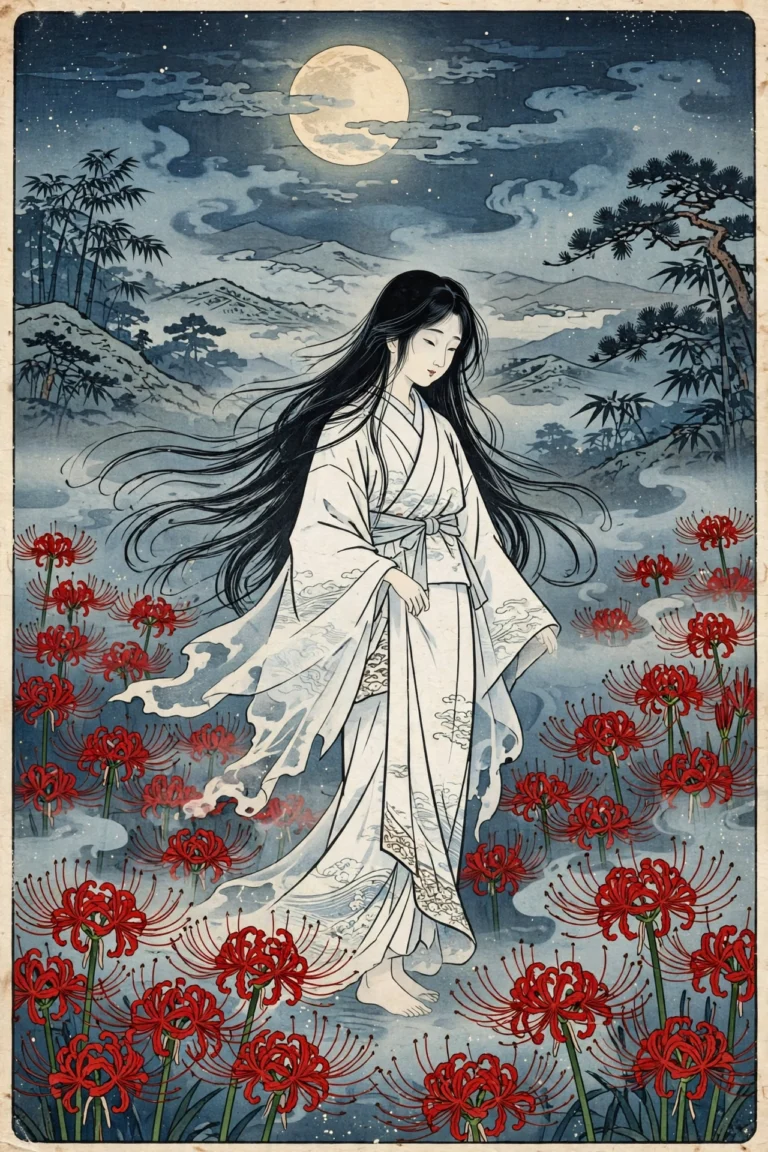
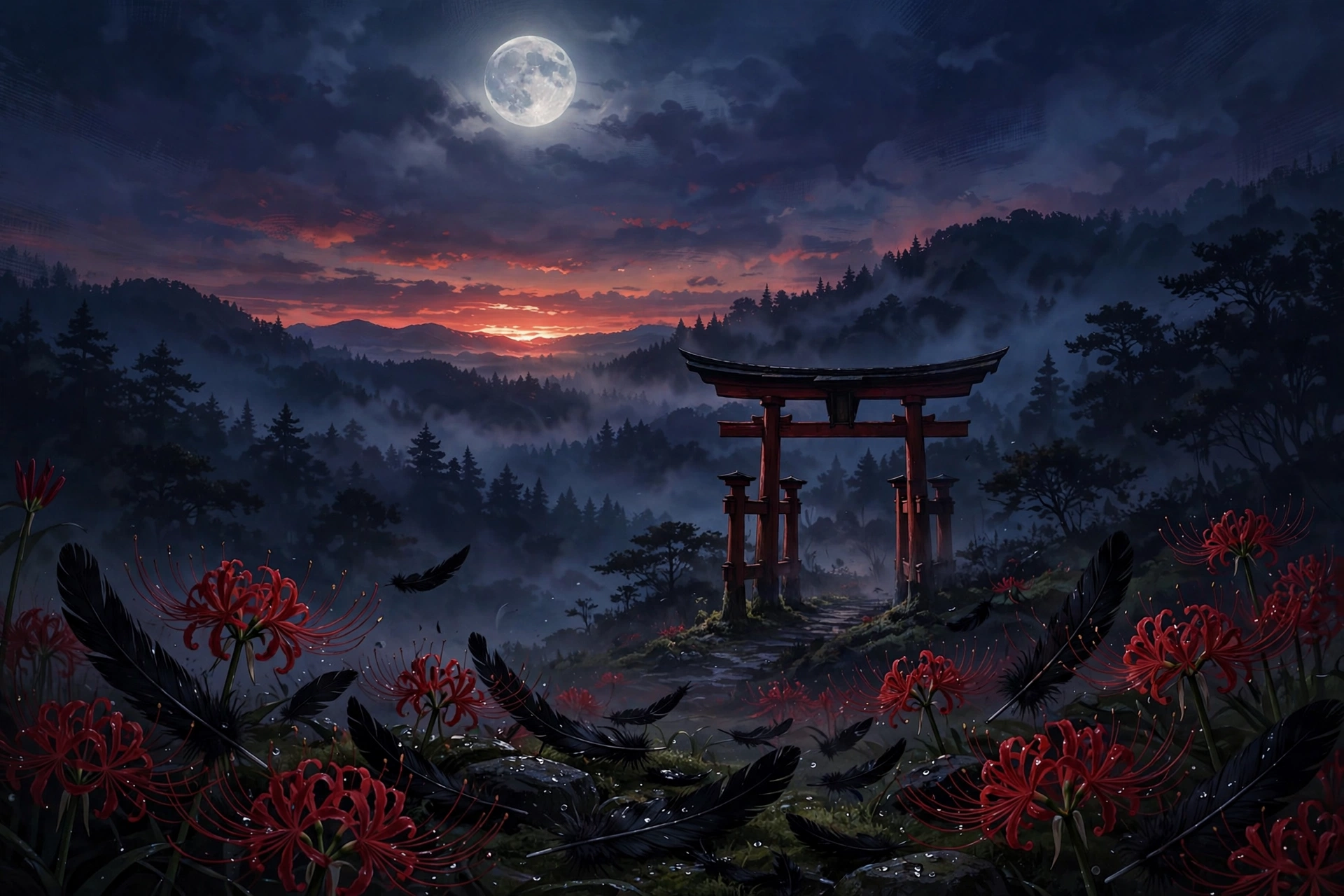
| Higanbana | Japanese | red spider lily | The flower of cemeteries and the afterlife in Japan — beautiful and ominous. |
| Akumu | Japanese | nightmare, bad dream | A word-name for a dark character, not a typical baby name. |
| Noroi | Japanese | curse | Use for fiction only; a name with real weight in Japanese. |
| Onryo | Japanese | vengeful spirit | A ghost bound to the living world by anger. |
| Yasha | Japanese | female night demon (yaksha) | A fierce female spirit from Buddhist lore. |
Names Linked to Death and the Spirit World
Japan’s spirit world is crowded and specific: yurei are ghosts, shinigami are death gods, Yomi is the land of the dead, and ancestors return as honoured spirits. Treat these names with respect — several are titles or concepts rather than everyday given names, which makes them perfect for fiction.
| Name | Origin | Meaning | Short note |
|---|---|---|---|
| Shinigami | Japanese | god of death | The death deities popularised by folklore and anime; a title more than a given name. |
| Yurei | Japanese | faint spirit, ghost | The classic white-clad ghost of Japanese folklore. |
| Reikon | Japanese | soul, spirit | The immortal part that survives the body. |
| Rei | Japanese | spirit; ghost (with the rei kanji) | One kanji can mean ‘spirit’, another ‘zero’ or ‘bell’ — meaning depends entirely on writing. |
| Tamashii | Japanese | soul | Everyday word for the soul; powerful as a symbolic name. |
| Meifu | Japanese | realm of the dead, netherworld | The dark world beneath. |
| Jigoku | Japanese | hell, underworld | Buddhist hells where the dead are judged. |
| Yomi | Japanese | land of the dead | The Shinto underworld ruled by Izanami. |
| Yomiko | Japanese | child of Yomi | A coined feminine form tied directly to the underworld. |
| Yomiya | Japanese | shrine of the dead / night palace | A modern compound with an underworld echo. |
| Hakai | Japanese | destruction | The breaking that must come before rebuilding. |
| Shi | Japanese | death (the kanji shi) | Also the number four, which is why shi is considered unlucky — context matters. |
| Shikyo | Japanese | death; passing away | A formal word for dying, used respectfully. |
| Shinzo | Japanese | heart; core | The organ of life — and, in another reading, ‘truth’. Life at the centre. |
| Obake | Japanese | ghost, shapeshifting spirit | Things that transform — death, change and rebirth in one word. |
| Bakemono | Japanese | monster, transformed thing | A creature changed into something else. |
| Ayakashi | Japanese | strange spirit of sea and mist | Mysterious beings that appear over water. |
| Mononoke | Japanese | vengeful spirit; mysterious being | The spirit behind illness and death in old belief. |
| Ikiryo | Japanese | living ghost | The spirit of a living person that leaves the body. |
| Shiryo | Japanese | spirit of the dead | A direct counterpart to Ikiryo. |
| Funayurei | Japanese | ship ghosts | Spirits of those drowned at sea. |
| Goryo | Japanese | honoured spirit of the dead | Noble ghosts once feared and later enshrined as gods. |
| Mitama | Japanese | honoured soul | The revered soul of a deity or ancestor in Shinto. |
| Eirei | Japanese | heroic spirit of the war dead | Souls honoured at shrines. |
| Bourei | Japanese | departed spirit, ghost | A literary word for the dead who linger. |
| Konpaku | Japanese | soul (kon and haku) | The two parts of the soul in old Chinese-Japanese belief. |
| Chinkon | Japanese | repose of souls | The Shinto rite of pacifying spirits. |
| Kuchiyose | Japanese | summoning (of spirits) | A word from ritual and fantasy fiction. |
| Sorei | Japanese | ancestor spirit | Spirits of those who came before. |
Boy Names of Rebirth and New Life
After the dark sections, the turn: names built on arata (new), spring, the morning sun and the lotus. Many of these are popular real-world boy names in Japan today.
| Name | Origin | Meaning | Short note |
|---|---|---|---|
| Arata | Japanese | new, fresh | One of the most popular modern boy names — literally a new beginning. |
| Shin | Japanese | new; true; heart (by kanji) | A one-syllable name whose meaning is chosen by its kanji. |
| Haru | Japanese | spring; sun (by kanji) | Spring is Japan’s great symbol of renewal. |
| Haruto | Japanese | sun + soar; spring + person (by kanji) | Light rising and flying — a top modern name. |
| Haruki | Japanese | spring tree; shining spring | A tree putting out new leaves. |
| Haruya | Japanese | spring night / spring + to be | Renewal arriving quietly. |
| Sakuto | Japanese | bloom + person / soar | To bloom like a cherry tree. |
| Sakuya | Japanese | blooming night / to bloom + night | A night on which flowers open. |
| Asahi | Japanese | morning sun | The sun reborn every day. |
| Asato | Japanese | morning + person | A person of the new morning. |
| Yoichi | Japanese | first of dawn / world + one | Yo can mean generations — a life renewed across time. |
| Reiji | Japanese | spirit + govern; zero + govern | Order restored after chaos. |
| Renji | Japanese | lotus + govern | The lotus rises clean from mud — a rebirth emblem. |
| Ren | Japanese | lotus | The flower that blooms unstained from dark water. |
| Rento | Japanese | lotus + person | A person carrying the lotus meaning. |
| Seiya | Japanese | starry night; sacred night | Stars return each night; also ‘holy arrow’ by kanji. |
| Seito | Japanese | new life + person / star + person | A coined modern form with a renewal reading. |
| Kaisei | Japanese | revival, regeneration; sea + star | Kaisei literally suggests coming back to life. |
| Sosei | Japanese | resurrection, revival | A direct word for being brought back to life. |
| Fukkatsu | Japanese | resurrection | Use as a concept name for fiction; unmistakably ‘rebirth’. |
| Saisei | Japanese | rebirth, regeneration | The medical and spiritual word for renewal. |
| Tensei | Japanese | reincarnation | Being born again into a new life — huge in modern fantasy. |
| Kakusei | Japanese | awakening | Waking into a new self. |
| Mezame | Japanese | awakening | The moment of opening your eyes anew. |
| Shinji | Japanese | new + govern; true + govern | A familiar name given a fresh-start reading. |
Girl Names of Rebirth, Dawn and Blooming
Cherry blossom is the obvious symbol — beautiful, brief, and back again next year — but the lotus, young leaves, sprouts and tomorrow itself all carry the same promise.
| Name | Origin | Meaning | Short note |
|---|---|---|---|
| Sakura | Japanese | cherry blossom | Japan’s ultimate symbol of brief life and yearly return. |
| Saki | Japanese | bloom, blossom | To bloom — flowers opening after winter. |
| Hana | Japanese | flower | Simple, bright and cyclical. |
| Hanako | Japanese | flower child | A classic name tied to blooming. |
| Akari | Japanese | light, bright red glow | Light returning; warm rather than harsh. |
| Hikari | Japanese | light | The light after darkness — placed here, not in the dark lists. |
| Asuka | Japanese | fragrance of tomorrow; flying bird | ‘Tomorrow’ built into the name. |
| Asuna | Japanese | tomorrow + greens | A modern name literally facing tomorrow. |
| Mirai | Japanese | future | Looking forward, not back. |
| Nozomi | Japanese | hope, wish | Hope after a dark season. |
| Kibou | Japanese | hope | A direct word-name for fiction or symbolism. |
| Yuna | Japanese | gentle greens / moon (by kanji) | Soft new growth. |
| Aoi | Japanese | hollyhock; blue | A flower name and a colour of deep water and sky. |
| Wakana | Japanese | young greens; harmonious greens | Young leaves — new life in plant form. |
| Wakaba | Japanese | young leaf | The first leaf of a plant or tree. |
| Moeka | Japanese | bud, sprout + flower | A bud about to open. |
| Moe | Japanese | bud, sprout | New growth in a single syllable. |
| Ichika | Japanese | one flower; thousand flowers | A first bloom. |
| Nana | Japanese | greens; seven | Fresh vegetables/greens give it a living, growing feel. |
| Riko | Japanese | jasmine child; village child | White jasmine that flowers again each year. |
| Suzuka | Japanese | bell + flower / cool flower | A fresh, ringing sound. |
| Yui | Japanese | bind, connect; reason + life | Life reconnected — a gentle rebirth idea. |
| Yua | Japanese | bind + love | Bonds formed anew. |
| Seika | Japanese | sacred flower; star flower | A flower with a holy reading. |
Mythology and Folklore Names
Gods and spirits embody these themes at full power: a sun goddess who returns from a cave, a creator who descends to the land of the dead, and a small guardian statue, Jizo, who looks after souls between worlds. For background on the goddess who links creation and death, see Izanami on Wikipedia.
| Name | Origin | Meaning | Short note |
|---|---|---|---|
| Susanoo | Japanese | storm god | God of storms and the sea, brother of the sun goddess. |
| Amaterasu | Japanese | sun goddess | The sun who hid in a cave and was coaxed back — light reborn. |
| Izanagi | Japanese | creator god | He who invites; creator who descended to Yomi to retrieve his wife. |
| Orochi | Japanese | eight-headed serpent | Yamata no Orochi, slain and reborn in countless retellings. |
| Ryujin | Japanese | dragon god | King of the sea dragons beneath the waves. |
| Raijin | Japanese | thunder god | Drums thunder across the night sky. |
| Fujin | Japanese | wind god | Carries the winds of change in a great bag. |
| Kagutsuchi | Japanese | fire god | Fire deity whose birth killed his mother Izanami. |
| Hannya | Japanese | vengeful female demon mask | A woman transformed by jealousy into a demon. |
| Tengu | Japanese | heavenly dog spirit | Mountain spirits who test warriors. |
| Kiyohime | Japanese | snake woman of legend | Love transformed her into a serpent-dragon. |
| Tamamo | Japanese | Tamamo-no-Mae, fox spirit | The legendary nine-tailed fox at court. |
| Shuten | Japanese | Shuten-doji, demon king | The drunken demon chief of Mount Oe. |
| Emma | Japanese | Enma, king of the dead | Judge of souls in the afterlife (Enma-o). |
| Daruma | Japanese | Bodhidharma figure | Symbol of falling seven times and rising eight — resilience and return. |
| Benzaiten | Japanese | goddess of water and rebirth of fortune | Goddess of flowing things, music and luck. |
| Kannon | Japanese | bodhisattva of mercy | Compassion that reaches even the dead. |
| Jizo | Japanese | protector of dead children and travellers | The beloved guardian of souls in between worlds. |
| Ebisu | Japanese | god of fishermen and luck | The laughing god who survived and thrived. |
| Hotei | Japanese | laughing buddha figure | Joy after hardship. |
More Dark Nature and Night Names
A compact expansion list — moons in every phase, frost, fog, fireflies and winter — for readers who want atmosphere without an obviously ‘death’ meaning.
| Name | Origin | Meaning |
|---|---|---|
| Tsuki | Japanese | moon |
| Gekkou | Japanese | moonlight |
| Mangetsu | Japanese | full moon |
| Shingetsu | Japanese | new moon |
| Hangetsu | Japanese | half moon |
| Mikazuki | Japanese | crescent moon |
| Yuuzuki | Japanese | evening moon |
| Zangetsu | Japanese | morning moon / lingering moon |
| Kangetsu | Japanese | cold moon |
| An’ei | Japanese | dark shadow / peace + shadow |
| Kageboshi | Japanese | shadow star (coined) |
| Hoshikage | Japanese | star shadow / starlight reflected |
| Yamabiko | Japanese | mountain echo spirit |
| Kodama | Japanese | tree spirit / echo |
| Kawaakari | Japanese | river light in darkness |
| Hotaru | Japanese | firefly |
| Keikou | Japanese | firefly light (alternate reading style) |
| Yuki | Japanese | snow |
| Yukiyo | Japanese | snowy night / snow world |
| Fuyu | Japanese | winter |
| Fuyuko | Japanese | winter child |
| Shimo | Japanese | frost |
| Shimotsuki | Japanese | month of frost (November) |
| Kori | Japanese | ice |
| Hyoga | Japanese | glacier |
| Ryuhyo | Japanese | drift ice |
| Kiri | Japanese | fog, mist |
| Kasumi | Japanese | mist, haze |
| Yoarashi | Japanese | night storm |
More Rebirth in Nature: Sun, Flame and Flowers
| Name | Origin | Meaning |
|---|---|---|
| Hinode | Japanese | sunrise |
| Nichirin | Japanese | sun disc |
| Taiyo | Japanese | sun |
| Himawari | Japanese | sunflower |
| Hibana | Japanese | spark |
| Kaen | Japanese | flame |
| Homura | Japanese | flame, blaze |
| Enji | Japanese | crimson / flame child reading |
| Tsubaki | Japanese | camellia |
| Ume | Japanese | plum blossom |
| Momo | Japanese | peach |
| Anzu | Japanese | apricot |
| Sumire | Japanese | violet (flower) |
| Ayame | Japanese | iris |
| Botan | Japanese | peony |
| Yuri | Japanese | lily |
| Hasu | Japanese | lotus |
| Suiren | Japanese | water lily |
| Asagao | Japanese | morning glory |
| Wakakusa | Japanese | young grass |
| Shinryoku | Japanese | fresh green, new leaves |
| Aoba | Japanese | green leaves |
| Midori | Japanese | green |
| Sora | Japanese | sky |
| Amane | Japanese | heavenly sound / all over the sky |
| Hoshi | Japanese | star |
| Hoshiko | Japanese | star child |
| Nagareboshi | Japanese | shooting star |
| Harukaze | Japanese | spring breeze |
Modern and Character-Style Combinations
Contemporary coined combinations and concept names, popular for original characters, pen names and gaming profiles. Several are title-style or fiction-only, as noted in the main lists above.
| Name | Origin | Meaning |
|---|---|---|
| Kuroudo | Japanese | black + person (old-style suffix) |
| Yamikaze | Japanese | darkness wind (coined) |
| Kagehisa | Japanese | shadow + long time |
| Kagemitsu | Japanese | shadow light (coined paradox) |
| Yoruhisa | Japanese | night + long-lasting |
| Yorushiro | Japanese | night castle / white of night (coined) |
| Meihaku | Japanese | dark + white / soul-binding reading |
| Meiryu | Japanese | dark dragon (coined) |
| Ankokuou | Japanese | king of darkness (title-style, fiction) |
| Kurayamihime | Japanese | princess of pitch darkness (title-style) |
| Reikou | Japanese | spirit light / zero light |
| Reiya | Japanese | spirit night / zero night |
| Reito | Japanese | spirit + person / zero + person |
| Shinreiko | Japanese | spirit child (coined -ko form) |
| Tamaki | Japanese | jewel tree / soul ring reading |
| Tamayo | Japanese | soul generation / jewel world |
| Seirei | Japanese | spirit, ghost |
| Yuuka | Japanese | ghost flower / gentle flower by kanji |
| Yuuna | Japanese | ghost greens (coined with yu kanji) |
| Akuryo | Japanese | evil spirit (fiction only) |
| Majutsu | Japanese | witchcraft (concept name) |
| Mahou | Japanese | magic (concept name) |
| Unmei | Japanese | fate, destiny |
| Shukumei | Japanese | destiny, fate |
| Eien | Japanese | eternity |
How to Choose the Right Name
Decide which of the three themes leads. A darkness name (Kage, Yamiko) feels cool and private; a death/spirit name (Reikon, Yurei) feels haunting and literary; a rebirth name (Arata, Sakura) feels hopeful. Mixing one dark element with one renewal element — shadow plus light, night plus dawn — often gives the most balanced result.
Check the kanji, not just the sound. Rei can mean spirit, zero, bell or lovely depending on the character. If the name is for a real person, confirm the writing with a native speaker or a reputable name dictionary, and avoid kanji associated with actual death for a baby unless that symbolism is truly intended — in Japan, the character for death and the number four are traditionally avoided in gifts and celebrations.
Say it aloud in your own language. Short names like Kuro, Ren and Rin travel well. Longer compounds like Kurayami or Kurotsuki are striking for characters but will need spelling out in daily life.
Match the name to the setting. For historical fiction, favour established names and folklore figures. For modern stories, games and online personas, the coined combinations in the last section give you something no one else is using.
If this darker end of the spectrum is your taste, you may also enjoy our guides to names that mean death bringer, Japanese girl names that mean death and names that mean lost soul. For a softer contrast, browse names that mean ice or snow, and for pure shadowy mood, see boy names that mean evil — useful for villains, at least.
FAQs
What is the Japanese name for death?
There is no common given name that simply means ‘death’. The word shi means death and is traditionally avoided in names; instead, death-linked names use spirit (rei), the underworld (Yomi, Meifu) or folklore figures such as Shinigami, the god of death.
What Japanese name means rebirth?
Shinsei (new life), Saisei (rebirth/regeneration) and Tensei (reincarnation) express rebirth directly. More wearable given names with a renewal meaning include Arata (new), Ren (lotus) for boys and Sakura (cherry blossom) and Asuka (fragrance of tomorrow) for girls.
What Japanese girl name means darkness?
Yamiko — ‘child of darkness’ — is the clearest option. Kurotsuki (black moon), Kurohana (black flower) and Yoriko (child of the night) give the same mood in softer forms.
Are dark Japanese names appropriate for a baby?
Names of night, shadow, moon and snow are used for real children in Japan, but names built on death, curses or demons (Akumu, Noroi, Onryo) are best kept for fiction. If in doubt, choose the darkness-and-dawn balance rather than a purely death-themed name, and check the kanji with a native speaker.
What does the lotus symbolise in Japanese names?
The lotus (Ren, Hasu) grows in muddy water and blooms unstained, so in Buddhist-influenced culture it stands for purity, resilience and rebirth — rising clean from a dark place, which is exactly the arc of this whole list.
Conclusion
Death, darkness and rebirth are not three separate themes in Japanese naming — they are one cycle: night gives way to dawn, blossom falls and returns, and the lotus rises from dark water. Whether you chose a shadow name like Kage, a spirit name like Reikon, or a dawn name like Akatsuki, you now have 256 unique options, each with its real elements explained and none repeated. Pick the point in the cycle that matches your story, check the kanji, and the name will carry its meaning for a lifetime.