285 Japanese Girl Names That Mean Death — and the Dark, Poetic Names Around It
Meta description: 285 Japanese girl names that mean death, plus the honest truth about the theme: folklore spirits, night and moon names, funerary flowers and creative kanji combinations, each with meanings and cultural notes.
Introduction
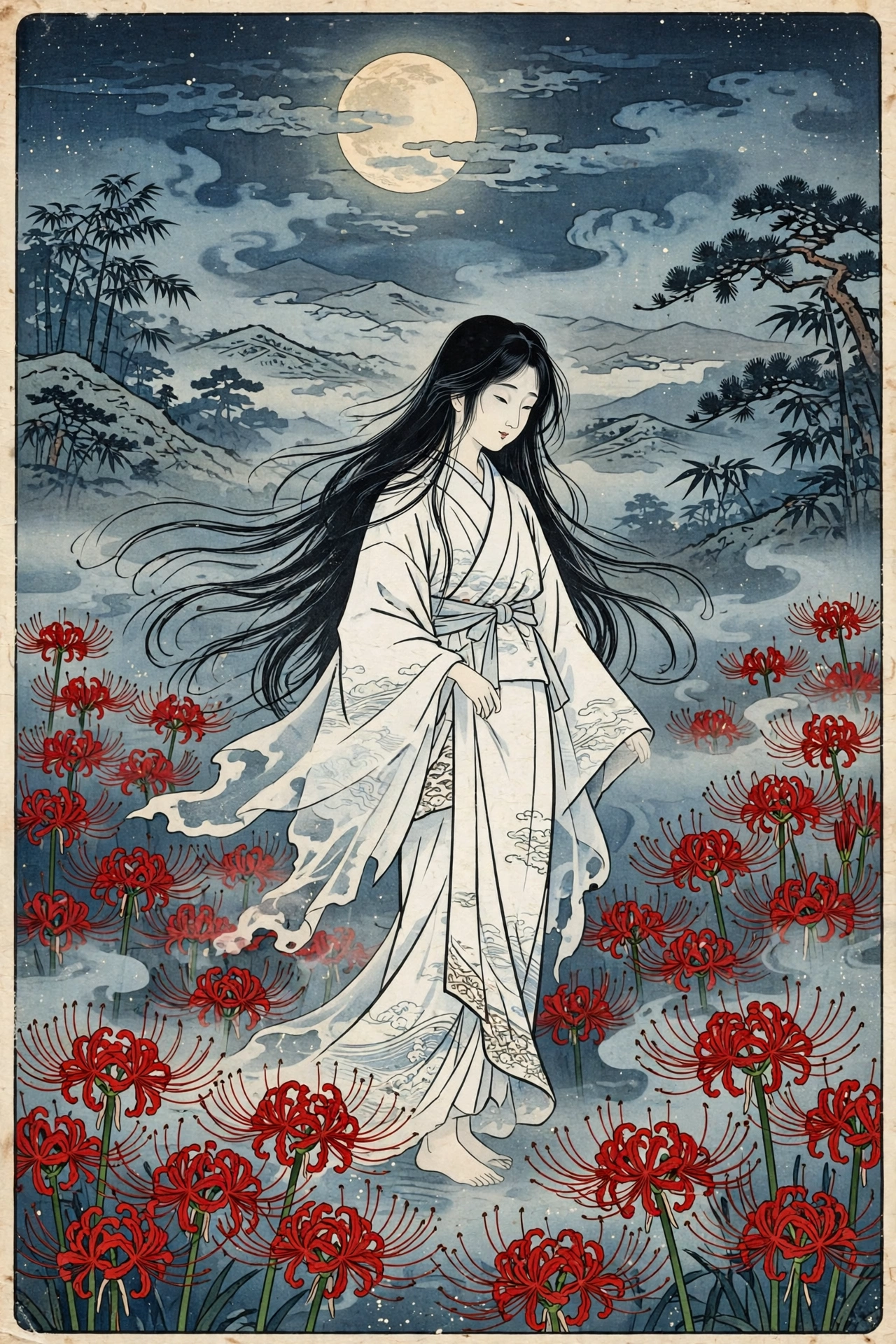
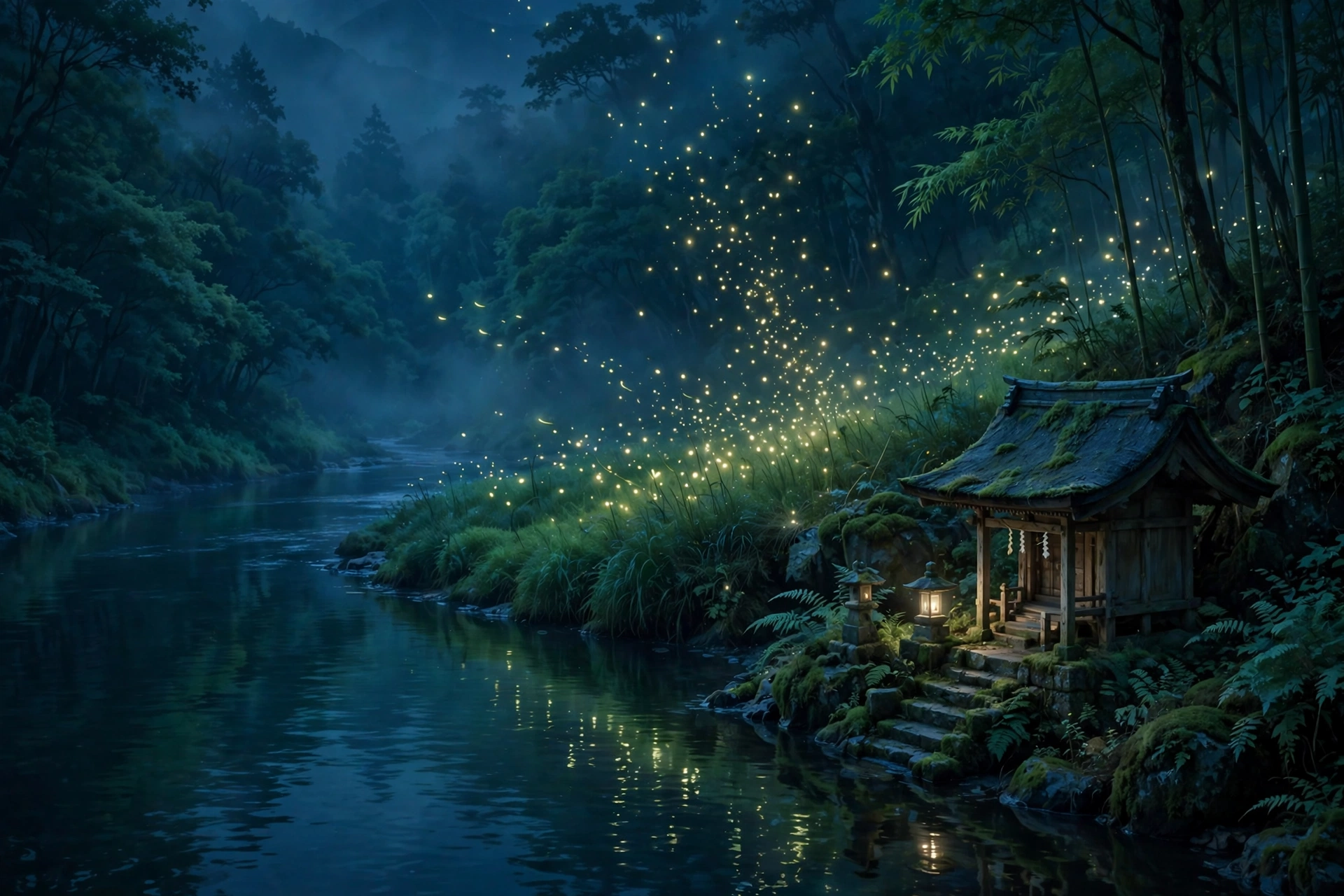
Searching for Japanese girl names that mean death leads to a surprise: Japan almost never names a real child ‘death’. The sound shi also means ‘four’, and both are considered unlucky, so genuine given names built on the death kanji are extremely rare. Honest lists should tell you that — and then show you what Japanese culture actually uses instead, which is far more beautiful. This guide gathers 285 names in widening circles around death: goddesses and ghosts such as Izanami and Oiwa, night and moon names, funerary flowers like the grave-side higanbana, symbols of impermanence like cherry blossom and fireflies (said to be the souls of the dead), and, clearly labelled, modern creative combinations for anime, manga and game characters. A note on kanji: the same spoken name can be written many ways, and readings can vary, so treat every meaning here as ‘with these kanji’ rather than as the only possibility. If you want the broader theme, start with our companion list of Japanese names inspired by death, darkness and rebirth, then return here for the girl names in full.
Quick Picks — 15 Japanese Girl Names Closest to Death
These fifteen sit closest to death itself — through myth, kanji, flowers or folklore — and are the best starting point on the page.
| Name | Origin | Meaning | Short note |
|---|---|---|---|
| Izanami | Japanese — mythology | Creator goddess who died giving birth to fire and became queen of Yomi, the land of the dead | The strongest true death link of any name here. |
| Rei | Japanese — given name | Can be written with kanji for ‘spirit’ or ‘ghost’; readings and meanings vary by kanji | Wearable in real life, ghostly only if you choose the kanji. |
| Mei | Japanese — given name | Can be written with the kanji for ‘dark’ or ‘underworld’, though other kanji give brighter meanings | One kanji choice turns a pretty name very dark. |
| Rin | Japanese — given name | ‘Cold, dignified’ — a crisp name with a solemn, wintry feel | Solemn rather than scary — easy to live with. |
| Yami | Japanese — character name | ‘Darkness’; used for characters rather than as a common given name | Pure character name; bold and simple. |
| Tsukiko | Japanese — given name | ‘Moon child’ — the moon governs night, tides and many ghost stories | Classic moon name with a nocturnal edge. |
| Shion | Japanese — given name | Named for the aster, a flower of remembrance in Japanese flower language | A flower that literally stands for remembrance. |
| Sakura | Japanese — given name | Cherry blossom, the classic Japanese symbol of beautiful, short lives | The famous symbol of life’s brevity. |
| Yoru | Japanese — character name | ‘Night’; simple, dark and unmistakably nocturnal | One word, total night. |
| Ayame | Japanese — given name | Iris; a sharp, elegant flower name borne by several dark fictional heroines | Elegant, sharp and fiction-friendly. |
| Tsubaki | Japanese — given name | Camellia, linked with funerals because the whole flower drops at once | Beautiful flower, funerary folklore. |
| Yume | Japanese — given name | ‘Dream’ — dreams and ghosts blur in Japanese folklore | Soft sound, dreamlike meaning. |
| Kuroko | Japanese — character name | ‘Black child / person in black’; also the unseen stagehands of kabuki, a fittingly ghostly image | Ghostly stagehands inspire this one. |
| Yukiko | Japanese — given name | ‘Snow child’ — snow means winter, silence and purity | A real, classic name with a wintry hush. |
| Kaguya | Japanese — folklore | Moon princess who must leave Earth and return to the moon in The Tale of the Bamboo Cutter | A farewell story every Japanese reader knows. |
Folklore Spirits and Legendary Figures Used as Character Names
| Name | Origin | Meaning |
|---|---|---|
| Yurei | Japanese — folklore term | A pale, unquiet ghost, used as a character name rather than a given name |
| Onryo | Japanese — folklore term | A vengeful spirit who returns to punish the living |
| Shinigami | Japanese — folklore term | A death god who invites or guides people to die; a title used as a character name |
| Goryo | Japanese — folklore term | Vengeful spirits of wronged nobles |
| Ayakashi | Japanese — folklore term | A general word for supernatural apparitions and sea ghosts |
| Jorogumo | Japanese — folklore figure | The ‘entangling bride’, a spider spirit who takes a woman’s form |
| Hone-onna | Japanese — folklore figure | The ‘bone woman’, a skeleton spirit who drains her lovers’ life |
| Kuchisake-onna | Japanese — folklore figure | The slit-mouthed woman of legend and modern urban myth |
| Futakuchi-onna | Japanese — folklore figure | The two-mouthed woman, cursed after death by neglect |
| Rokurokubi | Japanese — folklore figure | Women whose necks stretch impossibly at night |
| Nure-onna | Japanese — folklore figure | The ‘wet woman’, a serpent spirit of rivers and shores |
| Yamamba | Japanese — folklore figure | The mountain hag who helps or devours travellers |
| Hashihime | Japanese — folklore figure | Bridge princess whose jealousy turned her into a vengeful spirit |
| Oiwa | Japanese — ghost story | Betrayed wife of the famous Yotsuya Kaidan, Japan’s best-known ghost |
| Okiku | Japanese — ghost story | Servant girl thrown into a well, who counts plates forever after |
| Otsuyu | Japanese — ghost story | Ghost heroine of the Botan Doro peony-lantern tale |
| Teketeke | Japanese — urban legend | Modern school-ghost legend; a sound-effect name used for characters |
| Hanako | Japanese — given name / legend | Common name (‘flower child’) also borne by Hanako-san, the school-toilet ghost |
| Sadako | Japanese — given name / fiction | Real name made chilling by the Ring novels and films |
| Kayako | Japanese — fiction | The vengeful mother of the Ju-On / Grudge films |
| Tamamo | Japanese — folklore figure | Short for Tamamo-no-Mae, the nine-tailed fox of the imperial court |
| Himiko | Japanese — history / legend | Shaman-queen of Yamatai who ruled through sorcery |
| Ubume | Japanese — folklore term | Spirit of a woman who died in childbirth, still seeking her child |
| Funayurei | Japanese — folklore term | Ghosts of people drowned at sea who capsize ships |
| Yuki-onna | Japanese — folklore figure | The snow woman who freezes travellers with her breath |
| Iso-onna | Japanese — folklore figure | Coastal vampire spirit who calls to fishermen |
| Hannya | Japanese — folklore / theatre | The horned female demon of Noh theatre, born of jealousy |
| Kiyohime | Japanese — folklore figure | Girl whose rejected love turned her into a fire-breathing serpent |
| Suzuka | Japanese — folklore figure | From Suzuka Gozen, a demon princess of Mount Suzuka |
| Takiyasha | Japanese — folklore figure | Witch princess who raised an army of ghosts against the emperor |
| Momiji | Japanese — folklore figure | Maple-leaf demon woman of Mount Togakushi; also means ‘autumn maple’ |
| Enenra | Japanese — folklore term | Smoke-and-darkness spirit of bonfires |
| Itsumade | Japanese — folklore term | Bird with a human face that cries over places of death and plague |
| Zashiki-warashi | Japanese — folklore term | Child house spirit; playful rather than frightening, but a spirit all the same |
| Chochin-obake | Japanese — folklore term | Haunted paper lantern spirit, a playful-dark character name |
Night, Moon and Darkness Names
| Name | Origin | Meaning |
|---|---|---|
| Mizuki | Japanese — given name | ‘Beautiful moon’, one of the most popular moon names |
| Mitsuki | Japanese — given name | ‘Beautiful moon’ or ‘full moon’, depending on kanji |
| Tsukasa | Japanese — given name | Gender-flexible name; can be written with characters linked to the moon in fiction |
| Tsukino | Japanese — character name | ‘Of the moon’, familiar from Sailor Moon’s family name |
| Tsukina | Japanese — given name | ‘Moon’ plus a gentle final syllable; a modern moon name |
| Tsukiyo | Japanese — character name | ‘Moonlit night’ — quiet, pale and nocturnal |
| Yozora | Japanese — character name | ‘Night sky’; a modern, poetic character name |
| Yoriko | Japanese — given name | Can be written ‘night child’ with night kanji; meanings vary by kanji |
| Yoko | Japanese — given name | Long-established name whose kanji vary widely, including night readings in fiction |
| Runa | Japanese — given name | Modern name associated by sound with luna, the moon |
| Hazuki | Japanese — given name | Traditional month name for August, written with leaf and moon characters |
| Natsuki | Japanese — given name | Can combine summer and moon characters |
| Akatsuki | Japanese — given name / word | ‘Dawn’ — literally the death of night, and a striking character name |
| Anko | Japanese — given name | Can be written with ‘dark’ plus ‘child’ kanji; also a sweet red-bean word, so kanji choice matters |
| Anri | Japanese — given name | Modern name that can carry dark or village kanji combinations |
| Kuroha | Japanese — character name | ‘Black feather’ or ‘black leaf’ — dark and delicate at once |
| Kuroe | Japanese — character name | ‘Black inlet’ or ‘black picture’, depending on kanji |
| Kurumi | Japanese — given name | Walnut; its hard dark shell gives it a shadowy image in fiction |
| Meiko | Japanese — given name | Can be written with the ‘dark/underworld’ mei plus ‘child’ |
| Meika | Japanese — given name | Can pair the dark mei reading with ‘flower’ or ‘fragrance’ |
| Meisa | Japanese — given name | Modern name that can use the dark mei character |
| Yamiko | Japanese — character name | ‘Child of darkness’ — a transparent, story-ready construction |
| Yamika | Japanese — character name | ‘Darkness’ plus ‘flower/fragrance’; a modern dark construction |
| Kurayami | Japanese — word / character name | ‘Total darkness’ — a word name for bold fictional use |
| Kageko | Japanese — character name | ‘Shadow child’ — shadow (kage) plus the classic -ko ending |
| Reiko | Japanese — given name | Established name that can be written with ‘spirit/ghost’ plus ‘child’ kanji |
| Reika | Japanese — given name | Can pair spirit or bell kanji with ‘flower’; readings vary |
| Reimi | Japanese — given name | Modern name that can use spirit kanji with ‘beauty’ |
| Rinne | Japanese — given name | From the Buddhist cycle of rebirth — death and return in one concept |
| Rina | Japanese — given name | Popular name; in fiction often given moon or village kanji |
| Rinka | Japanese — given name | Can combine ‘cold/dignified’ rin with ‘flower’ |
| Rinko | Japanese — given name | Rin plus ‘child’; a neat, solemn classic-style name |
| Shizuka | Japanese — given name | ‘Quiet, calm’ — the stillness of night and of gravesides |
| Setsuna | Japanese — given name | ‘A moment’ — Buddhist impermanence in a single word, also a name from fiction |
| Sayo | Japanese — given name | Can mean ‘born at night’ or ‘small night’ with night kanji |
| Sayoko | Japanese — given name | Sayo plus ‘child’; a gentle night name |
| Seira | Japanese — given name | ‘Star’ linked readings; a night-sky name |
| Sena | Japanese — given name | Modern name often given star or rapids kanji |
| Suzune | Japanese — given name | ‘Bell sound’ — temple bells mark funerals as well as festivals |
| Tomoyo | Japanese — given name | Can be written with characters suggesting wisdom and ‘world/age’ |
| Yoake | Japanese — word / character name | ‘Daybreak’ — the hour ghosts must fade |
| Yoi | Japanese — word / character name | ‘Evening, twilight’ as a short character name |
| Yuuna | Japanese — fiction | Name of a ghost heroine in modern manga; also a gentle real name sound |
| Shino | Japanese — given name | Short name linked to bamboo stalks and, in fiction, to quiet assassins |
| Shinobu | Japanese — given name | ‘Endure, conceal oneself’ — borne by a famously doomed demon-slayer in fiction |
Flowers, Snow and Impermanence Names
| Name | Origin | Meaning |
|---|---|---|
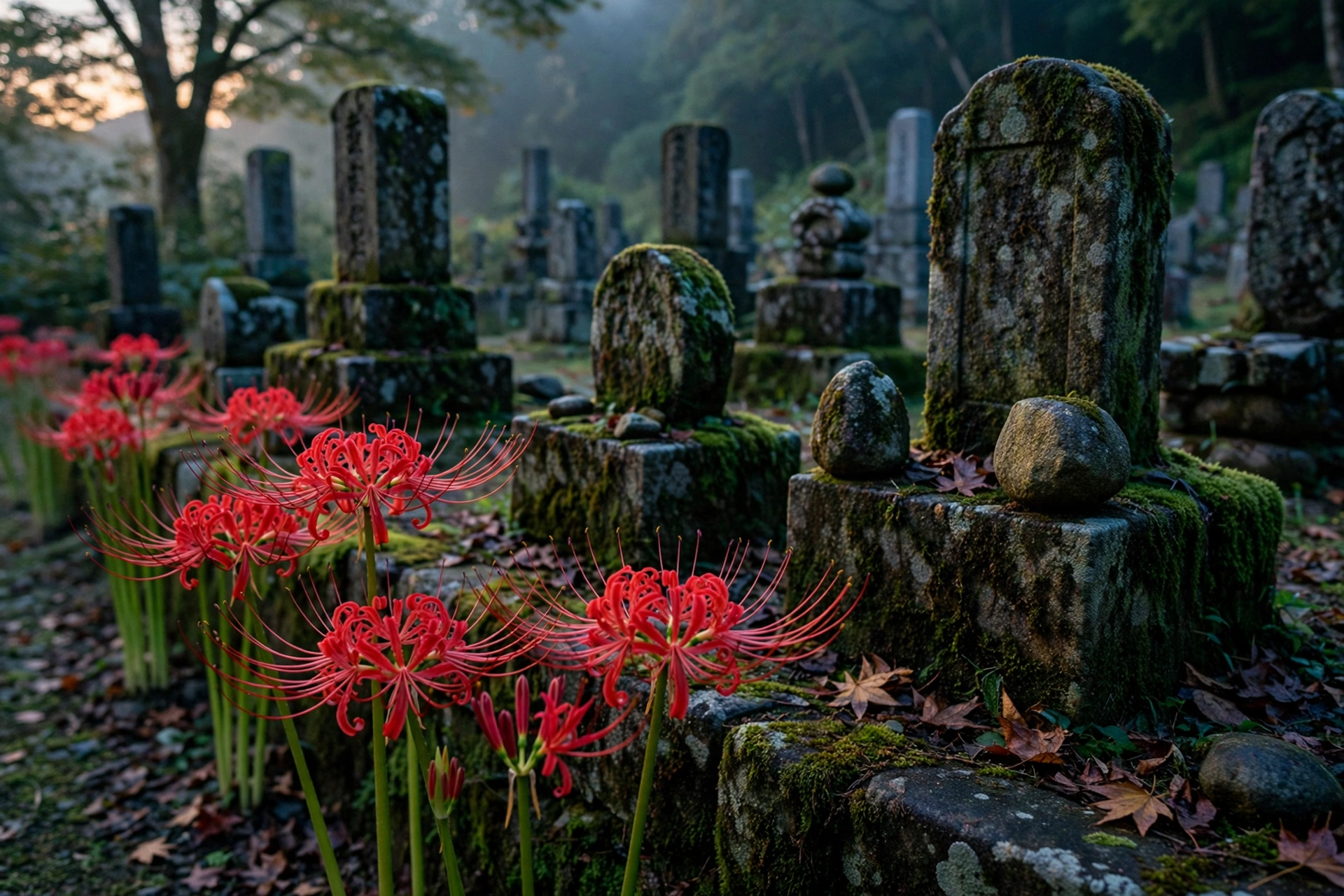
| Higanbana | Japanese — flower / character name | Red spider lily, the ‘flower of the other shore’, planted in graveyards and never given as a bouquet |
| Manjushage | Japanese — flower name | Sanskrit-derived Buddhist name for the red spider lily of the afterlife |
| Sakurako | Japanese — given name | ‘Cherry blossom child’ — beauty with a built-in farewell |
| Ayaka | Japanese — given name | ‘Colourful flower’ — bright surface, and like all blossoms, brief |
| Ayano | Japanese — given name | Silk-and-colour name with a soft, fading-blossom image |
| Kikyo | Japanese — given name | Bellflower; also a priestess in fiction who dies and is resurrected |
| Yuri | Japanese — given name | Lily — white lilies are a funeral flower in Japan as in the West |
| Yuriko | Japanese — given name | ‘Lily child’, a classic name with a funerary-flower undertone |
| Yurina | Japanese — given name | Lily plus a soft final syllable |
| Yurika | Japanese — given name | Lily plus ‘fragrance’ |
| Ren | Japanese — given name | Lotus, the Buddhist flower of rebirth from mud and death |
| Renko | Japanese — given name | ‘Lotus child’ |
| Renka | Japanese — given name | ‘Lotus flower’ |
| Renge | Japanese — given name / word | Lotus blossom, central to Buddhist ideas of the afterlife |
| Hana | Japanese — given name | ‘Flower’ — the simplest emblem of a short, beautiful life |
| Hanae | Japanese — given name | ‘Flower’ plus ‘inlet/picture’ kanji options |
| Hanaka | Japanese — given name | ‘Flower’ plus ‘fragrance’ |
| Hanami | Japanese — given name / word | Blossom-viewing; also a name with a wistful, seasonal feel |
| Hanayo | Japanese — given name | ‘Flower generation/world’ kanji options |
| Akina | Japanese — given name | ‘Autumn flower’ — a bloom at the dying end of the year |
| Akino | Japanese — given name | ‘Autumn field’ readings; seasonal and melancholy |
| Akiha | Japanese — given name | ‘Autumn leaf’ |
| Akiho | Japanese — given name | ‘Autumn grain/ear’ readings |
| Akiko | Japanese — given name | ‘Autumn child’, a long-established name |
| Yuki | Japanese — given name | ‘Snow’ — winter, silence and melting away |
| Yukina | Japanese — given name | Can combine snow with flower or leaf characters |
| Yukino | Japanese — given name | ‘Snow field’ readings; cool and quiet |
| Yukie | Japanese — given name | Snow plus ‘inlet/picture’ options |
| Yukari | Japanese — given name | Can suggest a connection or bond; also written with purple characters |
| Yukimi | Japanese — given name / word | Snow-viewing — beauty watched before it melts |
| Setsuko | Japanese — given name | Classic name that can use the snow character |
| Setsu | Japanese — given name / word | Snow, as a short stark name |
| Fuyu | Japanese — given name / word | ‘Winter’, the season of death in nature |
| Fuyuko | Japanese — given name | ‘Winter child’ |
| Fuyuka | Japanese — given name | Winter plus ‘flower/fragrance’ |
| Fuyumi | Japanese — given name | Winter plus ‘beauty’ |
| Ume | Japanese — given name | Plum blossom, which blooms on bare winter branches |
| Umeko | Japanese — given name | ‘Plum child’, a vintage name |
| Sumire | Japanese — given name | Violet, a small spring flower with a fleeting season |
| Hotaru | Japanese — given name | Firefly — in Japan fireflies are said to be the souls of the dead |
| Cho | Japanese — given name | ‘Butterfly’ — butterflies carry souls in Japanese belief |
| Kocho | Japanese — character name | Butterfly, in the on’yomi reading; borne by a poison-using demon-slayer in fiction |
| Tsubakiko | Japanese — constructed name | Camellia plus ‘child’ — a transparent construction on a funerary flower |
| Natsume | Japanese — given name | Jujube; strongly linked in fiction to a boy who sees spirits |
| Maboroshi | Japanese — word / character name | ‘Phantom, illusion’ — a bold word name for fiction |
Spirit, Dream and Illusion Names
| Name | Origin | Meaning |
|---|---|---|
| Tamako | Japanese — given name | Can use characters for soul/spirit (tama) plus ‘child’ |
| Tamao | Japanese — given name | Tama (jewel/soul) readings; soft and old-fashioned |
| Tamami | Japanese — given name | Tama plus ‘beauty’ options |
| Tamayo | Japanese — given name | Tama plus ‘world/generation’ options |
| Chiyo | Japanese — given name | ‘Thousand generations’ — ancestors and remembrance |
| Chiyoko | Japanese — given name | ‘Child of a thousand generations’ |
| Maya | Japanese — given name | Also the Buddhist word for illusion, the veil over reality |
| Mayoi | Japanese — character name | From mayoi, being lost or astray — a wandering-spirit image |
| Mayuko | Japanese — given name | Can combine cocoon or illusion-linked characters with ‘child’ |
| Mayumi | Japanese — given name | Established name; spindle-tree or true-bow readings vary |
| Yumeko | Japanese — given name | ‘Dream child’ |
| Yumemi | Japanese — given name | ‘Dream-seeing’ — one who sees dreams (and ghosts) |
| Yumika | Japanese — given name | Dream plus ‘fragrance/beauty’ options |
| Yumiko | Japanese — given name | ‘Dream child’, a gentle classic-style name |
| Mumei | Japanese — word / character name | ‘Nameless’ — the state of forgotten dead |
| Oboro | Japanese — given name / word | ‘Hazy, faint’ — like a ghost half-seen in moonlight |
| Gen’ei | Japanese — word / character name | ‘Phantom, illusion’ (written Genei in plain romaji lists) |
| Yugen | Japanese — word / character name | Profound, mysterious beauty — an aesthetic of the unseen |
| Tamayura | Japanese — word / character name | ‘A brief moment’ — an old poetic word for impermanence |
| Utsuroi | Japanese — word / character name | Fading, transition, the changing of seasons and life |
| Shion-no | Japanese — constructed name | Aster of remembrance plus a poetic particle ending |
| Reiha | Japanese — constructed name | Spirit plus ‘leaf/feather’ — transparent and ghostly |
| Reina | Japanese — given name | Modern name that can use bell or spirit characters |
| Reino | Japanese — constructed name | Spirit plus a poetic ending |
| Mio | Japanese — given name | Popular name; its waterway readings suit drifting-spirit imagery in fiction |
| Miu | Japanese — given name | Can combine beauty and feather/rain characters; light as a departing soul |
| Neneko | Japanese — character name | A soft, invented-feeling name used for cat-like spirit characters in fiction |
| Orochi | Japanese — folklore term | The great serpent; a fierce character name with mythic weight |
| Sayo-hime | Japanese — folklore figure | Princess Sayo, who waited so long for her lover she turned to stone |
| Kohime | Japanese — constructed name | ‘Small princess’ — a delicate ghost-princess construction |
| Misaki | Japanese — given name | Also the name of capes where spirits gather in folklore (misaki as spirit sites) |
| Misako | Japanese — given name | Classic name sharing its sound with those spirit-haunted headlands |
| Nagi | Japanese — given name | ‘Calm, lull’ — the still air before something appears |
| Nagisa | Japanese — given name | Shore — the boundary between the living world and the sea of the dead |
| Reigetsu | Japanese — constructed name | ‘Spirit moon’ — a transparent moon-and-ghost construction |
Creative Kanji-Combination Names for Characters
The final names are modern constructions built for fiction, following the way Japanese character names are often coined: a meaningful first element — shi (death), mei (darkness/the underworld), yomi (land of the dead), higan (the other shore) — joined to a classic feminine ending such as -ko (‘child’) or -ka (‘flower’). They are not traditional given names and should not be presented as such; they are transparent, pronounceable building blocks for writers and gamers who need a name that genuinely contains the idea of death. Pair them with the folklore in our lists of names that mean lost soul and names that mean mysterious if your character’s story is about wandering rather than dying.
| Name | Origin | Meaning |
|---|---|---|
| Shiko | Japanese — creative combination | Combines shi, ‘death’ with -ko, ‘child’; a modern character-name construction, not a traditional given name |
| Shika | Japanese — creative combination | Combines shi, ‘death’ with -ka, ‘flower’; a modern character-name construction, not a traditional given name |
| Shimi | Japanese — creative combination | Combines shi, ‘death’ with -mi, ‘beauty’; a modern character-name construction, not a traditional given name |
| Shina | Japanese — creative combination | Combines shi, ‘death’ with -na, a soft name ending; a modern character-name construction, not a traditional given name |
| Shiri | Japanese — creative combination | Combines shi, ‘death’ with -ri, a soft name ending; a modern character-name construction, not a traditional given name |
| Shiha | Japanese — creative combination | Combines shi, ‘death’ with -ha, ‘leaf / feather’; a modern character-name construction, not a traditional given name |
| Shie | Japanese — creative combination | Combines shi, ‘death’ with -e, a soft name ending; a modern character-name construction, not a traditional given name |
| Shisa | Japanese — creative combination | Combines shi, ‘death’ with -sa, a soft name ending; a modern character-name construction, not a traditional given name |
| Shiyo | Japanese — creative combination | Combines shi, ‘death’ with -yo, ‘generation / world’; a modern character-name construction, not a traditional given name |
| Meimi | Japanese — creative combination | Combines mei, ‘dark / underworld’ with -mi, ‘beauty’; a modern character-name construction, not a traditional given name |
| Meina | Japanese — creative combination | Combines mei, ‘dark / underworld’ with -na, a soft name ending; a modern character-name construction, not a traditional given name |
| Meiri | Japanese — creative combination | Combines mei, ‘dark / underworld’ with -ri, a soft name ending; a modern character-name construction, not a traditional given name |
| Meiha | Japanese — creative combination | Combines mei, ‘dark / underworld’ with -ha, ‘leaf / feather’; a modern character-name construction, not a traditional given name |
| Meie | Japanese — creative combination | Combines mei, ‘dark / underworld’ with -e, a soft name ending; a modern character-name construction, not a traditional given name |
| Meino | Japanese — creative combination | Combines mei, ‘dark / underworld’ with -no, a poetic ending; a modern character-name construction, not a traditional given name |
| Meiyo | Japanese — creative combination | Combines mei, ‘dark / underworld’ with -yo, ‘generation / world’; a modern character-name construction, not a traditional given name |
| Yamimi | Japanese — creative combination | Combines yami, ‘darkness’ with -mi, ‘beauty’; a modern character-name construction, not a traditional given name |
| Yamina | Japanese — creative combination | Combines yami, ‘darkness’ with -na, a soft name ending; a modern character-name construction, not a traditional given name |
| Yamiri | Japanese — creative combination | Combines yami, ‘darkness’ with -ri, a soft name ending; a modern character-name construction, not a traditional given name |
| Yamiha | Japanese — creative combination | Combines yami, ‘darkness’ with -ha, ‘leaf / feather’; a modern character-name construction, not a traditional given name |
| Yamie | Japanese — creative combination | Combines yami, ‘darkness’ with -e, a soft name ending; a modern character-name construction, not a traditional given name |
| Yamino | Japanese — creative combination | Combines yami, ‘darkness’ with -no, a poetic ending; a modern character-name construction, not a traditional given name |
| Yamisa | Japanese — creative combination | Combines yami, ‘darkness’ with -sa, a soft name ending; a modern character-name construction, not a traditional given name |
| Yamiyo | Japanese — creative combination | Combines yami, ‘darkness’ with -yo, ‘generation / world’; a modern character-name construction, not a traditional given name |
| Yoruko | Japanese — creative combination | Combines yoru, ‘night’ with -ko, ‘child’; a modern character-name construction, not a traditional given name |
| Yoruka | Japanese — creative combination | Combines yoru, ‘night’ with -ka, ‘flower’; a modern character-name construction, not a traditional given name |
| Yorumi | Japanese — creative combination | Combines yoru, ‘night’ with -mi, ‘beauty’; a modern character-name construction, not a traditional given name |
| Yoruna | Japanese — creative combination | Combines yoru, ‘night’ with -na, a soft name ending; a modern character-name construction, not a traditional given name |
| Yoruri | Japanese — creative combination | Combines yoru, ‘night’ with -ri, a soft name ending; a modern character-name construction, not a traditional given name |
| Yoruha | Japanese — creative combination | Combines yoru, ‘night’ with -ha, ‘leaf / feather’; a modern character-name construction, not a traditional given name |
| Yorue | Japanese — creative combination | Combines yoru, ‘night’ with -e, a soft name ending; a modern character-name construction, not a traditional given name |
| Yoruno | Japanese — creative combination | Combines yoru, ‘night’ with -no, a poetic ending; a modern character-name construction, not a traditional given name |
| Yorusa | Japanese — creative combination | Combines yoru, ‘night’ with -sa, a soft name ending; a modern character-name construction, not a traditional given name |
| Yoruyo | Japanese — creative combination | Combines yoru, ‘night’ with -yo, ‘generation / world’; a modern character-name construction, not a traditional given name |
| Kuroka | Japanese — creative combination | Combines kuro, ‘black’ with -ka, ‘flower’; a modern character-name construction, not a traditional given name |
| Kuromi | Japanese — creative combination | Combines kuro, ‘black’ with -mi, ‘beauty’; a modern character-name construction, not a traditional given name |
| Kurona | Japanese — creative combination | Combines kuro, ‘black’ with -na, a soft name ending; a modern character-name construction, not a traditional given name |
| Kurori | Japanese — creative combination | Combines kuro, ‘black’ with -ri, a soft name ending; a modern character-name construction, not a traditional given name |
| Kurono | Japanese — creative combination | Combines kuro, ‘black’ with -no, a poetic ending; a modern character-name construction, not a traditional given name |
| Kurosa | Japanese — creative combination | Combines kuro, ‘black’ with -sa, a soft name ending; a modern character-name construction, not a traditional given name |
| Kuroyo | Japanese — creative combination | Combines kuro, ‘black’ with -yo, ‘generation / world’; a modern character-name construction, not a traditional given name |
| Kageka | Japanese — creative combination | Combines kage, ‘shadow’ with -ka, ‘flower’; a modern character-name construction, not a traditional given name |
| Kagemi | Japanese — creative combination | Combines kage, ‘shadow’ with -mi, ‘beauty’; a modern character-name construction, not a traditional given name |
| Kagena | Japanese — creative combination | Combines kage, ‘shadow’ with -na, a soft name ending; a modern character-name construction, not a traditional given name |
| Kageri | Japanese — creative combination | Combines kage, ‘shadow’ with -ri, a soft name ending; a modern character-name construction, not a traditional given name |
| Kageha | Japanese — creative combination | Combines kage, ‘shadow’ with -ha, ‘leaf / feather’; a modern character-name construction, not a traditional given name |
| Kagee | Japanese — creative combination | Combines kage, ‘shadow’ with -e, a soft name ending; a modern character-name construction, not a traditional given name |
| Kageno | Japanese — creative combination | Combines kage, ‘shadow’ with -no, a poetic ending; a modern character-name construction, not a traditional given name |
| Kagesa | Japanese — creative combination | Combines kage, ‘shadow’ with -sa, a soft name ending; a modern character-name construction, not a traditional given name |
| Kageyo | Japanese — creative combination | Combines kage, ‘shadow’ with -yo, ‘generation / world’; a modern character-name construction, not a traditional given name |
| Yomiko | Japanese — creative combination | Combines yomi, ‘land of the dead’ with -ko, ‘child’; a modern character-name construction, not a traditional given name |
| Yomika | Japanese — creative combination | Combines yomi, ‘land of the dead’ with -ka, ‘flower’; a modern character-name construction, not a traditional given name |
| Yomimi | Japanese — creative combination | Combines yomi, ‘land of the dead’ with -mi, ‘beauty’; a modern character-name construction, not a traditional given name |
| Yomina | Japanese — creative combination | Combines yomi, ‘land of the dead’ with -na, a soft name ending; a modern character-name construction, not a traditional given name |
| Yomiri | Japanese — creative combination | Combines yomi, ‘land of the dead’ with -ri, a soft name ending; a modern character-name construction, not a traditional given name |
| Yomiha | Japanese — creative combination | Combines yomi, ‘land of the dead’ with -ha, ‘leaf / feather’; a modern character-name construction, not a traditional given name |
| Yomie | Japanese — creative combination | Combines yomi, ‘land of the dead’ with -e, a soft name ending; a modern character-name construction, not a traditional given name |
| Yomino | Japanese — creative combination | Combines yomi, ‘land of the dead’ with -no, a poetic ending; a modern character-name construction, not a traditional given name |
| Yomisa | Japanese — creative combination | Combines yomi, ‘land of the dead’ with -sa, a soft name ending; a modern character-name construction, not a traditional given name |
| Yomiyo | Japanese — creative combination | Combines yomi, ‘land of the dead’ with -yo, ‘generation / world’; a modern character-name construction, not a traditional given name |
| Reiri | Japanese — creative combination | Combines rei, ‘spirit’ with -ri, a soft name ending; a modern character-name construction, not a traditional given name |
| Reie | Japanese — creative combination | Combines rei, ‘spirit’ with -e, a soft name ending; a modern character-name construction, not a traditional given name |
| Reisa | Japanese — creative combination | Combines rei, ‘spirit’ with -sa, a soft name ending; a modern character-name construction, not a traditional given name |
| Reiyo | Japanese — creative combination | Combines rei, ‘spirit’ with -yo, ‘generation / world’; a modern character-name construction, not a traditional given name |
| Higanko | Japanese — creative combination | Combines higan, ‘the other shore (afterlife)’ with -ko, ‘child’; a modern character-name construction, not a traditional given name |
| Higanka | Japanese — creative combination | Combines higan, ‘the other shore (afterlife)’ with -ka, ‘flower’; a modern character-name construction, not a traditional given name |
| Higanmi | Japanese — creative combination | Combines higan, ‘the other shore (afterlife)’ with -mi, ‘beauty’; a modern character-name construction, not a traditional given name |
| Higanna | Japanese — creative combination | Combines higan, ‘the other shore (afterlife)’ with -na, a soft name ending; a modern character-name construction, not a traditional given name |
| Higanri | Japanese — creative combination | Combines higan, ‘the other shore (afterlife)’ with -ri, a soft name ending; a modern character-name construction, not a traditional given name |
| Higanha | Japanese — creative combination | Combines higan, ‘the other shore (afterlife)’ with -ha, ‘leaf / feather’; a modern character-name construction, not a traditional given name |
| Higane | Japanese — creative combination | Combines higan, ‘the other shore (afterlife)’ with -e, a soft name ending; a modern character-name construction, not a traditional given name |
| Higanno | Japanese — creative combination | Combines higan, ‘the other shore (afterlife)’ with -no, a poetic ending; a modern character-name construction, not a traditional given name |
| Higansa | Japanese — creative combination | Combines higan, ‘the other shore (afterlife)’ with -sa, a soft name ending; a modern character-name construction, not a traditional given name |
| Higanyo | Japanese — creative combination | Combines higan, ‘the other shore (afterlife)’ with -yo, ‘generation / world’; a modern character-name construction, not a traditional given name |
| Setsuka | Japanese — creative combination | Combines setsu, ‘snow’ with -ka, ‘flower’; a modern character-name construction, not a traditional given name |
| Setsumi | Japanese — creative combination | Combines setsu, ‘snow’ with -mi, ‘beauty’; a modern character-name construction, not a traditional given name |
| Setsuri | Japanese — creative combination | Combines setsu, ‘snow’ with -ri, a soft name ending; a modern character-name construction, not a traditional given name |
| Setsuha | Japanese — creative combination | Combines setsu, ‘snow’ with -ha, ‘leaf / feather’; a modern character-name construction, not a traditional given name |
| Setsue | Japanese — creative combination | Combines setsu, ‘snow’ with -e, a soft name ending; a modern character-name construction, not a traditional given name |
| Setsuno | Japanese — creative combination | Combines setsu, ‘snow’ with -no, a poetic ending; a modern character-name construction, not a traditional given name |
| Setsusa | Japanese — creative combination | Combines setsu, ‘snow’ with -sa, a soft name ending; a modern character-name construction, not a traditional given name |
| Setsuyo | Japanese — creative combination | Combines setsu, ‘snow’ with -yo, ‘generation / world’; a modern character-name construction, not a traditional given name |
| Tsukika | Japanese — creative combination | Combines tsuki, ‘moon’ with -ka, ‘flower’; a modern character-name construction, not a traditional given name |
| Tsukimi | Japanese — creative combination | Combines tsuki, ‘moon’ with -mi, ‘beauty’; a modern character-name construction, not a traditional given name |
| Tsukiri | Japanese — creative combination | Combines tsuki, ‘moon’ with -ri, a soft name ending; a modern character-name construction, not a traditional given name |
| Tsukiha | Japanese — creative combination | Combines tsuki, ‘moon’ with -ha, ‘leaf / feather’; a modern character-name construction, not a traditional given name |
| Tsukie | Japanese — creative combination | Combines tsuki, ‘moon’ with -e, a soft name ending; a modern character-name construction, not a traditional given name |
| Tsukisa | Japanese — creative combination | Combines tsuki, ‘moon’ with -sa, a soft name ending; a modern character-name construction, not a traditional given name |
| Fuyuna | Japanese — creative combination | Combines fuyu, ‘winter’ with -na, a soft name ending; a modern character-name construction, not a traditional given name |
| Fuyuri | Japanese — creative combination | Combines fuyu, ‘winter’ with -ri, a soft name ending; a modern character-name construction, not a traditional given name |
| Fuyuha | Japanese — creative combination | Combines fuyu, ‘winter’ with -ha, ‘leaf / feather’; a modern character-name construction, not a traditional given name |
| Fuyue | Japanese — creative combination | Combines fuyu, ‘winter’ with -e, a soft name ending; a modern character-name construction, not a traditional given name |
| Fuyuno | Japanese — creative combination | Combines fuyu, ‘winter’ with -no, a poetic ending; a modern character-name construction, not a traditional given name |
| Fuyusa | Japanese — creative combination | Combines fuyu, ‘winter’ with -sa, a soft name ending; a modern character-name construction, not a traditional given name |
| Fuyuyo | Japanese — creative combination | Combines fuyu, ‘winter’ with -yo, ‘generation / world’; a modern character-name construction, not a traditional given name |
| Anka | Japanese — creative combination | Combines an, ‘dark (with dark kanji)’ with -ka, ‘flower’; a modern character-name construction, not a traditional given name |
| Anmi | Japanese — creative combination | Combines an, ‘dark (with dark kanji)’ with -mi, ‘beauty’; a modern character-name construction, not a traditional given name |
| Anna | Japanese — creative combination | Combines an, ‘dark (with dark kanji)’ with -na, a soft name ending; a modern character-name construction, not a traditional given name |
| Anha | Japanese — creative combination | Combines an, ‘dark (with dark kanji)’ with -ha, ‘leaf / feather’; a modern character-name construction, not a traditional given name |
| Ane | Japanese — creative combination | Combines an, ‘dark (with dark kanji)’ with -e, a soft name ending; a modern character-name construction, not a traditional given name |
| Anno | Japanese — creative combination | Combines an, ‘dark (with dark kanji)’ with -no, a poetic ending; a modern character-name construction, not a traditional given name |
| Ansa | Japanese — creative combination | Combines an, ‘dark (with dark kanji)’ with -sa, a soft name ending; a modern character-name construction, not a traditional given name |
| Anyo | Japanese — creative combination | Combines an, ‘dark (with dark kanji)’ with -yo, ‘generation / world’; a modern character-name construction, not a traditional given name |
| Muko | Japanese — creative combination | Combines mu, ‘nothingness, emptiness’ with -ko, ‘child’; a modern character-name construction, not a traditional given name |
| Muka | Japanese — creative combination | Combines mu, ‘nothingness, emptiness’ with -ka, ‘flower’; a modern character-name construction, not a traditional given name |
| Mumi | Japanese — creative combination | Combines mu, ‘nothingness, emptiness’ with -mi, ‘beauty’; a modern character-name construction, not a traditional given name |
| Muna | Japanese — creative combination | Combines mu, ‘nothingness, emptiness’ with -na, a soft name ending; a modern character-name construction, not a traditional given name |
| Muri | Japanese — creative combination | Combines mu, ‘nothingness, emptiness’ with -ri, a soft name ending; a modern character-name construction, not a traditional given name |
| Muha | Japanese — creative combination | Combines mu, ‘nothingness, emptiness’ with -ha, ‘leaf / feather’; a modern character-name construction, not a traditional given name |
| Mue | Japanese — creative combination | Combines mu, ‘nothingness, emptiness’ with -e, a soft name ending; a modern character-name construction, not a traditional given name |
How to Choose a Japanese Name with a Death Meaning
First, decide whether the name is for a real child or a character. For a character, folklore terms and creative combinations are fair game, and a name like Onryo or Shiko tells the audience the theme instantly. For a real child, choose from the established given names — Rei, Mei, Shion, Sakura, Yukiko — where the dark layer only appears with a particular kanji, and check that kanji choice with a native speaker before committing, because readings and impressions can vary a great deal. Second, respect the culture: death in Japan is tied to ancestor veneration, Buddhist ideas of impermanence (mujo) and seasonal beauty, not to horror alone, and a name chosen in that spirit will always feel more authentic. Third, say the name aloud and check it in your own language as well as Japanese. Finally, compare neighbouring themes before you settle: our guides to Greek names that mean death show a very different, personification-based tradition, while names that mean danger suit characters who threaten death rather than embody it. For checking how established Japanese names are actually written and read, Wikipedia’s overview of yurei is a good doorway into the folklore behind many of these choices.
FAQs About Japanese Girl Names That Mean Death
Do any real Japanese girl names literally mean death?
Almost none. Because shi (death) is considered unlucky — and sounds like ‘four’, also avoided — parents do not normally choose death kanji. The literal options in this list are therefore character-name constructions, while real given names approach death through night, moon, flowers and impermanence.
Why are cherry blossoms and fireflies on a death list?
Because in Japanese aesthetics they are death symbols: cherry blossom is the emblem of mono no aware, the beauty of things that fall quickly, and fireflies are traditionally said to be the souls of dead soldiers or lovers, a belief retold in film and literature.
What does higanbana mean, and why is it funerary?
Higanbana, the red spider lily, means ‘flower of the other shore’ — the far shore of the Buddhist afterlife. It blooms around graves at the autumn equinox festival of Higan, and its bulbs are poisonous, so it is never used as a gift flower.
Can I use these names for an anime or game character?
Yes — that is the main use for the folklore and creative sections. Names such as Yurei, Onryo and Shinigami are common nouns or titles rather than personal names in Japanese, so using them signals ‘character’ clearly; the creative combinations are free to adopt and adapt.
How do I check the kanji and reading of a name I like?
Look the name up in a Japanese name dictionary, note that the same romaji can have dozens of kanji spellings, and, for anything beyond fiction, ask a native speaker to sense-check both the reading and the impression the kanji give. Never assume the first kanji a website offers is the standard one.
Conclusion
Japanese girl names that mean death are really a doorway into how Japan talks about death itself: rarely head-on, and usually through a goddess who became queen of the underworld, a flower that blooms in graveyards, a firefly carrying a soul, or a blossom that falls in a week. This list has given you 285 distinct names across that whole spectrum — folklore figures, established given names with dark kanji options, symbols of impermanence, and clearly labelled creative combinations for characters — with no name repeated. Choose the circle that fits your purpose, check the kanji with care, and the result will be a name that is dark in a genuinely Japanese way: quiet, seasonal and unforgettable.