410 Names That Mean Broken: Shattered, Fallen and Mended Names
Introduction
A name that means broken sounds like a curse until you look at what cultures actually did with theirs. Spain’s most beloved girl’s name means sorrows. Ireland’s most famous heroine is its sorrow. The Bible names a baby ‘the glory has departed’ — and another ‘son of my sorrow’. Brokenness, it turns out, is one of the oldest and most honest themes in naming, and the names it produced are some of the most beautiful ever given.
This list is built differently from the one you may have seen elsewhere. The web’s best-known broken list claims hundreds of names but recycles a small cast through section after section with no origins at all. Here, every name appears exactly once, every name is real, and every name carries its origin and its story — the sorrow families done with proper etymology, fallen angels from the actual Book of Enoch, wounded gods, tragic lovers from a dozen literatures, and two sections the dark lists always forget: the broken who were mended, and the healers.
Read it as a map. The first half descends — sorrow, ruin, the fallen. The second half comes back up. If your interest is the pain itself, our list of names that mean pain goes further down that road; if it is the road back, start at the restoration section below.
Quick Picks: The 15 Best Names That Mean Broken
| Name | Origin | Meaning |
|---|---|---|
| Dolores | Spanish | Sorrows |
| Deirdre | Irish | Sorrowful one (by lore) |
| Tristan | Welsh / French | Tumult; sorrow (by lore) |
| Mallory | French | The unfortunate one |
| Job | Hebrew | The persecuted one |
| Lazarus | Hebrew | God has helped |
| Phoenix | Greek | The reborn bird |
| Kintsugi | Japanese | Golden repair |
| Niobe | Greek | (weeping mother) |
| Baldr | Norse | The shining god |
| Ophelia | Greek | Help (by etymology) |
| Samson | Hebrew | Sun |
| Mara | Hebrew | Bitter |
| Shatter | English | To break apart |
| Medea | Greek | The cunning one |
Broken Word Names and Surnames
Almost no traditional given name literally means ‘broken’ — languages protect their children from that. So the literal shelf is made of honest word names and surnames, labelled for exactly what they are, including surnames from Turkish and German that carry the meaning outright.
| Name | Origin | Meaning | Note |
|---|---|---|---|
| Broken | English | Broken | The word itself, occasionally used as a stark modern name |
| Breaker | English | One who breaks | An occupational-style word name with breaker-of-waves energy |
| Shard | English | A broken fragment | A pottery shard — the piece the gold seam will honour |
| Ruin | English | Collapse; wreckage | A dark word name for the remains of great things |
| Ruina | Latin | Ruin; downfall | The Latin word, softer in sound than its meaning |
| Wreck | English | A wrecked thing | A blunt, nautical word name |
| Crash | English | A violent breaking | A modern word name with comic-book energy |
| Cinder | English | Ashes; remains | What is left when the fire goes out |
| Relic | English | A surviving remnant | What remains of something broken by time |
| Maksur | Arabic | Broken | The Arabic word for broken, occasionally used as a name |
| Breakspear | English | Break-spear | The surname of Nicholas Breakspear, England’s only pope |
| Bruch | German | Break; fracture | A German surname from the word for a break or marsh fracture |
| Kirik | Turkish | Broken | The Turkish word kırık worn as a surname and name |
| Fall | English | A fall; falling | A surname that carries the fall in one syllable |
| Broke | English | Broken (archaic) | The archaic past tense, preserved as a rare surname |
Girl Names That Mean Sorrow and Broken Hearts
The honest core of every broken list is the sorrow family: names built on the words for grief, bitterness and tears in Spanish, Irish, Welsh and Latin. This is that family, done properly — with the etymology the shallow lists skip.
| Name | Origin | Meaning | Note |
|---|---|---|---|
| Lola | Spanish | Sorrows | The beloved diminutive of Dolores, all sorrow and all charm |
| Dolora | Latin | Sorrow | A rare, direct Latin form of the sorrow name |
| Addolorata | Italian | The sorrowful one | Italy’s name for Our Lady of Sorrows, given to girls for centuries |
| Angustias | Spanish | Anguishes | A genuine Spanish name from Our Lady of Anguish |
| Soledad | Spanish | Solitude | The Spanish name for sacred loneliness, from the Virgin’s sorrow |
| Trista | Latin | Sad | From tristis — the feminine root of the Tristan family |
| Tristana | Latin / Spanish | The sorrowful one | A literary Spanish form steeped in beautiful sadness |
| Tristessa | Literary English | Sadness | The name Jack Kerouac gave his tragic heroine |
| Bronagh | Irish | Sorrow | A real Irish girl’s name from brón, sorrow itself |
| Sorrow | English | Grief | A Puritan-style word name, stark and honest |
| Misery | English | Suffering | Worn as a name in fiction — sorrow with the gloves off |
| Delilah | Hebrew | Delicate; languishing | The woman whose love story ended with a blinded, broken hero |
| Nydia | Latin (literary) | (blind flower-seller) | The blind girl of The Last Days of Pompeii who guides others through ruin |
| Etain | Irish | (heroine of the Wooing) | Turned into a butterfly by a jealous goddess and blown on the wind for years |
| Emer | Irish | (wife of Cuchulainn) | Who won her husband by riddles and mourned his fated death |
| Derbforgaill | Irish | (princess of Lochlann) | Who died of grief in the old Irish tale when her lover was slain |
| Blathnaid | Irish | Flower | Abducted by Cuchulainn, she leapt to her death rather than stay |
| Fionnuala | Irish | Fair-shouldered | One of the Children of Lir, a swan for nine hundred years |
| Aoife | Irish | Beauty | The stepmother whose jealousy transformed the Children of Lir |
| Derdriu | Irish | (original form of Deirdre) | The oldest Irish spelling of the sorrowful heroine’s name |
| Blodeuwedd | Welsh | Flower-face | The wife made of flowers who became an owl for her betrayal |
| Arianrhod | Welsh | Silver wheel | The mother shamed by a magic test in the Mabinogion |
| Goewin | Welsh | (foot-holder of Math) | The maiden wronged in the Fourth Branch of the Mabinogi |
| Creiddylad | Welsh | (daughter of Lludd) | Fought over every May Day for ever — the Welsh original of Cordelia |
| Olwen | Welsh | White footprint | Whose giant father set impossible tasks and died when they were done |
Boy Names That Mean Broken, Fallen and Undone
For boys the broken shelf runs through Wales and Camelot: kings whose lands were enchanted waste, knights who killed their brothers unknowing, and wandering poets who made ruin glamorous. The Tristan family anchors it, as it should.
| Name | Origin | Meaning | Note |
|---|---|---|---|
| Tristram | Welsh / Literary | Tumult | The scholarly spelling of Tristan, used by poets from Malory to Swinburne |
| Drystan | Welsh | Tumult | The original Welsh form of the sorrow knight’s name |
| Pellinore | Arthurian | (questing king) | The king who spent his life chasing the Questing Beast and was killed by his friend’s sons |
| Balin | Arthurian | (knight of two swords) | Who drew a cursed sword and killed his own brother, not knowing him |
| Balan | Arthurian | (knight) | Balin’s brother — the two slew each other in the same hour |
| Gareth | Arthurian | Gentle (by lore) | Arthur’s nephew, killed unknowing by Lancelot in the last rescue |
| Gaheris | Arthurian | (knight) | Slain by Lancelot beside his brother Gareth |
| Agravain | Arthurian | (knight) | The brother who exposed Lancelot and Guinevere and lit the final war |
| Palamedes | Arthurian | (Saracen knight) | The noble knight whose unreturned love for Isolde haunted the Round Table |
| Lamorak | Arthurian | (knight) | One of the three best knights, ambushed by the Orkney brothers |
| Perceval | Welsh / French | Pierce the valley (by lore) | Whose mother died of grief the day he rode away to be a knight |
| Lucan | Arthurian | (the butler knight) | The last man standing at Arthur’s final battle, who died of his wounds lifting the king |
| Culhwch | Welsh | (cursed stepson) | Cursed by his stepmother to win Olwen or nothing |
| Pryderi | Welsh | Care; trouble | The stolen child of the Mabinogi, slain in single combat |
| Manawydan | Welsh | (son of Llyr) | Who watched his land turn to empty waste under an enchantment |
| Gwydion | Welsh | (magician of Gwynedd) | Punished for a year as stag, sow and wolf for his crimes |
| Gilfaethwy | Welsh | (brother of Gwydion) | Who shared the beast-punishment for the wrong done to Goewin |
| Gronw | Welsh | (lord of Penllyn) | Who speared Lleu and was killed by the same spear a year later |
| Dylan | Welsh | Son of the sea | The sea-child killed by his uncle Govannon’s blow in the old tale |
| Efnisien | Welsh | (the mutilator) | The bitter twin who broke a peace — then broke a magic cauldron from inside, at the cost of his life |
| Nissyen | Welsh | (the peacemaker) | Efnisien’s gentle twin, dragged into his brother’s wars |
| Bran | Welsh | Raven | The giant king wounded by a poisoned spear, whose head kept talking for years |
| Matholwch | Irish / Welsh | (king of Ireland) | Whose insulted bride — Branwen — brought two kingdoms down |
| Dorian | Greek / Literary | Of Doris | Dorian Gray, literature’s portrait of a soul rotting in a beautiful frame |
| Faust | German / Literary | Fist; the pact-maker | Who sold his soul and spent twenty-four years spending it |
| Manfred | Germanic | Man of peace | Byron’s count, broken by a guilt he will not name |
| Conrad | Germanic | Bold counsel | Byron’s corsair — the original Byronic broken antihero |
| Lara | Literary | (Byron’s hero) | The brooding lord of Byron’s tale, carrying an unnamed sorrow |
| Harold | Anglo-Saxon | Army ruler | Byron’s Childe Harold, the world-weary pilgrim who starts modern melancholy |
| Ahasuerus | Hebrew / Persian | (the Wandering Jew) | The legendary figure cursed to wander, unageing, until the end of the world |
Unisex Broken Names
Weather, ash and regret: the unisex shelf is built from aftermath words — what the sky does after the storm and what the ground holds after the fire.
| Name | Origin | Meaning | Note |
|---|---|---|---|
| Ash | English | Ashes; ash tree | What remains after burning — and the tree that regrows from it |
| Rain | English | Rain | The weeping sky, worn soft and gender-free |
| Winter | English | The cold season | The bleak, stripped-back quarter of the year |
| November | Latin | Ninth month | The dark month of remembrance, used as a modern name |
| Grey | English | The colour grey | Dulled colour itself — a name for muted days |
| Slate | English | Grey rock | A stone that splits in layers, sharp and grey |
| Echo | Greek | A returned sound | The nymph who wasted away until only her voice remained |
| Rue | English / French | Regret; herb of grace | Both the bitter herb and the feeling of sorrow for what was done |
| Solace | English | Comfort in sorrow | The name for what broken hearts actually need |
| Mercy | English | Compassion | The virtue that answers brokenness, a Puritan favourite |
| Patience | English | Endurance | The virtue name for suffering borne quietly |
| Briar | English | Thorn bush | Beauty with the wound built in — Sleeping Beauty’s hedge |
Greek Names of Ruin, Grief and Shattered Lives
Greek tragedy is the world’s deepest well of broken stories: mothers turned to stone, lovers separated by a backward glance, heroes dragged around the walls of burning cities. Fifty names from that well, each with its story attached.
| Name | Origin | Meaning | Note |
|---|---|---|---|
| Aedon | Greek | Nightingale | The mother whose grief turned her into the nightingale, still singing sorrow |
| Alcyone | Greek | Kingfisher | Who threw herself into the sea for her drowned husband and was changed into a bird |
| Hecuba | Greek | (queen of Troy) | Who watched all fifty of her children die and ended howling on a shore |
| Cassandra | Greek | (prophetess of Troy) | Cursed to foresee every ruin and never be believed |
| Phaedra | Greek | Bright | Whose forbidden love and false accusation destroyed her house |
| Ariadne | Greek | Most holy | Who gave Theseus the thread out of the labyrinth — and was left sleeping on Naxos |
| Dido | Phoenician / Latin | (queen of Carthage) | Abandoned by Aeneas, she built her own funeral pyre |
| Thisbe | Greek / Babylonian | (lover of Pyramus) | Who died on her lover’s sword beneath the mulberry tree |
| Hero | Greek | (priestess of Aphrodite) | Who leapt from her tower when Leander drowned in the strait |
| Io | Greek | (priestess of Hera) | Turned into a cow and driven across the world by a gadfly |
| Callisto | Greek | Most beautiful | Changed into a bear by a jealous goddess, then into the Great Bear stars |
| Andromeda | Greek | Ruler of men | Chained to a rock for the sea monster because of her mother’s pride |
| Philomela | Greek | Lover of song | Mutilated to silence her, she wove her story into a tapestry |
| Procne | Greek | (sister of Philomela) | Who answered an unspeakable wrong with an unspeakable revenge |
| Sisyphus | Greek | (king of Corinth) | Condemned to roll his boulder up the hill for ever, and watch it fall |
| Prometheus | Greek | Forethought | Chained to a rock while an eagle ate his liver daily |
| Ixion | Greek | (king of the Lapiths) | Bound to a burning wheel that turns for eternity |
| Tityos | Greek | (giant) | Stretched across the underworld while vultures fed on him |
| Jocasta | Greek | (queen of Thebes) | Who discovered the truth of her marriage and hanged herself |
| Laius | Greek | (king of Thebes) | Whose attempt to escape a prophecy set the whole ruin in motion |
| Hector | Greek | Holding fast | Troy’s noblest defender, dragged behind Achilles’ chariot |
| Helen | Greek | Torch; light | Whose flight with Paris burned the greatest city of the age |
| Achilles | Greek | (hero of Troy) | Broken twice — by Agamemnon’s insult, then by Patroclus’s death |
| Patroclus | Greek | Glory of the father | Whose death in borrowed armour unmade Achilles |
| Ajax | Greek | (hero of Troy) | Driven mad by a rigged contest, he fell on his own sword |
| Orestes | Greek | Of the mountain | Who killed his mother and was hunted screaming by the Furies |
| Electra | Greek | Amber; shining | Who kept her murdered father’s memory alive until vengeance came |
| Clytemnestra | Greek | (queen of Mycenae) | Whose grief for her sacrificed daughter became an axe |
| Agamemnon | Greek | The steadfast | The king who sacrificed his child and was murdered in his bath |
| Demeter | Greek | Earth mother | Whose grief for Persephone invented winter |
| Orpheus | Greek | (musician) | Who charmed death itself, then looked back one moment too soon |
| Eurydice | Greek | Wide justice | Lost twice — once to the snake, once to the backward glance |
| Hyacinthus | Greek | (Spartan prince) | Killed by Apollo’s discus and changed into the hyacinth |
| Narcissus | Greek | Numbness (by lore) | Who wasted away before his own reflection in the pool |
| Actaeon | Greek | (hunter) | Changed into a stag and torn apart by his own hounds |
| Phaethon | Greek | The shining one | Who begged for the sun chariot and fell burning into the river |
| Icarus | Greek | (son of Daedalus) | Whose wax wings melted — the name of every beautiful overreach |
| Scylla | Greek | (monster) | A beautiful nymph transformed into the terror of the strait |
| Atalanta | Greek | Equal in weight | The huntress undone at last by golden apples and a marriage |
| Meleager | Greek | (prince of Calydon) | Whose life was bound to a log — and his mother finally burned it |
| Althaea | Greek | Healer | The mother who chose her brothers’ vengeance over her son’s life |
| Tyro | Greek | (princess) | Seduced by a god in her lover’s shape, her twins exposed |
| Jason | Greek | Healer | The Argonaut captain who ended alone, killed by his own rotting ship |
| Creusa | Greek | Princess | Jason’s bride, burned alive in Medea’s poisoned robe |
| Hylas | Greek | (companion of Heracles) | Pulled into a spring by nymphs while fetching water |
| Heracles | Greek | Glory of Hera | Driven mad, he woke to find he had destroyed his own family |
| Megara | Greek | (wife of Heracles) | The princess whose story ends in the hero’s madness |
| Deianira | Greek | Man-destroyer | Whose loving gift — a poisoned shirt — killed Heracles by accident |
| Nessus | Greek | (centaur) | Whose dying lie about his blood reached across years to kill |
| Coronis | Greek | Crow | Apollo’s lover, shot by the god’s own arrow on a raven’s report |
| Danae | Greek | (princess of Argos) | Locked in a bronze tower, then set adrift in a chest with her baby |
| Calypso | Greek | The concealer | The goddess who kept Odysseus seven years and had to let him go |
Norse Names of the Fallen and Forsaken
Norse myth is a story of a world that knows it will break: the gods foresee Ragnarok and live inside the foreseeing. These are the slain, the betrayed, the bound and the bereaved of the sagas and Eddas.
| Name | Origin | Meaning | Note |
|---|---|---|---|
| Hodr | Norse | Battle | The blind god tricked into killing his brother Baldr, and slain in turn |
| Loki | Norse | (the trickster) | Bound in a cave with a serpent dripping venom on his face until the world’s end |
| Sigyn | Norse | (wife of Loki) | Who sits in the cave holding a bowl over her bound husband’s face |
| Fenrir | Norse | Fen-dweller | The wolf the gods could only bind with a ribbon of impossible things |
| Hel | Norse | (queen of the dead) | Half living, half corpse — cast into the cold realm that bears her name |
| Sigurd | Norse | Victory guardian | The dragon-slayer murdered in his sleep by his brothers-in-law |
| Brynhild | Norse | Armour battle | The valkyrie betrayed into the wrong marriage, who arranged Sigurd’s death and followed him |
| Gudrun | Norse | God’s secret lore | The most grief-burdened woman in Germanic legend — husband, brothers, sons, daughter, all lost |
| Atli | Norse | (king of the Huns) | Who murdered Gudrun’s brothers for gold and was killed in his own hall |
| Gunnar | Norse | Battle warrior | Thrown into the snake pit, he played the harp with his toes as he died |
| Hogni | Norse | (hero of the Niflungs) | Whose heart was cut out while he laughed |
| Signy | Norse | (sister of Sigmund) | Who burned in her hated husband’s hall by her own choice, her vengeance complete |
| Sigmund | Norse | Victory protection | Whose sword was shattered by Odin — and reforged for his son Sigurd |
| Volsung | Norse | (king) | Murdered by Siggeir despite his daughter Signy’s warning |
| Sinfjotli | Norse | (son of Sigmund) | Poisoned by his stepmother’s ale |
| Helgi | Norse | The holy one | The hero slain by his brother-in-law, mourned in the mound by Sigrun |
| Sigrun | Norse | Victory secret | The valkyrie who held her dead lover in his burial mound and died of grief |
| Regin | Norse | Counsel | The smith who reforged the broken sword Gram — and plotted his foster-son’s death |
| Fafnir | Norse | (the dragon) | Who murdered his father for gold and rotted into a dragon on the hoard |
| Andvari | Norse | (dwarf) | Robbed of his ring by Loki, he laid the curse that destroys everyone in this story |
| Ottr | Norse | Otter | Whose accidental killing set the cursed gold moving |
| Hreidmar | Norse | (king of dwarfs) | Murdered by his own sons over the ransom gold |
| Sorli | Norse | (son of Gudrun) | Stoned to death avenging his sister Svanhild |
| Hamdir | Norse | (son of Gudrun) | Sorli’s brother, who threw away victory with one taunt |
| Erp | Norse | (son of Gudrun) | Killed by his own brothers on the road for a riddle they misunderstood |
| Svanhild | Norse | Battle swan | Gudrun’s daughter, trampled by horses on a false accusation |
| Randver | Norse | (prince of the Goths) | Hanged on a false charge by his father’s counsellor |
| Jormunrek | Norse | (king of the Goths) | The cruel king whose hall the broken family finally broke into |
Biblical Names of Affliction and Ruin
Scripture names its broken honestly: a son called ‘son of my sorrow’, a baby named ‘the glory has departed’, a woman who renamed herself Bitter. These are the afflicted of the Bible — kings, prophets, mothers and the lame prince at the king’s table.
| Name | Origin | Meaning | Note |
|---|---|---|---|
| Jonah | Hebrew | Dove | Swallowed by the great fish after fleeing his calling, and spat back to it |
| Jeremiah | Hebrew | Yahweh exalts | The weeping prophet who watched his city burn as foretold |
| Hosea | Hebrew | Salvation | Whose own broken marriage became his prophecy |
| Gomer | Hebrew | Complete | Hosea’s unfaithful wife, bought back from slavery by her husband |
| David | Hebrew | Beloved | Whose psalms of despair — and whose grief for Absalom — still anchor prayer |
| Absalom | Hebrew | Father of peace | The beautiful rebel son hanged by his hair in the oak |
| Bathsheba | Hebrew | Daughter of the oath | Whose first child died, and whose grief shadows the royal psalms |
| Tamar | Hebrew | Palm tree | Wronged by her half-brother and left, the text says, desolate in Absalom’s house |
| Uriah | Hebrew | Yahweh is my light | The loyal soldier sent to die by the king who stole his wife |
| Mephibosheth | Hebrew | (son of Jonathan) | Lamed in both feet from a childhood fall, he ate at David’s table in fear and grace |
| Jonathan | Hebrew | Yahweh has given | David’s truest friend, slain beside his father on Gilboa |
| Saul | Hebrew | Asked for | The first king, rejected and fallen on his own sword |
| Jephthah | Hebrew | He opens | Whose rash vow cost him his only daughter |
| Eli | Hebrew | Ascension | The old priest who fell backward and broke his neck at the news of ruin |
| Rachel | Hebrew | Ewe | Who died in childbirth on the road, weeping in prophecy for her children |
| Leah | Hebrew | Weary | The unloved wife whose sons became tribes |
| Jacob | Hebrew | Supplanter | Who limped away from his night wrestling and buried his beloved Rachel on the road |
| Dinah | Hebrew | Judged | Jacob’s daughter, whose wronging brought a city’s massacre |
| Judah | Hebrew | Praised | Who offered himself as a slave in place of his brother, broken into greatness |
| Hagar | Hebrew / Egyptian | Flight | Cast into the desert with her son and a skin of water |
| Ishmael | Hebrew | God hears | The cast-out son who became a nation in the wilderness |
| Esau | Hebrew | Hairy | Who cried with an exceedingly bitter cry for the blessing he had lost |
| Moses | Hebrew / Egyptian | Drawn out | Who saw the promised land from the mountain and died outside it |
| Aaron | Hebrew | (high priest) | Whose two sons died on his first day of ministry |
| Nadab | Hebrew | Generous | Aaron’s eldest, consumed by fire at the altar |
| Korah | Hebrew | Baldness; ice | Swallowed by the earth in his rebellion |
| Rizpah | Hebrew | Glowing coal | Who guarded her executed sons’ bodies on the rock for a whole harvest |
| Michal | Hebrew | (daughter of Saul) | Who loved David, was given to another, and ended childless and bitter |
| Abigail | Hebrew | Father’s joy | The wise wife trapped in marriage to a fool |
| Gehazi | Hebrew | (servant of Elisha) | Cursed with his master’s leprosy for greed |
| Ichabod | Hebrew | No glory | Born the day the ark was lost: ‘The glory has departed from Israel’ |
| Ben-Oni | Hebrew | Son of my sorrow | Rachel’s dying name for her baby, softened by his father to Benjamin |
Fallen Angels and Demons of the Broken Heaven
The oldest broken-family story is heaven’s: the watchers who descended, the angels who fell, and the princes of the grimoires. These names come from the Book of Enoch, scripture and the medieval lists — real names in a real tradition.
| Name | Origin | Meaning | Note |
|---|---|---|---|
| Lucifer | Latin | Light-bearer | The morning star whose fall became the pattern of all falls |
| Samael | Hebrew | Venom of God | The archangel tradition casts as accuser and destroyer |
| Azazel | Hebrew | (desert demon) | The watcher who taught men swords and was bound in the desert |
| Semjaza | Aramaic | (chief of the Watchers) | Leader of the two hundred angels who descended on Mount Hermon |
| Gadreel | Aramaic | (watcher) | The watcher blamed for leading Eve astray |
| Penemue | Aramaic | (watcher) | Who taught mankind writing — and its sorrows |
| Kokabiel | Aramaic | Star of God | The watcher who taught the signs of the stars |
| Tamiel | Aramaic | (watcher) | Who taught astronomy to the children of men |
| Ramiel | Aramaic | Thunder of God | The watcher set over those who rise — and in some lists, one of the fallen |
| Armaros | Aramaic | (watcher) | Who taught the resolving of enchantments |
| Asael | Aramaic | (watcher) | Named in Enoch among the first to descend |
| Baraqiel | Aramaic | Lightning of God | The watcher who taught astrology |
| Chazaqiel | Aramaic | (watcher) | Who taught the knowledge of the clouds |
| Ananiel | Aramaic | (watcher) | One of the chiefs of tens in the fallen host |
| Shamsiel | Aramaic | Sun of God | A fallen prince of angels in the Enoch tradition |
| Belial | Hebrew | Worthlessness | The spirit whose name became a byword for ruin |
| Beelzebub | Hebrew | Lord of the flies | The prince of demons in the Gospels, once a god of Ekron |
| Asmodeus | Persian / Hebrew | Creature of wrath | The demon of the Book of Tobit, breaker of marriages |
| Mammon | Aramaic | Wealth | The personified greed you cannot serve beside God |
| Leviathan | Hebrew | Coiled one | The chaos serpent crushed in prophecy and psalm |
| Abaddon | Hebrew | Destruction | The angel-king of the bottomless pit |
| Astaroth | Phoenician / Hebrew | (grand duke of hell) | A goddess’s name demoted into a demon of the grimoires |
| Berith | Phoenician | Covenant | The Canaanite covenant god recast as a duke of hell |
| Paimon | Grimoire | (king of hell) | The demon king who teaches all arts and sciences |
| Bael | Canaanite | Lord | The storm god’s title worn by the first king of the Goetia |
| Agares | Grimoire | (duke of hell) | The demon who teaches languages and runs down fugitives |
| Marbas | Grimoire | (president of hell) | The lion-shaped demon who answers questions and breaks bodies |
| Naberius | Grimoire | (marquis of hell) | The three-headed dog-demon who restores lost honours |
Wounded Gods and Broken-Bodied Heroes
A striking number of gods are maimed: an eye for wisdom, a hand to a wolf, a body torn apart and gathered again. This section gathers the wounded of world myth — the shelf for anyone who wants a name that honours a scar.
| Name | Origin | Meaning | Note |
|---|---|---|---|
| Osiris | Egyptian | (god of the dead) | Dismembered by his brother Set and gathered piece by piece by Isis |
| Isis | Egyptian | Throne | Who searched the world for her husband’s scattered body, singing it whole |
| Horus | Egyptian | (falcon god) | Whose eye was torn out by Set and healed — the original wounded-and-restored emblem |
| Set | Egyptian | (god of chaos) | Torn himself in his endless war with Horus |
| Dumuzi | Sumerian | Faithful son | The shepherd god dragged to the underworld while his wife feasted |
| Geshtinanna | Sumerian | (goddess of the vine) | Who took her brother Dumuzi’s place in the underworld for half of every year |
| Inanna | Sumerian | Lady of heaven | Who descended to the underworld, was killed and hung on a hook, and rose again |
| Kullervo | Finnish | (hero of the Kalevala) | The most broken hero in Finnish epic — enslaved, betrayed, and destroyed by a curse |
| Aino | Finnish | (maiden of the Kalevala) | Who drowned herself rather than marry against her will |
| Ilmarinen | Finnish | (the smith) | Who forged a wife of gold and silver and found her cold |
| Väinämöinen | Finnish | (sage of the Kalevala) | Whose axe-wound flooded the world with blood until a bird brought the herb |
| Chiron | Greek | (centaur) | The wounded healer — immortal, in agony, he traded his immortality for peace |
| Hephaestus | Greek | (smith god) | Hurled from Olympus as a baby and lamed for life by the fall |
| Bellerophon | Greek | (hero) | Thrown from Pegasus, he wandered the Aleian plain blind and shunning men |
| Oedipus | Greek | Swollen foot | Blinded by his own hand, led by his daughter into exile |
| Tyr | Norse | (war god) | Who left his hand in the wolf Fenrir’s mouth as the price of the binding |
| Odin | Norse | Fury; inspiration | Who traded an eye for a drink from the well of wisdom |
| Mimir | Norse | The rememberer | The beheaded god whose preserved head still counsels Odin |
| Attis | Phrygian | (god of vegetation) | Who died beneath the pine in madness, mourned with violets |
Broken Hearts of Literature
Novels and plays are graveyards of the broken: the bride left at the altar in her wedding dress for decades, the girl in the attic, the governess’s maimed master. These are literature’s certified ruins — every one a real, usable name.
| Name | Origin | Meaning | Note |
|---|---|---|---|
| Romeo | Italian / Latin | Pilgrim to Rome | Who drank poison at a rumour in the Capels’ tomb |
| Juliet | Latin | Youthful | Who woke in the tomb one scene too late |
| Paolo | Italian | Small | Dante’s lover, blown on the winds of the second circle for ever |
| Francesca | Italian | Free | Who tells her own damnation to Dante in the most famous lines of the Inferno |
| Lancelot | Arthurian | (knight) | Whose love for the queen broke the greatest fellowship in literature |
| Guinevere | Welsh | White phantom | The queen whose love and betrayal split Camelot |
| Elaine | Greek / Arthurian | Light | The lily maid of Astolat, who died of love and floated to Camelot in a barge |
| Arthur | Welsh / Celtic | Bear (by lore) | The once and future king, wounded to death by his own son-knight |
| Mordred | Arthurian | (son of Arthur) | The knight whose existence was Camelot’s ruin foretold |
| Bedivere | Welsh | (knight) | The last of the Round Table, who threw the sword back to the lake |
| Heathcliff | English (literary) | Heath cliff | The foundling whose grief for Catherine curdled into two generations of revenge |
| Catherine | Greek | Pure (by lore) | Whose ghost scratches at the window in Wuthering Heights |
| Werther | German (literary) | (hero of Goethe) | The young man whose hopeless love invented a fashion — and an epidemic — of despair |
| Hamlet | Danish | (prince) | Whose father’s murder and mother’s haste broke a mind before a kingdom |
| Desdemona | Greek | Ill-fated | Her name means ill-starred, and Othello makes it prophecy |
| Othello | Literary (Shakespeare) | (the Moor) | Whose jealousy, fed by whispers, destroyed the thing he loved |
| Antony | Latin | (Roman triumvir) | Who threw away an empire for Cleopatra and fell on his sword |
| Cleopatra | Greek | Glory of the father | The queen who died rather than be displayed in a Roman triumph |
| Troilus | Greek | (Trojan prince) | Whose faithless Cressida Shakespeare and Chaucer both mourn |
| Cressida | Greek | (Trojan heroine) | Her name became the byword for the broken vow |
| Lavinia | Latin | (daughter of Titus) | Shakespeare’s most literally broken heroine, silenced and maimed in Titus Andronicus |
| Titus | Latin | (Roman general) | Who served his enemy’s sons to her in a pie and died on the same stage |
| Tamora | Literary (Shakespeare) | (queen of the Goths) | Whose grief for her sacrificed son drove the whole revenge machine |
| Anna | Hebrew | Grace | Anna Karenina, who threw her whole life — then herself — under the train of love |
| Emma | Germanic | Whole | Emma Bovary, who poisoned herself in a provincial town that bored her to death |
| Tess | Greek | Harvest (by lore) | Tess of the d’Urbervilles, Hardy’s pure woman destroyed by two men and a letter under a carpet |
| Phedre | Greek | Bright | Racine’s queen, burning with a forbidden love that kills three generations |
| Marguerite | French | Pearl; daisy | The Lady of the Camellias, who renounced love and died of consumption |
| Manon | French | (of Manon Lescaut) | The girl whose lovers’ ruin Abbé Prévost made France weep over |
| Carmen | Spanish | Song; garden | Shot through with freedom, she chose death over surrender |
| Violetta | Italian | Violet | La Traviata’s courtesan, who gives up her one happiness and dies forgiven |
| Eponine | French (literary) | (of Les Misérables) | Who took a bullet meant for the boy who never saw her love |
| Fantine | French (literary) | Childlike | Hugo’s factory girl ground down to nothing for her daughter |
| Javert | French (literary) | (inspector) | Broken not by cruelty but by mercy — he drowned himself in the Seine |
| Gervaise | French (literary) | (of L’Assommoir) | Zola’s laundress, whose slow ruin is naturalism’s saddest arc |
| Nana | French (literary) | (daughter of Gervaise) | The courtesan through whom Zola shows a whole society rotting |
| Bertha | Germanic | Bright | Bertha Mason, the first Mrs Rochester, laughing in the attic of Jane Eyre |
| Havisham | English (literary) | (Miss Havisham) | Stopped all the clocks at twenty to nine on her wedding morning, for ever |
| Estella | Latin | Star | Raised by Miss Havisham as a beautiful weapon against men |
| Quasimodo | Latin | (the bell-ringer) | Born on Low Sunday, broken in body, broken at last in heart |
| Esmeralda | Spanish | Emerald | The dancer hanged for a crime of witchcraft she never committed |
| Cyrano | French (literary) | (of Bergerac) | Who hid a great love behind a great nose and another man’s face |
Gothic Names: Poe and the Fallen House
No writer stocked the broken shelf like Edgar Allan Poe — lost Lenores, dying brides, and houses that crack down the middle. His heroines anchor this gothic section, joined by the cursed wives of older romance.
| Name | Origin | Meaning | Note |
|---|---|---|---|
| Lenore | Greek / Literary | Light | Poe’s lost love, named for ever by a raven |
| Annabel | Latin / Literary | Lovable | Poe’s Annabel Lee, whom the angels envied and the sea took |
| Ulalume | Latin (Poe’s coinage) | (the wailer) | The lost soul of Poe’s most haunted ballad |
| Morella | Polish / Literary | (Poe’s heroine) | Who died in childbirth and returned in her daughter |
| Ligeia | Greek | Clear-voiced | Poe’s learned lady who would not stay dead |
| Berenice | Greek | Bringer of victory | The cousin of Poe’s tale of teeth and obsession |
| Madeline | Hebrew / Literary | Of Magdala | Madeline Usher, who clawed out of her own coffin |
| Roderick | Germanic | Famous ruler | Roderick Usher, last of his line, sinking with his house |
| Usher | English | Door-keeper | The family name of the house that split and fell into the tarn |
| Eulalie | Greek | Sweetly speaking | Poe’s bride who briefly lifts the narrator’s sorrow |
| Prospero | Latin | Fortunate | The prince who walled out the plague and waltzed with it instead |
| Montresor | French | My treasure | The narrator who walled his enemy up alive, smiling |
| Fortunato | Italian | Fortunate | The least fortunate man in literature, bricked into a wine vault |
| Melusine | French | (water spirit) | The serpent-wife whose broken pact ended a dynasty of castles |
| Melisande | Germanic | Strength in work | The foundling bride of Pelléas, who dies asking to see the sky |
| Pelleas | Arthurian / French | (knight) | Whose gentle love in the old tale ends in treachery and death |
| Blanchefleur | French | White flower | Tristan’s mother, who died of grief when his father fell |
| Rivalin | Arthurian | (lord of Parmenie) | Tristan’s father, killed before his son was born |
East Asian Names of Tragedy and Grief
From the ghost who counts her broken plates to the heroine who wept down the Great Wall, East Asian story is rich in the beautifully broken. Our earlier batches took the anger side of Japan; here is its sorrow — plus China’s great tragic lovers.
| Name | Origin | Meaning | Note |
|---|---|---|---|
| Oiwa | Japanese | (ghost of Yotsuya) | Poisoned and betrayed by her husband, Japan’s most famous wronged ghost |
| Okiku | Japanese | Chrysanthemum | The maid thrown into a well, who counts her master’s broken plates for ever |
| Otsuyu | Japanese | (peony lantern ghost) | The dead girl who visits her lover by peony-lantern light |
| Sadako | Japanese | Chaste child | A gentle name the Ring films made synonymous with the vengeful well-ghost |
| Kayako | Japanese | (ghost of Ju-On) | The murdered wife whose grudge fills a house in the Ju-On films |
| Michizane | Japanese | (courtier) | Exiled on false charges, he died composing poems to a plum tree |
| Sutoku | Japanese | (emperor) | Forced from the throne and exiled, his spirit haunted the court for generations |
| Antoku | Japanese | (child emperor) | Drowned at eight years old in his grandmother’s arms at Dan-no-ura |
| Tokuko | Japanese | (Kenreimon’in) | The empress who survived her whole clan’s drowning and prayed for them as a nun |
| Shizuka | Japanese | Quiet | Shizuka Gozen, captured and forced to dance before her lover’s brother, her child taken |
| Yoshitsune | Japanese | (general) | Minamoto no Yoshitsune, the brilliant commander betrayed by his own brother |
| Benkei | Japanese | (warrior monk) | Who died standing, riddled with arrows, guarding Yoshitsune’s retreat |
| Atsumori | Japanese | (young warrior) | The sixteen-year-old slain at the shore, whose flute his killer mourned for ever |
| Komachi | Japanese | (poetess) | Ono no Komachi, the great beauty who ended in poverty and rags in legend |
| Genji | Japanese | (the shining prince) | Hikaru Genji, exiled to Suma with his whole glittering world stripped away |
| Rokujo | Japanese | (sixth avenue lady) | Genji’s lover, whose grieving spirit attacked his wives while she still lived |
| Aoi | Japanese | Hollyhock | Genji’s wife, killed by a jealous living ghost |
| Yugao | Japanese | Evening faces (moonflower) | Genji’s gentle lover, frightened to death by a spirit in a ruined villa |
| Murasaki | Japanese | Lavender | Genji’s beloved, who wasted with grief in a house of rivals |
| Daiyu | Chinese | (heroine of the Red Chamber) | Lin Daiyu, who buried fallen flowers and wept her short life away |
| Baoyu | Chinese | Precious jade | Jia Baoyu, who left the world for a monastery when Daiyu died |
| Liniang | Chinese | (heroine of the Peony Pavilion) | Du Liniang, who died of love for a man she had only dreamed |
| Mengmei | Chinese | (the dreamer) | Liu Mengmei, the scholar who loved a portrait back to life |
| Shanbo | Chinese | (butterfly lover) | Liang Shanbo, who died of grief when his beloved was promised to another |
| Yingtai | Chinese | (butterfly lover) | Zhu Yingtai, whose grave cracked open to receive her |
| Suzhen | Chinese | (the white snake) | Bai Suzhen, imprisoned under a pagoda for loving a mortal |
| Mengjiang | Chinese | (Lady Meng Jiang) | Whose weeping for her dead husband brought down a section of the Great Wall |
| Xiangyu | Chinese | (the Hegemon-King) | Xiang Yu, who refused to cross the river home after his final defeat |
| Yuji | Chinese | (consort of Xiang Yu) | Who danced her last sword dance and cut her throat before the defeat |
| Diaochan | Chinese | (one of the Four Beauties) | The dancer whose beauty was used as a weapon to break a tyrant’s house |
| Yuhuan | Chinese | (Yang Guifei) | The beloved consort the palace guard forced the emperor to execute |
Indian Names of Ruin, Exile and the Broken Vow
India’s epics are built on broken things: a kingdom lost at dice, a wife taken into the earth, a hero abandoned at birth and cursed by everyone he meets. The Mahabharata alone supplies a shelf of magnificent ruins.
| Name | Origin | Meaning | Note |
|---|---|---|---|
| Devdas | Sanskrit | Servant of God | Sarat Chandra’s lover, who drank himself to death outside his beloved’s gate |
| Paro | Bengali / Hindi | (Devdas’s beloved) | Married to another, she carried a lamp to his corpse |
| Chandramukhi | Sanskrit | Moon-faced | The courtesan who loved Devdas and renounced her world for him |
| Dushyanta | Sanskrit | (king of Hastinapura) | Who forgot his forest wife under a curse and remembered too late |
| Sita | Sanskrit | Furrow | Exiled, abducted, fire-tested and finally taken back by the earth itself |
| Rama | Sanskrit | Pleasing | Exiled for fourteen years on the day of his coronation |
| Lakshmana | Sanskrit | Marked with luck | Who shared his brother’s exile and nearly died of a spear for it |
| Bharata | Sanskrit | The maintained | Who refused the stolen throne and ruled from his brother’s sandals |
| Kaikeyi | Sanskrit | (queen of Kekaya) | Whose two boons exiled Rama and broke a royal house |
| Manthara | Sanskrit | (hunchback maid) | Whose whispered words set the exile in motion |
| Surpanakha | Sanskrit | Hard nails | Ravana’s sister, mutilated at the forest’s edge — the spark of the Ramayana’s war |
| Mandodari | Sanskrit | (queen of Lanka) | Who pleaded with Ravana and lived to lament a golden city in ashes |
| Ravana | Sanskrit | He of the terrible roar | The ten-headed scholar-king whose pride burned Lanka |
| Tara | Sanskrit | Star | Widow of Vali, whose lament is the Ramayana’s great speech of grief |
| Vali | Sanskrit | (monkey king) | Shot from hiding while fighting his brother — and argued his case as he died |
| Kunti | Sanskrit | (mother of the Pandavas) | Who bore a son in secret girlhood and watched all her sons go to war |
| Karna | Sanskrit | The ear (by lore) | Abandoned at birth, cursed by teacher, guru and earth — the Mahabharata’s noblest ruin |
| Draupadi | Sanskrit | Daughter of Drupada | Dragged into the dice hall by her hair, she questioned the law until heaven answered |
| Gandhari | Sanskrit | (princess of Gandhara) | Who blindfolded her whole life for her blind husband and lost a hundred sons |
| Dhritarashtra | Sanskrit | He who holds the realm | The blind king whose love for a vicious son broke the world |
| Duryodhana | Sanskrit | Hard to conquer | Whose thigh Bhima broke — the literal breaking that ends the war |
| Bhishma | Sanskrit | The terrible (vow) | Whose celibacy vow for his father’s sake unmade three generations |
| Amba | Sanskrit | Mother | Ruined by abduction and rejection, reborn as Shikhandi to exact revenge |
| Shikhandi | Sanskrit | (warrior) | Amba reborn, the instrument of Bhishma’s fall |
| Ekalavya | Sanskrit | (Nishada prince) | The self-taught archer who paid his guru’s fee with his own thumb |
| Abhimanyu | Sanskrit | (son of Arjuna) | The boy who knew how to enter the wheel formation but not how to leave it |
| Uttara | Sanskrit | Northern; later-born | Abhimanyu’s young widow, whose unborn child carried the dynasty |
| Subhadra | Sanskrit | Very fortunate | Krishna’s sister, who lost her son Abhimanyu and her brothers’ world |
| Arjuna | Sanskrit | Bright; silver | Who broke down weeping in his chariot between the two armies, and needed the Gita |
| Yudhishthira | Sanskrit | Steady in war | The righteous king who gambled away kingdom, brothers, wife and self |
| Shakuni | Sanskrit | (prince of Gandhara) | The dice-player whose own ruined family fuelled a generation of revenge |
| Meera | Sanskrit / Hindi | (Meerabai) | The princess-poet persecuted and poisoned for her devotion, in legend unharmed |
| Ranjha | Punjabi | (the lover of Heer) | Who played the flute and lost Heer to a forced marriage |
| Heer | Punjabi | (heroine) | Poisoned on the eve of being finally united with Ranjha |
| Sohni | Punjabi | Beautiful | Who crossed the river nightly on a clay pot — until someone replaced it with an unbaked one |
| Mahiwal | Punjabi | (the lover across the river) | Sohni’s beloved, a merchant who became a faqir for her |
| Sassi | Punjabi / Sindhi | Moon | Who died searching the desert for her stolen Punnu |
| Punnu | Balochi / Punjabi | (prince of Kech) | Carried home drunk by his brothers while Sassi woke to an empty bed |
| Mirza | Persian / Punjabi | Prince | Shot beneath the jand tree beside Sahiban, betrayed by love’s own arrow-breaking |
| Sahiban | Punjabi | (heroine) | Who broke Mirza’s arrows so he could not kill her brothers — and doomed them both |
| Anarkali | Urdu / Persian | Pomegranate blossom | The court dancer legend says was walled up alive for loving a prince |
Persian and Arabic Names of Loss and Long Grief
The Shahnameh is a book of fathers killing sons and kings drinking ashes, and Arabic tradition remembers prophets blinded by weeping. This shelf runs from Job’s Arabic name to the conqueror who refused to go home.
| Name | Origin | Meaning | Note |
|---|---|---|---|
| Ayyub | Arabic | (the prophet Job) | Islam’s emblem of patience under total loss |
| Yaqub | Arabic | (the prophet Jacob) | Whose eyes, the Quran says, turned white from grief for Yusuf |
| Yusuf | Arabic | (the prophet Joseph) | Thrown into the well by his brothers and carried to Egypt in chains |
| Zulaikha | Arabic / Persian | (Potiphar’s wife) | Who aged in longing and, in the Persian telling, was restored to youth and Yusuf |
| Laila | Arabic | Night | Half of Laila and Majnun, Islam’s most famous broken lovers |
| Majnun | Arabic | Possessed; mad | ‘Majnun’ means madman — the poet who went mad for Laila and died at her grave |
| Farhad | Persian | (the sculptor) | Who carved a mountain for Shirin and threw himself from it on a false report |
| Shirin | Persian | Sweet | The queen whose love story ends with two graves and a pomegranate tree |
| Khosrow | Persian | Good renown | The shah murdered by his own son as his empire frayed |
| Vis | Persian | (heroine of Vis and Ramin) | Locked in a castle for a king while loving his brother |
| Ramin | Persian | (the lover) | Whose letters and songs to Vis outlived an empire |
| Rostam | Persian | (the great hero) | Who killed the young warrior Sohrab and found his own armband on the body |
| Sohrab | Persian | (son of Rostam) | Who died asking for the father he had crossed the world to find |
| Tahmineh | Persian | (mother of Sohrab) | Who rode to Rostam in the night and buried their son |
| Esfandiyar | Persian | (prince) | Sent by his jealous father to die, and killed by the one hero who could |
| Siyavash | Persian | Having black horses | The innocent prince beheaded in exile, mourned in Persia for a thousand years |
| Sudabeh | Persian | (queen) | Whose false accusation set Siyavash’s ruin in motion |
| Kavus | Persian | (King Kay Kavus) | The foolish shah whose pride kept needing heroes to rescue him |
| Afrasiab | Turkic / Persian | (king of Turan) | The great enemy, executed at last beside the lake where he hid |
| Simurgh | Persian | (the great bird) | Who raised the abandoned infant Zal on her mountain |
| Sinbad | Arabic / Persian | (the sailor) | Shipwrecked seven times, and seven times the only one left |
Names of Fallen Places and Prophetic Ruin
A category the other lists never think of: places that became names — fallen cities, the battlefield where a nation broke — and the doom-laden names Hebrew prophets gave their own children as living sermons.
| Name | Origin | Meaning | Note |
|---|---|---|---|
| Troy | Greek / Literary | (the fallen city) | The city whose fall invented Western literature |
| Babylon | Akkadian | Gate of the gods | The great city whose name means splendour — and exile — at once |
| Petra | Greek | Rock | The rose-red city half as old as time, emptied into ruin |
| Palmyra | Aramaic / Latin | City of palms | Zenobia’s capital, smashed by Rome and still standing broken |
| Shiloh | Hebrew | (city of the shrine) | The shrine city left desolate; also a famous battlefield name |
| Olympia | Greek | (sanctuary of Zeus) | The games’ home, buried in silt for a thousand years |
| Jericho | Hebrew | (city of the moon) | Whose walls are the Bible’s most famous collapse |
| Ai | Hebrew | The ruin | A Canaanite city whose name literally means ‘the ruin’ |
| Bethaven | Hebrew | House of nothingness | The prophet Hosea’s bitter new name for a corrupted shrine town |
| Lo-Ruhamah | Hebrew | Not pitied | Hosea’s daughter, named by God as a sentence on a nation |
| Lo-Ammi | Hebrew | Not my people | Hosea’s son — perhaps the coldest name ever given a child |
| Jezreel | Hebrew | God sows | Hosea’s eldest, named for the valley of the coming bloodshed |
| Maher-Shalal-Hash-Baz | Hebrew | Hasten to the spoil | Isaiah’s son, a walking prophecy of plunder |
| Eden | Hebrew | Delight | Paradise — defined by being lost |
| Nineveh | Akkadian | (capital of Assyria) | So thoroughly ruined that its site was a mystery for two thousand years |
| Tyre | Phoenician | Rock | The island fortress Alexander broke by building a road into the sea |
Broken Then Mended: Names of Restoration
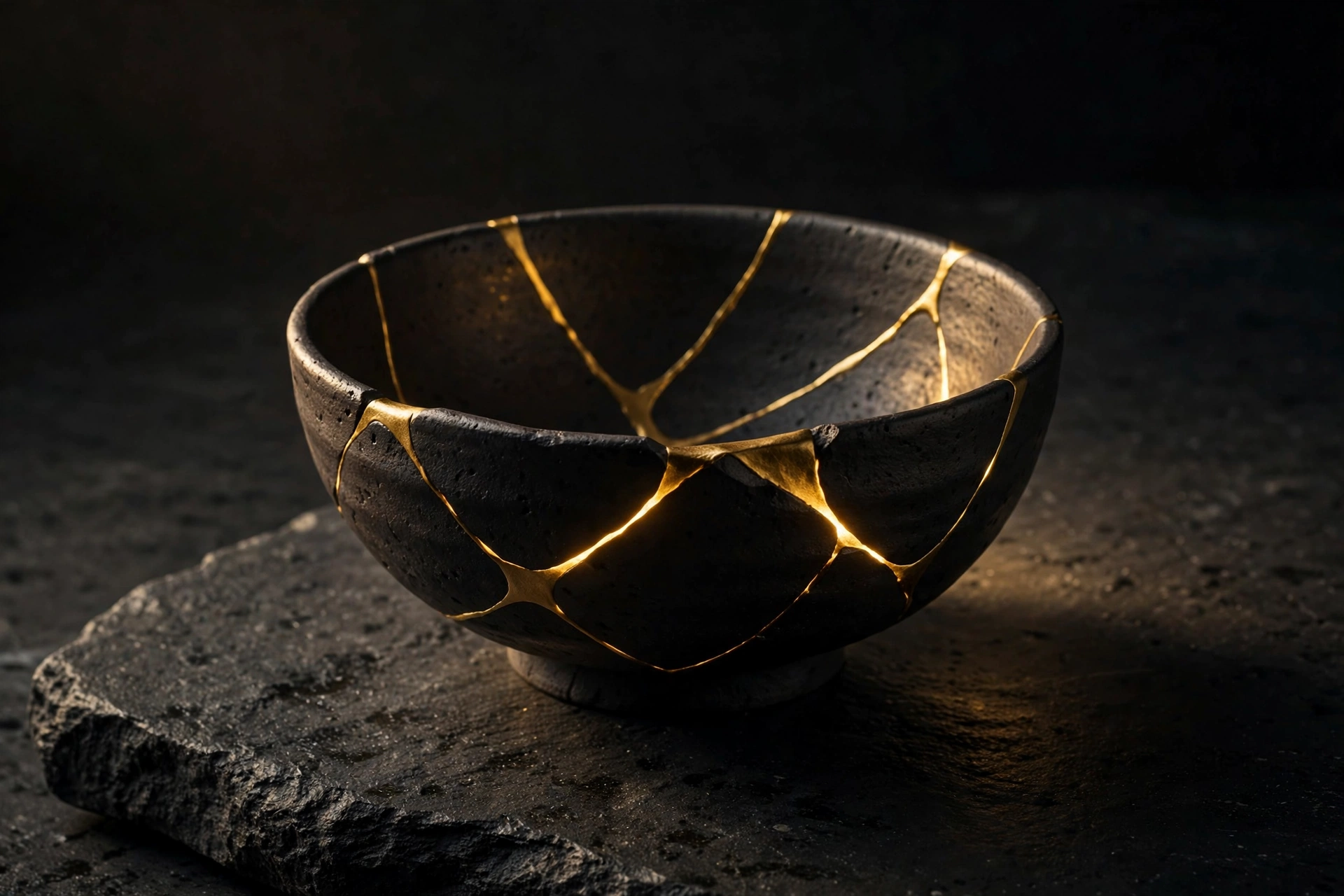
The most important section on this page, and the one the grim lists always miss: the broken who were put back together. Raised dead, healed wounds, reforged swords, a blind king’s mind restored — the kintsugi shelf, where the gold goes in the cracks.
| Name | Origin | Meaning | Note |
|---|---|---|---|
| Joseph | Hebrew | He will add | Sold by his brothers, imprisoned on a lie — and raised to save the family that broke him |
| Manasseh | Hebrew | Causing to forget | The wicked king who repented in chains and was restored to his throne |
| Naaman | Hebrew | Pleasant | The Syrian general whose leprosy was washed away in the Jordan |
| Miriam | Hebrew | (sister of Moses) | Struck with leprosy and healed after seven days outside the camp |
| Hannah | Hebrew | Grace | Whose years of barren grief ended with Samuel |
| Naomi | Hebrew | Pleasantness | Who came home bitter and empty and ended holding a grandson |
| Ruth | Hebrew | Friend | The widowed foreigner whose loyalty rebuilt a family line |
| Tabitha | Aramaic | Gazelle | The beloved seamstress Peter raised from the dead at Joppa |
| Eutychus | Greek | Fortunate | The young man who fell from a third-storey window at Paul’s sermon — and was taken up alive |
| Hezekiah | Hebrew | Yahweh strengthens | Turned his face to the wall on his deathbed and was given fifteen more years |
| Psyche | Greek | Soul; butterfly | Whose trials ended in apotheosis — the soul made whole and divine |
| Persephone | Greek | (queen of the underworld) | Whose yearly return from the dead is spring itself |
| Adonis | Greek / Semitic | Lord | Mourned and, in the old cults, yearly restored — the pattern of the dying-rising god |
| Tammuz | Sumerian | Faithful son | Dumuzi’s Akkadian name, wept for by women at the temple gate |
| Zagreus | Greek | (the first Dionysus) | The child god torn apart by Titans and reborn |
| Lemminkäinen | Finnish | (hero of the Kalevala) | Hacked to pieces in the river of death and raked together, piece by piece, by his mother |
| Pelops | Greek | (king of Pisa) | Served to the gods as a stew, restored to life with an ivory shoulder |
| Telephus | Greek | (king of Mysia) | Wounded by Achilles’ spear and healed by its rust — wounded by the same thing that cured him |
| Philoctetes | Greek | (archer) | Abandoned ten years with a festering wound, then healed and brought to win the war |
| Ahalya | Sanskrit | (wife of Gautama) | Turned to stone by a curse and released, in the telling, by Rama’s foot |
| Shakuntala | Sanskrit | (heroine) | Forgotten by her king under a curse, and restored when the ring was found |
| Savitri | Sanskrit | (princess) | Who followed Death himself and argued her dead husband back to life |
| Satyavan | Sanskrit | Truthful | The woodcutter prince restored to life by his wife’s wit |
| Nala | Sanskrit | (king of Nishadha) | Who lost kingdom and wife at dice and won both back in disguise |
| Damayanti | Sanskrit | Subduing | Abandoned sleeping in the forest, she engineered her own restoration |
| Sudama | Sanskrit | (friend of Krishna) | The starving friend whose handful of rice bought back a life |
| Zal | Persian | (the white-haired prince) | Exposed as a baby for his white hair, raised by the Simurgh, restored to his father |
| Bijan | Persian | (hero) | Thrown into a pit by Afrasiab and rescued by Rostam in disguise |
| Manijeh | Persian | (princess) | Who fed the prisoner in the pit and guided his rescue |
| Theoden | Anglo-Saxon | King; lord of men | The king bent double under a worm-tongue spell, who stood up straight and rode out singing |
| Eowyn | Anglo-Saxon | Horse joy | Whose despair sought death in battle, and who chose healing and the house of the healers |
| Owain | Welsh | (knight of the lion) | Driven mad by grief in the wild wood, healed, and restored by a lion’s friendship |
| Lleu | Welsh | Bright; light | Speared in eagle form, rotted on an oak — and gathered down and made a man again |
| Bors | Arthurian | (knight) | The one Grail knight who came back to Camelot to tell the story |
| Carton | English (literary) | (Sydney Carton) | The wasted lawyer of A Tale of Two Cities, who trades his broken life for another’s — ‘a far, far better thing’ |
| Valjean | French (literary) | (Jean Valjean) | The convict broken by nineteen years, rebuilt by one act of mercy |
| Rochester | English (literary) | (Edward Rochester) | Blinded and maimed in the fire that freed him, married at last as an equal |
| Aeson | Greek | (father of Jason) | Old and broken, restored to youth in Medea’s cauldron |
| Iolaus | Greek | (companion of Heracles) | Granted one day of renewed youth to fight for his city |
Names That Mean Healer, Healing and Made Whole
The natural companions of the broken: the healers. Physician gods, goddess-nurses of wounds, and the historical doctors of three continents — names that carry the promise that what is broken can be treated.
| Name | Origin | Meaning | Note |
|---|---|---|---|
| Raphael | Hebrew | God has healed | The archangel of healing, guide of the Book of Tobit |
| Asa | Hebrew | Physician; healer | The king of Judah whose name the tradition reads as healer |
| Paean | Greek | (the healer) | The physician of the Greek gods, later Apollo’s healing title |
| Aceso | Greek | Healing | The goddess of the healing process itself, daughter of Asclepius |
| Iaso | Greek | Cure; recovery | The goddess of cures and remedies |
| Panacea | Greek | Cure-all | The goddess whose name became the word for a remedy for everything |
| Hygeia | Greek | Health | Asclepius’s daughter — her name is the word ‘hygiene’ |
| Asclepius | Greek | (god of medicine) | The healer struck down for raising the dead, then set among the stars |
| Epione | Greek | Soothing | The goddess who soothes pain, wife of Asclepius |
| Airmid | Irish | (goddess of healing herbs) | Who gathered the 365 herbs that grew from her brother’s grave |
| Eir | Norse | Mercy; help | Named in the Eddas as the best of physicians |
| Mengloth | Norse | (goddess of healing) | The healer of the mountain Lyfjaberg, ‘the healing hill’ |
| Sulis | Celtic | (goddess of Bath) | The hot-spring goddess of Roman Britain, healer and curser both |
| Sirona | Celtic | (healing goddess) | The star-goddess of the healing springs of Gaul |
| Grannus | Celtic | (god of healing springs) | Apollo’s Celtic partner at the great spa sanctuaries |
| Borvo | Celtic | To boil; seethe | The god of bubbling healing waters |
| Lenus | Celtic | (healer god) | The great healing god of the Treveri |
| Nodens | Celtic | (god of healing) | The one-handed god whose temple kept a hospital of dreamers |
| Imhotep | Egyptian | He who comes in peace | The architect-physician deified as Egypt’s god of medicine |
| Thoth | Egyptian | (god of wisdom) | Who healed Horus’s torn eye and invented the arts of healing |
| Eshmun | Phoenician | (god of healing) | Sidon’s healing god, equated with Asclepius |
| Gula | Sumerian | The great one | Mesopotamia’s great goddess of healing |
| Ninisina | Sumerian | Lady of Isin | The healing goddess called ‘the great physician of the land’ |
| Bau | Sumerian | (goddess) | The mother goddess of healing and abundance |
| Ninkarrak | Sumerian | Lady of the wall | The dog-keeping healing goddess of Isin |
| Damu | Sumerian | The child | The young healing god who returns with the spring |
| Shennong | Chinese | Divine farmer | The emperor who tasted a hundred herbs to found medicine |
| Dhanvantari | Sanskrit | (physician of the gods) | Who rose from the churned ocean carrying the nectar of immortality |
| Ashvin | Sanskrit | Horseman | One of the twin horse-gods who are physicians to heaven |
| Charaka | Sanskrit | (physician) | Author of the Charaka Samhita, Ayurveda’s founding text |
| Sushruta | Sanskrit | Well-heard | The father of surgery, whose Samhita describes operations in detail |
| Jivaka | Pali / Sanskrit | (physician) | The Buddha’s own doctor, found abandoned as a baby |
| Gilead | Hebrew | (region of balm) | ‘Is there no balm in Gilead?’ — the place-name of healing itself |

How to Choose a Broken Name
Start by choosing which half of the story you are naming. A sorrow name — Dolores, Bronagh, Trista — is a real, everyday name in its home culture, carrying its meaning quietly. A fallen name — Lucifer, a watcher, a ruined king — is a statement, best weighed for characters, art and very confident babies. And a mended name — Lazarus, Shakuntala, Philoctetes — tells the whole arc in one word: broken, then restored. Parents choosing after loss, illness or a hard beginning overwhelmingly land in that third family, and the names that mean misfortune list covers the misfortune end of the same map.
Then check the story, not just the sound. These names are load-bearing: a name from the Greek or Norse sections comes with a specific tragedy attached, and your child will eventually read it. That is not a reason to avoid them — Deirdre and Sigurd have been loved for centuries — but it is a reason to choose the tragedy you actually want told. For the gentlest end of the theme, see girl names that mean survivor; for the loneliest, names that mean lonely.
Finally, say the full name aloud and imagine it at every age: shouted across a playground, printed on a degree, signed on a book. Sorrow names age beautifully because they were always adult names. Word names like Shard and Ruin are magnificent and demanding in equal measure. Choose the weight you want the name to carry — every name on this list can carry it.
Frequently Asked Questions
What name literally means broken?
Almost no classic given name does — languages rarely brand a child ‘broken’. The true literal entries are word names and surnames: the Arabic Maksur and the Turkish Kirik both mean ‘broken’ outright, and the Japanese art of mending broken pottery gives us Kintsugi, explained in the art of golden repair. The classic name Mallory goes closest, meaning ‘the unfortunate one’.
What is the most famous sorrow name?
Dolores, from Our Lady of Sorrows, has been a top name across the Spanish-speaking world for a century. Ireland’s entry is Deirdre, its tragic heroine of a thousand years, and the Bible’s is Mara — the name Naomi gives herself, meaning ‘bitter’, in the book of Ruth.
Are there positive names about being broken?
Yes — the restoration names. Lazarus and Joseph from scripture, Shakuntala and Savitri from India, Lemminkäinen reassembled by his mother in the Kalevala, and Philoctetes, healed at last and brought back to win the war. Our ‘Broken Then Mended’ section holds forty of them, and our names that mean anger list shows the fierce cousin of the same stories.
What name means broken for a girl?
For a literal sorrow meaning, the girl shelf is the richest on this page: Dolores and its family (Lola, Addolorata, Angustias), the Irish Bronagh, which derives from the word for sorrow itself, and Trista and Tristana from Latin tristis, sad.
What name means broken for a boy?
Tristan and its Welsh originals Tristram and Drystan lead the boy list, followed by the Arthurian knights who were undone by fate — Balin, Palamedes, Perceval — and the Bible’s afflicted, from blinded Samson to Mephibosheth, lame in both feet at the king’s table.
Conclusion
These 410 names trace the oldest arc there is: the fall, and the getting up. Sorrows in Spanish and Irish, a blind god’s eye, a sword reforged, a pot mended with gold. A broken name is not a curse — in culture after culture it is the name given by people who knew exactly what the breaking cost and chose the name anyway, because the story did not end there. Choose the chapter you want your name to live in — and if it is the mending chapter, wear the gold seams proudly.