330 Names That Mean Painful: Intense, Tormented and Sorrowful Names
Introduction
Some names shine; these names ache. Names that mean painful, sorrowful or grief belong to one of the oldest naming traditions on earth — the lament name, given in mourning, in memory, or in defiance of suffering. The Bible names a son Ben-Oni, ‘son of my sorrow’. Ireland keened over Naoise and Deirdre. Japan built a whole aesthetic, mono no aware, around the beautiful sadness of things. Pain names are not morbid decoration: they are how cultures honour what was lost and mark what was survived.
This list is built honestly. Every name below is real — a genuine given name, a suffering figure of myth or scripture, or the actual word for pain, sorrow or grief in its language, labelled as such. The pain words come first: algos and dolor, Dukkha and Acı, Pena and Dard. Then the great sufferers: Prometheus on his rock, Niobe turned to stone, Job on his ash heap. Then the saints of sorrow, the elegy names, the thorn and wound names, and the endurance names — the ones that mean ‘I went through pain and came out the other side’. Readers who want the ache without the darkness may prefer our gentler list of names that mean broken or the sharper names that mean pain.
A clear note before you choose: most of these names are for characters, stories, memorial naming or the bravest of real nurseries, and the notes say which is which. Every name appears exactly once.
Quick Picks: The 15 Most Striking Names That Mean Painful
| Name | Origin | Meaning |
|---|---|---|
| Dolores | Spanish | ‘Sorrows’ — Our Lady of Sorrows; the classic sorrow name |
| Tristan | Welsh / Celtic | ‘Sorrowful; tumult’ — the tragic lover of legend |
| Job | Hebrew | ‘Persecuted; the afflicted one’ — the Bible’s great sufferer |
| Mara | Hebrew | ‘Bitter’ — Naomi’s name of grief in the book of Ruth |
| Deirdre | Irish | ‘Sorrowful; raging’ — Deirdre of the Sorrows |
| Dolor | Spanish / Latin | ‘Pain’ — the raw pain word itself |
| Niobe | Greek | ‘Weeping’ — the mother turned to a weeping stone |
| Prometheus | Greek | ‘Forethought’ — the Titan chained and tormented for mankind |
| Bronwen | Welsh | ‘Fair breast’ — the tragic heroine of the Mabinogion |
| Jabez | Hebrew | ‘Born in pain’ — whose prayer reversed his sorrow |
| Dolora | Latin (rare) | ‘Sorrow’ — a rare direct form of the Dolores root |
| Algia | Greek | ‘Pain’ — the Greek pain root as a name |
| Persephone | Greek | ‘Bringer of destruction’ (folk) — queen of the dead, mourned half the year |
| Ben-Oni | Hebrew | ‘Son of my sorrow’ — Rachel’s dying name for her son |
| Desdemona | Greek | ‘Ill-fated, wretched’ — Shakespeare’s tragic heroine |
Names That Literally Mean Pain — Pain Words of the World
The purest entries in this article: the actual words for pain, suffering and sorrow, gathered from languages on every continent. Each note says whether the word is an established name at home or a raw word name better suited to fiction.
| Name | Origin | Meaning | Note |
|---|---|---|---|
| Dolore | Italian | Pain, sorrow | The Italian pain word; a poetic name choice — cousin of Dolores in Quick Picks |
| Douleur | French | Pain | The French pain word — a stark word name for fiction |
| Schmerz | German | Pain | The German pain word; raw word name only |
| Pena | Spanish / Portuguese | Sorrow, pain; penalty | An everyday word; in Portuguese also a feather — read the note before use |
| Pina | Germanic (folk form) | Pain (root) | Historically linked to Old High German pina, ‘pain, torment’ |
| Acı | Turkish | Pain, bitterness | Pronounced ah-JUH; a raw Turkish word name |
| Dard | Persian / Urdu | Pain | The great Urdu poetic word for heartache — dard-e-dil, pain of the heart |
| Elem | Hungarian / Turkish | Pain, suffering | In Hungarian elem means element; the pain reading is Ottoman Turkish |
| Izdırap | Turkish | Torment, agony | A literary Turkish word name for deep suffering |
| Bol | Slavic | Pain | The pain word across Russian and South Slavic languages; raw word name |
| Bolek | Polish / Slavic | Pain (diminutive link) | A Slavic name historically tied to the bol root in folk etymology |
| Muka | Slavic / Indonesian | Torment (Slavic); face (Indonesian) | In Slavic languages muka is torment; handle with care |
| Kədər | Azerbaijani | Grief, sorrow | Azerbaijan’s grief word; a poetic word name |
| Qəm | Azerbaijani | Sorrow | A short grief word name from the Caucasus |
| Dərd | Azerbaijani | Pain | The Azerbaijani form of Dard |
| Dukkha | Pali / Sanskrit | Suffering, unsatisfactoriness | The First Noble Truth of Buddhism — suffering itself |
| Duhkha | Sanskrit | Suffering | The Sanskrit spelling of the same great word |
| Vedana | Sanskrit | Feeling; pain sensation | In Buddhist texts, vedana is sensation — pleasant, unpleasant or neutral |
| Shoka | Sanskrit | Grief, sorrow | The Sanskrit grief word; Rama’s father’s death was ascribed to shoka |
| Vyatha | Sanskrit | Pain, agitation | A classical Sanskrit pain word |
| Peeda | Sanskrit / Hindi | Pain, affliction | The everyday Hindi pain word (peeda) |
| Kasht | Sanskrit / Hindi | Hardship, suffering | From kashta — difficulty and suffering endured |
| Santap | Sanskrit / Hindi | Anguish, burning grief | From santapa, the heat of grief |
| Vishad | Sanskrit | Despondency, sorrow | Arjuna’s despondency in the Gita is vishada |
| Kuri | Japanese | Suffering (Buddhist term) | From ku, suffering — one of the Buddhist truths |
| Kurushimi | Japanese | Suffering | The Japanese word for suffering itself; a word name for fiction |
| Kanashimi | Japanese | Sadness, sorrow | Japan’s sorrow word — the root of the aesthetic of mono no aware |
| Tung | Chinese (Cantonese root) | Pain | The Cantonese reading of the pain character 痛 |
| Tong | Chinese (Mandarin) | Pain | The Mandarin pain word (tòng); also a surname — read carefully |
| Ache | English | A dull pain | The English ache word, a surname and a stark word name |
| Anguish | English / Latin | Severe pain, distress | A bold English word name from angustia, ‘narrowness’ |
| Torment | English / Latin | Severe suffering | A raw word name — fiction only |
| Agony | English / Greek | Extreme pain; struggle | From Greek agonia, a contest — pain as struggle |
| Woe | English | Grief, sorrow | An Old English lament word, used as a stark name in fiction |
| Teen | Scots / Old English | Sorrow, grief | An old Scots word for sorrow — not the modern ‘teen’ |
| Sorg | Scandinavian / German | Sorrow, care | The sorrow word behind German Sorge and Swedish sorg |
| Sorgen | German (poetic) | Sorrows, cares | A poetic plural word name |
| Tunga | Norse / African (word) | Heavy, burdensome | In Old Norse þungi is heaviness and affliction |
| Kalvari | Finnish (folk) | Suffering (Calvary link) | A folk form tied to Golgotha — the place of suffering |
| Tuska | Finnish | Pain, agony | Finland’s strong pain word — also a famous metal festival’s name |
| Kipu | Finnish | Pain | The everyday Finnish pain word; a crisp word name |
Greek and Latin Pain Names
Greek gave medicine its pain vocabulary — algos, odyne, ponos — and mythology its great sufferers. These are the classical pain roots and the names built on them.
| Name | Origin | Meaning | Note |
|---|---|---|---|
| Algos | Greek | Pain | The Greek pain word itself; in myth, the Algea are its spirits |
| Algea | Greek | Pains, sorrows | The spirits of pain and grief, daughters of Eris |
| Algedon | Greek | Pain (medical coinage) | A rare term for pain perception; a scholarly word name |
| Algimantas | Lithuanian | Pain + wisdom (folk) | A Lithuanian name whose first element is read with the alg- root |
| Algis | Lithuanian | Messenger; (folk: pain root) | A popular Lithuanian boy’s name — properly a herald’s name, folk-linked to algos |
| Algina | Lithuanian (feminine) | Of Algis | The feminine form of Algis |
| Ponos | Greek | Toil, suffering | The Greek spirit of hardship and toil, brother of the Algea |
| Oizys | Greek | Misery, grief | The goddess of misery, a daughter of Night |
| Achlys | Greek | Mist of death; sorrow | The primordial sorrow — the mist before the eyes of the dying |
| Penthos | Greek | Grief, mourning | The Greek spirit of grief and lamentation |
| Pentheus | Greek | Man of sorrows | The Theban king whose name is built on penthos — torn apart in the Bacchae |
| Lupe | Greek | Pain, grief | One of the four passions in Greek philosophy — distress |
| Ania | Greek | Distress, trouble | A spirit of distress; also a Slavic form of Anna — read the origin |
| Achos | Greek | Distress, anguish | The Greek word for mental anguish |
| Odyne | Greek | Pain | The medical suffix -odyne — a scholarly word name |
| Odyn | Norse (the god) | Frenzy | Odin’s own name means frenzy-ecstasy, not pain — included to correct a common mislisting |
| Dolente | Italian | Sorrowful, aching | The Italian word for one who grieves — a poetic word name |
| Addolorata | Italian | The Sorrowful One | An Italian devotional name honouring the Madonna Addolorata |
| Lola | Spanish | Sorrows (pet form) | The famous short form of Dolores (in Quick Picks) |
| Lolita | Spanish | Little Lola | A diminutive of Dolores, shadowed by Nabokov — handle with care |
| Dolorita | Spanish (rare) | Little sorrow | A rare diminutive of Dolores found in older records |
| Marisol | Spanish | Mary of Solitude | María de la Soledad — the Virgin of Solitude, a sorrow title |
| Soledad | Spanish | Solitude | Our Lady of Solitude — sorrow in lonely form |
| Angustias | Spanish | Anguishes | From Our Lady of Angustias — Nuestra Señora de las Angustias |
| Amargura | Spanish | Bitterness | A Semana Santa title — the Virgin of Bitterness of Seville |
| Piedad | Spanish | Pity, piety | The Pietà — the mother holding her dead son; a devotional name |
| Tristana | Spanish (literary) | Sorrowful (feminine) | Galdós’ heroine — a literary form of Tristan |
Suffering Figures of Myth and Legend
The great sufferers of world mythology — chained, transformed, bereaved and betrayed. These are story names of real weight, mostly for characters and the boldest nurseries.
| Name | Origin | Meaning | Note |
|---|---|---|---|
| Epimetheus | Greek | Afterthought | Brother of Prometheus (in Quick Picks), who accepted Pandora |
| Tantalus | Greek | The tantalised | Tormented eternally by water and fruit just out of reach |
| Sisyphus | Greek | The endless labourer | Condemned to roll his boulder forever |
| Ixion | Greek | The wheel-bound | Bound to a burning wheel in Tartarus |
| Philoctetes | Greek | Lover of possession | Abandoned ten years on Lemnos with a wound that would not heal |
| Phineus | Greek | The blinded seer | Blinded, starved, tormented by Harpies at his own table |
| Actaeon | Greek | The torn hunter | Turned into a stag and torn apart by his own hounds |
| Marsyas | Greek | The flayed satyr | Flayed alive for challenging Apollo’s music |
| Arachne | Greek | Spider | Turned into a spider for weaving the gods’ crimes into her tapestry |
| Cassandra | Greek | The unbelieved prophetess | Cursed to foresee truly and never be believed |
| Kassandra | Greek (spelling form) | The unbelieved prophetess | The Greek K spelling — a traditional form, not a respelling trick |
| Hecuba | Greek | Queen of woes | Troy’s queen, who lost husband, children and city |
| Andromache | Greek | Man-battler | Hector’s widow, who watched her son thrown from Troy’s walls |
| Medea | Greek | Plans, cunning | The betrayed sorceress whose revenge became horror |
| Electra | Greek | Amber; shining | The grieving daughter whose mourning drove revenge |
| Orestes | Greek | Mountain-dweller | Electra’s brother, hunted by the Furies for his mother’s murder |
| Antigone | Greek | Against birth; unbending | Buried her brother against the law and was walled up alive |
| Oedipus | Greek | Swollen-foot | The king whose prophecy of pain fulfilled itself |
| Iphigenia | Greek | Strong-born | The daughter sacrificed at Aulis so the fleet could sail |
| Polyxena | Greek | Many strangers | Priam’s daughter, sacrificed on Achilles’ tomb |
| Laocoon | Greek | The crushed priest | Crushed with his sons by sea serpents for warning Troy |
| Procne | Greek | The nightingale | Turned into a nightingale, singing her grief forever |
| Philomela | Greek | Lover of song | Procne’s sister, whose woven tapestry told her violation |
| Itys | Greek | The lost child | Philomela’s nephew, the child lost to the sisters’ revenge |
| Phaedra | Greek | Bright | The queen destroyed by forbidden love and a false accusation |
| Ariadne | Greek | Most holy | Abandoned by Theseus on Naxos after saving him |
| Aerope | Greek | The betrayed queen | Atreus’ wife, whose betrayal seeded the house’s curse |
| Thyestes | Greek | The fed father | Fed his own children at his brother’s table |
| Atreus | Greek | Fearless | The brother who served that feast — the curse of the house begins here |
| Pelops | Greek | The reassembled | Served to the gods by his father and rebuilt with an ivory shoulder |
| Chrysippus | Greek | Golden horse | Pelops’ son, whose abduction cursed two royal houses |
| Laius | Greek | The piercer (folk) | Oedipus’ father, who pierced his infant son’s ankles |
| Jocasta | Greek | Shining moon | Oedipus’ mother and wife — tragedy’s most painful discovery |
| Clytemnestra | Greek | Famed wooing | The queen who murdered Agamemnon and was murdered by her son |
| Agamemnon | Greek | Very steadfast | The king sacrificed his daughter and was killed in his bath |
| Menelaus | Greek | The wronged husband | Helen’s husband, whose loss launched a thousand ships |
| Helen | Greek | Torch; bright | The face of Troy’s suffering — abducted, blamed, mourned |
| Helena | Greek / Latin | Torch; bright | The fuller classical form of Helen |
| Paris | Greek | The abductor | The prince whose choice and arrow doomed his city |
| Hector | Greek | Holding fast | Troy’s noblest defender, dragged behind Achilles’ chariot |
| Astyanax | Greek | Lord of the city | Hector’s infant son, thrown from the walls he would have ruled |
| Achilles | Greek | Grief of the people (folk: akhos + laos) | His name is folk-read as ‘pain of the host’ — the hero of grief and rage |
| Patroclus | Greek | Glory of the father | Achilles’ beloved, whose death broke the hero’s heart |
| Priam | Greek | The ransomed | The old king who knelt to beg for his son’s body |
| Deiphobus | Greek | Fear of the host | The brother betrayed by Athena’s disguise in his last fight |
| Psyche | Greek | Soul | Tormented by Venus’ tasks for loving Cupid |
| Echo | Greek | Sound | Cursed to only repeat, wasting away for unreturned love |
| Narcissus | Greek | Numbness (narkē) | His flower grew where he pined to death — narkē means numbness |
Suffering Names from the Bible
Scripture is full of lament names — children named out of grief, famine, exile and loss. These are the Bible’s pain names, each with its story.
| Name | Origin | Meaning | Note |
|---|---|---|---|
| Ichabod | Hebrew | ‘The glory has departed’ | Named at the moment of national and family catastrophe |
| Lo-Ruhamah | Hebrew | ‘Not pitied’ | Hosea’s daughter — a sign-name of judgement; a story name only |
| Lazarus | Hebrew / Greek | ‘God has helped’ | The beggar covered in sores at the rich man’s gate |
| Lazar | Serbian / Hebrew | ‘God has helped’ | The traditional Slavic form of Lazarus |
| Eleazar | Hebrew | ‘God has helped’ | Aaron’s son, and the martyr of 2 Maccabees who died under torture |
| Hagar | Hebrew / Egyptian | ‘Flight; stranger’ | The slave mother driven into the wilderness with her child |
| Ishmael | Hebrew | ‘God hears’ | Hagar’s son, heard crying in the desert |
| Manasseh | Hebrew | ‘Causing to forget’ | Joseph’s son — named for the pain God made him forget |
| Ephraim | Hebrew | ‘Fruitful’ | Named in the land of Joseph’s affliction |
| Beriah | Hebrew | ‘In misfortune’ | Ephraim named him ‘because it went ill with his house’ |
| Dinah | Hebrew | ‘Judged; vindicated’ | Jacob’s daughter, whose story in Genesis 34 is one of violation and vengeance |
| Tamar | Hebrew | ‘Date palm’ | Two Tamars suffer in scripture — David’s daughter and Judah’s daughter-in-law |
| Absalom | Hebrew | ‘Father of peace’ | David’s rebellious son, mourned with scripture’s most famous lament |
| Adonijah | Hebrew | ‘My lord is Yahweh’ | David’s son, executed after Solomon’s accession |
| Amnon | Hebrew | ‘Faithful’ | David’s firstborn, whose crime against Tamar brought civil war |
| Chileab | Hebrew | ‘Like the father’ | David’s forgotten second son, who vanishes from the record |
| Jedidiah | Hebrew | ‘Beloved of the LORD’ | Solomon’s second name, given after his brother’s death |
| Uriah | Hebrew | ‘The LORD is my light’ | The loyal soldier David sent to die |
| Bathsheba | Hebrew | ‘Daughter of the oath’ | Uriah’s wife — grief and scandal made her a queen |
| Nabal | Hebrew | ‘Fool’ | The churlish husband whose name was his character |
| Mephibosheth | Hebrew | ‘From the mouth of shame’ | Jonathan’s lame son, orphaned by war at five |
| Ziba | Hebrew | ‘Statue; plant’ | Mephibosheth’s servant, who betrayed him in his affliction |
| Rizpah | Hebrew | ‘Hot stone; coal’ | The mother who guarded her executed sons’ bodies for months |
| Gomer | Hebrew | ‘Complete’ | Hosea’s wife, whose unfaithfulness pictured a nation’s pain |
| Jeremiah | Hebrew | ‘The LORD exalts’ | The weeping prophet, author of Lamentations |
| Ezekiel | Hebrew | ‘God strengthens’ | The prophet forbidden to mourn his own wife’s death |
| Baruch | Hebrew | ‘Blessed’ | Jeremiah’s scribe, who wrote the lamentations down — blessed name, sorrowful office |
| Gedaliah | Hebrew | ‘God is great’ | The governor murdered after Jerusalem’s fall |
| Jehoiachin | Hebrew | ‘The LORD establishes’ | The boy-king exiled to Babylon for 37 years |
| Zedekiah | Hebrew | ‘The LORD is my righteousness’ | Blinded after watching his sons executed — Judah’s last king |
Celtic and Northern Sorrow Names
The Celtic world made an art of lament — keening, elegy, the sorrowful heroine. The North kept its grief in the sagas. These are their pain names.
| Name | Origin | Meaning | Note |
|---|---|---|---|
| Deirdra | Irish (variant) | ‘Sorrowful’ | A rare traditional spelling variant of Deirdre (in Quick Picks) |
| Naoise | Irish | ‘Warrior (folk)’ | Deirdre’s lover, killed by Conchobar’s treachery |
| Branwen | Welsh (older form) | ‘Blessed raven’ | The fuller Welsh form of Bronwen (in Quick Picks) — the tragic queen of the Mabinogion |
| Bran | Welsh | ‘Raven’ | Bran the Blessed, whose severed head protected Britain |
| Matholwch | Welsh | ‘(obscure)’ | The Irish king whose cruelty to Branwen began the war |
| Tristram | English (literary) | ‘Sorrowful’ | Malory’s spelling of Tristan (in Quick Picks) in Le Morte d’Arthur |
| Isolde | German / Celtic | ‘Ice ruler (folk)’ | Tristan’s beloved — the other half of the sorrow |
| Iseult | French / Celtic | ‘Ice ruler (folk)’ | The French form of Isolde |
| Yseult | French (archaic) | ‘Ice ruler (folk)’ | The medieval French spelling |
| Mark | Cornish / Latin | ‘Of Mars’ | King Mark, the husband betrayed by Tristan and Isolde |
| Grania | Irish | ‘Love (grainne)’ | Gráinne, who fled Diarmaid and caused his death — love as calamity |
| Diarmaid | Irish | ‘Freeman (folk)’ | Diarmuid of the love-spot, hunted to death by Fionn |
| Fionn | Irish | ‘Fair, white’ | The aging hero who hunted his young rival out of jealousy |
| Oisin | Irish | ‘Little deer’ | Fionn’s son, the poet who returned from Tir na nOg to a lost world |
| Niamh | Irish | ‘Bright’ | Oisín’s fairy wife — their parting is Ireland’s great leave-taking |
| Emer | Irish | ‘Swift (folk)’ | Cú Chulainn’s wife, who endured his madness and his other loves |
| Ferdiad | Irish | ‘Spear-man (folk)’ | Cú Chulainn’s foster-brother, forced to fight him to the death |
| Conaire | Irish | ‘(obscure)’ | The doomed high king of the Destruction of Da Derga’s Hostel |
| Etain | Irish | ‘Jealousy (folk)’ | Étaín, transformed into a fly and a pool by a jealous rival |
| Mis | Irish | ‘(legendary)’ | The madwoman of the Sliabh Mis legend, driven wild by grief at her father’s death |
| Goll | Irish | ‘One-eyed’ | Goll mac Morna, the one-eyed rival of Fionn |
| Bricriu | Irish | ‘Speckled’ | Bricriu of the Poisoned Tongue, the troublemaker of Ulster tales |
| Gudrun | Norse | ‘War rune’ | The Völsunga heroine who lost husband, brothers and sons, and ate her own children’s hearts |
| Brynhild | Norse | ‘Armour battle’ | The valkyrie who burned on Sigurd’s pyre beside him |
| Sigurd | Norse | ‘Victory guardian’ | The dragon-slayer murdered in his bed by his brothers-in-law |
| Signy | Norse | ‘New victory’ | The Völsung twin who burned with her husband to avenge her family |
| Sigmund | Norse | ‘Victory protection’ | Signy’s twin, father of Sigurd, killed by Odin’s own spear |
| Sinfiotli | Norse | ‘(obscure)’ | Sigmund’s son, poisoned by his stepmother |
| Hagen | German | ‘Enclosure’ | The Nibelungenlied’s grim, loyal murderer of Siegfried |
| Kriemhild | German | ‘Mask battle’ | Gudrun’s German form — the widow whose revenge destroyed two kingdoms |
| Balder | Norse | ‘Prince; brave’ | The beloved god whose death by mistletoe began the end of the world |
| Hodr | Norse | ‘Warrior’ | The blind god tricked into killing his brother Balder |
| Nanna | Norse / Mesopotamian | ‘Daring (folk)’ | Balder’s wife, who died of grief and burned beside him |
| Frigg | Norse | ‘Beloved’ | The mother who bargained with all creation to save Balder — and missed the mistletoe |
| Hel | Norse | ‘The hidden’ | Queen of the dead, half alive and half corpse — she kept Balder in her hall |
| Ran | Norse | ‘Robbery’ | The sea goddess whose net drowned sailors without mercy |
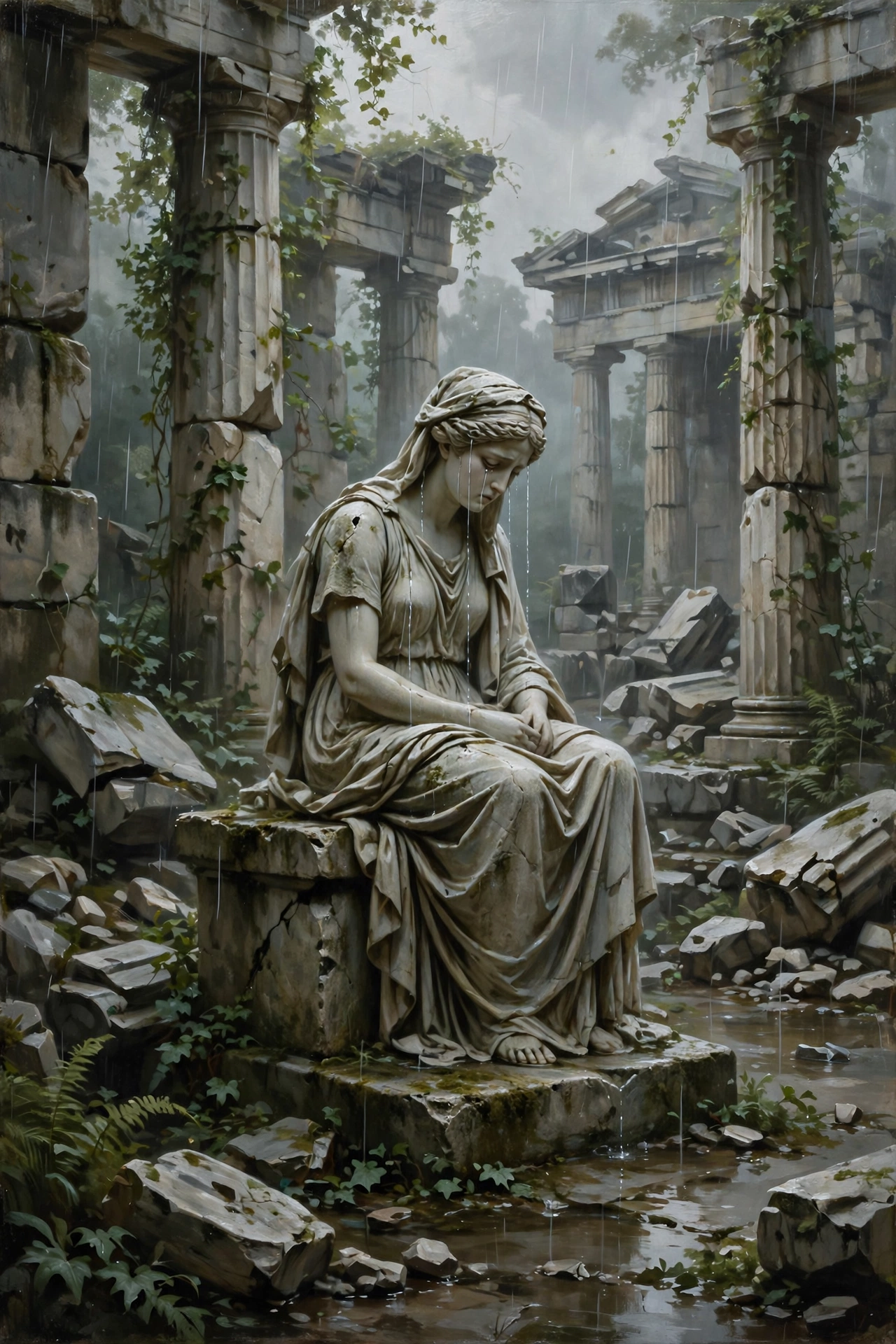
Saints of Sorrow, Elegy Names and Mourning Names
Every culture keeps a shelf of names for mourning: the saints who specialised in sorrow, the elegies that became names, and the memorial names given after loss.
| Name | Origin | Meaning | Note |
|---|---|---|---|
| Perpetua | Latin | ‘Everlasting’ | The young mother martyred at Carthage, leaving her baby behind |
| Felicitas | Latin | ‘Happiness’ | Perpetua’s fellow martyr — a slave, seven months pregnant in prison |
| Felicity | English / Latin | ‘Happiness’ | The English form of Felicitas |
| Blandina | Latin | ‘Charming’ | The slave girl of Lyon whose endurance under torture amazed her executioners |
| Apollonia | Greek | ‘Of Apollo’ | The martyr whose teeth were smashed — patron of dentists and toothache |
| Agatha | Greek | ‘Good’ | The Sicilian martyr, patroness of breast disease and suffering women |
| Lucia | Latin | ‘Light’ | St Lucy, whose eyes were put out — light named out of darkness |
| Lucy | English / Latin | ‘Light’ | The everyday form of Lucia |
| Barbara | Greek | ‘Foreign woman’ | Imprisoned in a tower and executed by her own father |
| Cecilia | Latin | ‘Blind’ | The patroness of music, martyred by suffocation and the sword |
| Cecily | English / Latin | ‘Blind’ | The English form of Cecilia |
| Philomena | Greek | ‘Lover of strength’ | The child martyr of the catacombs, patroness of hopeless causes |
| Dymphna | Irish | ‘Poet; fawn (folk)’ | The Irish girl martyr, patroness of those who suffer in mind |
| Rita | Italian / Latin | ‘Pearl’ | St Rita of Cascia — patroness of impossible causes and wounded spouses |
| Monica | Latin / Berber (folk) | ‘Adviser’ | St Monica, who wept for her wayward son Augustine for seventeen years |
| Augustine | Latin | ‘Great, venerable’ | Monica’s son — his Confessions are the fruit of her tears |
| Jerome | Greek | ‘Sacred name’ | The grieving scholar of Bethlehem, translator of the Vulgate |
| Ephrem | Syriac / Hebrew | ‘Fruitful’ | Ephrem the Syrian, the Harp of the Holy Spirit, poet of paradise and loss |
| Manoah | Hebrew | ‘Rest’ | Samson’s father, who received the angel’s news with trembling — rest named out of barren sorrow |
| Nehemiah | Hebrew | ‘The LORD comforts’ | The rebuilder of Jerusalem’s walls, whose memoir opens with weeping |
| Nahum | Hebrew | ‘Comforter’ | The prophet of comfort whose name is consolation itself |
| Noah | Hebrew | ‘Rest, comfort’ | The flood survivor — comfort shelved beside sorrow for the world he lost |
| Menachem | Hebrew | ‘Comforter’ | The traditional Jewish name given to boys born after a loss in the family |
| Nechemya | Hebrew | ‘Comfort of God’ | A fuller form of the Nehemiah comfort name |
| Tanchum | Hebrew | ‘Consolation’ | A rabbi’s name from the comfort root — given in mourning seasons |
| Nehama | Hebrew | ‘Consolation (feminine)’ | A rare feminine comfort name |
| Consolata | Italian / Latin | ‘Consoled’ | From Our Lady of Consolation of Turin — a memorial Madonna name |
| Consolacion | Spanish | ‘Consolation’ | The Spanish devotional consolation name |
| Remedios | Spanish | ‘Remedies’ | Our Lady of Remedies — the cure named out of the sickness |
| Amparo | Spanish | ‘Shelter, protection’ | Our Lady of the Forsaken’s title — shelter for the abandoned |
| Desamparados | Spanish | ‘The forsaken ones’ | Valencia’s patroness is the Virgin of the Forsaken — a name of raw grief |
| Dolors | Catalan | ‘Sorrows’ | The Catalan form of Dolores |
Girl Names That Mean Painful and Sorrowful
For girls, sorrow naming has a long, tender history — from the Madonna of Sorrows to Ireland’s lament heroines. Sound often hides the sadness; the notes do not.
| Name | Origin | Meaning | Note |
|---|---|---|---|
| Ophelia | Greek | ‘Help’ | Shakespeare’s drowned heroine — not a pain word, but literature’s emblem of grief |
| Cordelia | Welsh / Latin | ‘Heart; daughter of the sea’ | Lear’s truthful daughter, carried dead in her father’s arms |
| Lenora | Greek / Spanish | ‘Light; compassion (folk)’ | Poe’s lost Lenore in Spanish dress |
| Lenore | Greek (via Eleanor) | ‘Light’ | Poe’s ‘rare and radiant maiden’ the angels named Lenore |
| Annabel | Latin / Hebrew | ‘Gracious beauty’ | Poe’s Annabel Lee, dead by the sea in the poem |
| Ulalume | Latin (coined by Poe) | ‘Wail (lumen/wail folk)’ | Poe’s invented name for his ballad of grief — a deliberate literary coinage |
| Morella | Latin (Poe) | ‘Death (folk)’ | Poe’s dying-and-returning wife — a story name |
| Ligeia | Greek | ‘Clear-voiced’ | Poe’s lost lady, whose will would not let her stay dead |
| Berenice | Greek | ‘Victory-bringer’ | Poe’s doomed bride in the tale of obsession |
| Brona | Irish | ‘Sorrow’ | A genuine Irish sorrow name — from brón, grief |
| Bronagh | Irish | ‘Sorrowful’ | The anglicised form of Brónach — St Bronagh of Ireland |
| Dores | Portuguese | ‘Sorrows’ | The Portuguese form of Dolores |
| Dolorcitas | Spanish (rare diminutive) | ‘Little sorrows’ | An old diminutive of Dolores in Spanish records |
| Trista | Spanish / Italian | ‘Sad (feminine)’ | The feminine of triste — literally ‘the sad one’ |
| Triste | Spanish | ‘Sad’ | A raw word name — fiction only |
| Tristina | Italian (rare) | ‘Sorrowful’ | A rare feminine elaboration of Tristan found in Italian records |
| Tristessa | Spanish (literary) | ‘Sadness’ | The title figure of a Kerouac novella — sorrow named outright |
| Delores | Spanish (anglicised spelling) | ‘Sorrows’ | The common American spelling of Dolores |
| Mallory | French | ‘Unfortunate’ | From Old French malheure — ‘the ill-fated one’, a genuine sorrow-meaning surname-name |
| Mallorie | French (variant) | ‘Unfortunate’ | A spelling variant of Mallory |
| Alala | Greek | ‘War-cry’ | The Greek war-cry personified — pain’s battle shout |
| Alastora | Greek (feminine, rare) | ‘Avenging spirit’ | A rare feminine of Alastor, the avenger |
| Morgause | Arthurian | ‘(obscure)’ | Arthur’s half-sister, mother of his doom |
| Morgana | Welsh | ‘Sea-born (folk)’ | Morgan le Fay in Italian dress — the enchantress of Arthur’s fall |
| Morgaine | French (literary) | ‘Sea-born (folk)’ | The literary form of Morgan — Marion Zimmer Bradley’s mourning priestess |
Boy Names That Mean Painful and Sorrowful
Boy sorrow names run from prophets to tragic heroes to the great sufferers of saga and stage.
| Name | Origin | Meaning | Note |
|---|---|---|---|
| Alastor | Greek | ‘Avenger; tormentor’ | The spirit of vengeance that haunts a guilty house |
| Algie | English (diminutive) | ‘Pain (folk link)’ | A diminutive long folk-linked in name books to the alg- pain root |
| Algan | Breton (rare) | ‘(obscure)’ | A rare Breton name sometimes folk-linked to suffering |
| Pellinore | Arthurian | ‘(obscure)’ | The king who chased the Questing Beast all his life, killed by Gawain’s sons |
| Pelleas | Arthurian | ‘(obscure)’ | The knight betrayed by his friend and his lady, who died of the grief of it |
| Percival | Welsh / French | ‘Pierce the valley’ | The innocent who failed to ask the question that would heal the wounded king |
| Anfortas | Arthurian (Wagner) | ‘(obscure)’ | The wounded Fisher King of Parsifal, waiting in pain for the fool’s question |
| Gawain | Welsh | ‘White hawk (folk)’ | The knight shamed by the Green Knight’s game and his own lapse |
| Gaheris | Arthurian | ‘(obscure)’ | Gawain’s brother, killed by Lancelot in the rescue of the queen |
| Gareth | Welsh | ‘Gentle (folk)’ | The kind brother, also killed by Lancelot who did not know him |
| Agravain | Arthurian | ‘(obscure)’ | The brother who exposed Lancelot and Guinevere out of spite |
| Mordred | Welsh | ‘Sea lord (folk)’ | Arthur’s son and destroyer — father and son killed each other |
| Accolon | Arthurian | ‘(obscure)’ | Morgan’s lover, killed by Arthur with his own stolen sword |
| Uther | Welsh | ‘Terrible’ | Uther Pendragon — his epithet means ‘the terrible one’ |
| Kay | Welsh | ‘(obscure)’ | Arthur’s foster-brother, the sharp-tongued seneschal |
| Bedivere | Welsh | ‘Birch-man (folk)’ | The last knight, who threw Excalibur into the lake |
| Lucan | Latin | ‘From Lucania’ | The knight who died of his wounds after the last battle |
| Constantine | Latin | ‘Steadfast’ | The British king who succeeded Arthur amid the ruin |
| Maelgwn | Welsh | ‘Princely lord’ | The ‘dragon of Anglesey’, rebuked by Gildas for his sins |
| Vortigern | British | ‘Great lord’ | The king blamed for inviting the Saxons — Britain’s sorrow begins with him |
| Urien | Welsh | ‘Privileged birth (folk)’ | The king of Rheged, assassinated at his moment of victory |
| Owain | Welsh | ‘Well-born’ | Urien’s son, hero of The Lady of the Fountain |
| Peredur | Welsh | ‘Warrior (folk)’ | The Welsh Percival — the original of the wounded-king story |
| Gwalchmai | Welsh | ‘Hawk of May’ | The Welsh Gawain, Arthur’s nephew |
| Culhwch | Welsh | ‘Hog run’ | The cursed suitor who won Olwen through impossible tasks |
| Huwawa | Mesopotamian | ‘(guardian)’ | Humbaba in another reading — the cedar forest guardian Gilgamesh killed |
Japanese Names That Mean Pain and Sorrow
Japanese treats pain naming with unusual honesty: words for suffering exist, but real naming uses kanji, story and the aesthetics of impermanence. This table labels each entry for what it is.
| Name | Origin | Meaning | Note |
|---|---|---|---|
| Kurumi | Japanese | ‘Walnut; (fiction: come-pain kanji)’ | A real girl’s name meaning walnut; fiction writers re-read it with pain kanji |
| Itami | Japanese (surname/word) | ‘Pain’ | Itami is a real Japanese surname and the pain word (itami) — city and surname |
| Yamai | Japanese (word) | ‘Illness’ | The sickness word — a word name for fiction |
| Setsuna | Japanese | ‘Moment; (folk: painful instant)’ | From the Buddhist ‘moment’ — popularly linked to setsunai, ‘painful, heart-rending’ |
| Setsunai | Japanese (word) | ‘Painful, heart-rending’ | The adjective itself — a raw word name |
| Urei | Japanese (word) | ‘Sorrow, grief’ | A literary sorrow word, read urei |
| Rokujo | Japanese (literary) | ‘Sixth Avenue’ | Lady Rokujo, the Genji character whose jealous grief turned her into a living ghost |
| Yugao | Japanese (literary) | ‘Evening flower’ | Genji’s fragile lover who died of a spirit’s jealousy |
| Aoi | Japanese | ‘Hollyhock’ | Genji’s wife, killed by Rokujo’s living spirit — a sorrow story name |
| Murasaki | Japanese | ‘Purple’ | Genji’s great love, whose long decline is the novel’s deepest sorrow |
| Utsusemi | Japanese (literary) | ‘Empty cicada shell’ | A Genji lady named for emptiness and leaving |
| Suetsumuhana | Japanese (literary) | ‘Safflower’ | Genji’s most mocked and most pitied lady |
| Oborozukiyo | Japanese (literary) | ‘Hazy moon night’ | A Genji lady of a single sorrowful night |
| Kashiwagi | Japanese (literary) | ‘Oak tree’ | The Genji character who wasted away from guilt and forbidden love |
| Kaoru | Japanese | ‘Fragrance’ | Genji’s supposed son, whose secret parentage is his lifelong quiet sorrow |
| Niou | Japanese (literary) | ‘Scented (prince)’ | Kaoru’s rival-friend, the ‘Perfumed Prince’ |
| Ukifune | Japanese (literary) | ‘Floating boat’ | The heroine torn between Kaoru and Niou, who chose the convent over both |
Thorn, Wound and Scar Names
Pain made visible: thorns, wounds, scars, nettles and blows. Nature’s pain vocabulary is old and rich, and several of these are gentler than they sound.
| Name | Origin | Meaning | Note |
|---|---|---|---|
| Thorn | English | A sharp point; pain | The English thorn word — a stark surname-name |
| Thorne | English (surname) | Thorn bush | The surname form, softer than the bare word |
| Briar | English | Thorny shrub | Sleeping Beauty’s briar — pain that protects |
| Brier | English (variant) | Thorny shrub | The traditional spelling variant of Briar |
| Bramble | English | Thorny blackberry bush | A wild, scratched-knees nature name |
| Nettle | English | Stinging plant | A bold botanical — the plant that stings |
| Akane | Japanese | ‘Madder (red root)’ | Included for its anime pain roles; the name means the madder plant |
| Ibara | Japanese | ‘Briar, thorn’ | A genuine Japanese thorn name, written with the briar kanji |
| Toge | Japanese (word) | ‘Thorn, splinter’ | The thorn word — a raw word name |
| Dorn | German | ‘Thorn’ | The German thorn word, a surname and stark name |
| Dornan | Irish | ‘Fist; thorn (folk)’ | An Irish surname folk-linked to thorns |
| Spina | Italian / Latin | ‘Thorn, spine’ | An Italian surname — the thorn word itself |
| Spino | Italian (rare) | ‘Thorn bush’ | A rare Italian thorn word name |
| Espin | Spanish (surname root) | ‘Thorn’ | From espina, thorn — the root of Espinosa |
| Acacia | Greek | ‘Thorn; innocence’ | From akis, a sharp point — the thorn tree of the savanna |
| Akakia | Greek (rare) | ‘Thorny’ | A rare Greek feminine on the thorn root |
| Agave | Greek | ‘Illustrious’ | The spiked century plant — Pentheus’ mother in myth |
| Scar | English | A mark of a wound | A raw word name, famous from The Lion King — fiction shelf |
| Scarlett | English | ‘Scarlet cloth’ | Included honestly: a cloth-dyer’s surname, not a wound name, despite the echo |
| Kizu | Japanese (word) | ‘Wound, scar’ | The wound word — raw word name |
| Kizuna | Japanese | ‘Bonds’ | From kizu’s family in folk reading — properly ‘bonds between people’ |
| Trace | English | ‘Track, remnant’ | A scar’s gentler cousin — what pain leaves behind |
| Remnant | English (word) | ‘What remains’ | A Puritan-style word for what survives the suffering |
Villains, Antagonists and Dark Sufferers
The competitor missed this shelf entirely: names for fiction’s villains and antagonists whose meanings or stories are pain itself — and a few sympathetic sufferers shelved with them.
| Name | Origin | Meaning | Note |
|---|---|---|---|
| Malice | English / Latin | ‘Ill will’ | From malitia — a virtue-name inverted; a fiction favourite |
| Malachi | Hebrew | ‘My messenger’ | Included honestly: a prophet’s name, darkened only by Children of the Corn |
| Malachai | Hebrew (spelling form) | ‘My messenger’ | The spelling made famous by the film villain |
| Damien | Greek / French | ‘To tame’ | Darkened forever by The Omen — its meaning is ‘tamer’, not pain |
| Damian | Greek | ‘To tame’ | The saint-physician’s spelling — same honest note as Damien |
| Voron | Slavic (surname/word) | ‘Raven’ | A raven word — shelved with dark fiction names |
| Grendel | Old English | ‘Grinder (folk)’ | Beowulf’s tormented monster, whose arm was torn off in the hall |
| Cain | Hebrew | ‘Acquired; spear (folk)’ | The first murderer, marked and wandering |
| Judas | Greek / Hebrew | ‘Praise’ | The betrayer — his Greek form of Judah means praise, painfully ironic |
| Delilah | Hebrew | ‘Delicate’ | Samson’s betrayer — a lovely name with a painful story |
| Jezebel | Hebrew | ‘Not exalted (folk)’ | The queen whose name became a byword |
| Herod | Greek | ‘Hero’s ode (folk)’ | The king of the Massacre of the Innocents |
| Pilate | Latin | ‘Armed with a javelin’ | The governor who washed his hands |
| Nero | Latin / Sabine | ‘Strong; black (folk)’ | The emperor of the fire and the persecution |
| Caligula | Latin | ‘Little boot’ | The mad emperor — a nickname turned nightmare |
| Commodus | Latin | ‘Convenient, pleasing’ | The gladiator emperor whose reign began Rome’s long pain |
| Draco | Greek / Latin | ‘Dragon; serpent’ | Athens’ lawgiver, whose code was ‘written in blood’ — hence draconian |
| Vlad | Slavic | ‘Rule’ | Vlad the Impaler — the historical seed of Dracula |
| Dracula | Romanian | ‘Son of the dragon/devil’ | Stoker’s count — pain’s most famous fictional name |
| Frankenstein | German (surname) | ‘Stone of the Franks’ | The maker’s surname — the monster himself, nameless, is the sufferer |
| Hyde | English (surname) | ‘Hide (of land)’ | Jekyll’s other self — pain turned outward |
| Jekyll | Breton / English (surname) | ‘Generous (folk)’ | The doctor who made Hyde — shelved with his shadow |
| Ahab | Hebrew | ‘Father’s brother’ | Both the wicked king and Melville’s monomaniac captain |
Endurance and Survived-Pain Names
The gentlest shelf in the article: names that mean enduring, bearing, surviving — pain answered rather than pain described. Many of these are everyday names.
| Name | Origin | Meaning | Note |
|---|---|---|---|
| Patience | English / Latin | ‘Suffering; endurance’ | The virtue name is literal: patientia means bearing suffering |
| Paciencia | Spanish | ‘Patience’ | The Spanish form of the endurance virtue |
| Sabr | Arabic | ‘Patience, endurance’ | One of Islam’s central virtues — endurance under pain |
| Sabir | Arabic | ‘Patient, enduring’ | A well-used boy’s name from the sabr root |
| Sabira | Arabic | ‘Patient (feminine)’ | The feminine form of Sabir |
| Sabri | Arabic / Turkish | ‘Of patience’ | A common name across the Middle East |
| Valens | Latin | ‘Strong, healthy’ | An emperor’s name — strength after suffering |
| Valencia | Latin / Spanish | ‘Strength, valour’ | The strong city — shelved here for the endurance shelf |
| Valentina | Latin | ‘Strong, healthy’ | The beloved feminine of the strength family |
| Valentine | Latin / English | ‘Strong’ | The martyred saint of lovers — endurance in love |
| Valerian | Latin | ‘To be strong’ | The emperor captured by Persia — and the calming herb |
| Endurance | English (virtue word) | ‘Endurance’ | Shackleton’s ship — the boldest endurance word name |
| Fortitude | English / Latin | ‘Strength of endurance’ | A cardinal virtue name for fiction |
| Temperance | English / Latin | ‘Moderation’ | A virtue name for bearing life measuredly |
| Submit | English (Puritan) | ‘Submission’ | A Puritan virtue name of endured humility |
| Tribulation | English (Puritan word) | ‘Tribulation’ | Another Puritan sorrow-virtue curiosity |
| Lamentation | English (Puritan word) | ‘Lamentation’ | A Puritan name recorded in parish registers — grief as devotion |
| Humility | English / Latin | ‘Lowly’ | The virtue that kneels — endurance’s sister |
| Onesimus | Greek | ‘Useful, profitable’ | The runaway slave of Philemon — a nobody made a brother |
| Onesiphorus | Greek | ‘Bringing profit’ | The friend who refreshed Paul in prison and was not ashamed of his chains |
| Fortunatus | Latin | ‘Fortunate’ | The man who was not ashamed of Paul’s suffering — a martyr’s name |
| Restituta | Latin | ‘Restored’ | An African martyr — restored after suffering |
| Restitutus | Latin | ‘Restored (masculine)’ | The masculine form — bishops and martyrs bore it |
| Reparata | Latin / Italian | ‘Repaired, restored’ | A Florentine martyr — the mended one |
| Soteria | Greek | ‘Deliverance, salvation’ | Salvation after danger — a Greek festival name |
| Sotirios | Greek | ‘Saviour, deliverer’ | The masculine deliverance name |
| Anastasia | Greek | ‘Resurrection’ | The rising-again name — pain’s most hopeful answer |
| Anastasius | Greek | ‘Resurrection (masculine)’ | Popes and martyrs bore the rising name |
| Renata | Latin | ‘Reborn’ | The reborn name — suffering survived and life begun again |
| Renatus | Latin | ‘Reborn (masculine)’ | Descartes’ Latin name — rebirth in a signature |
| Vita | Latin | ‘Life’ | Life itself — shelved at the end of the pain list on purpose |

How to Choose a Painful Name
Start with purpose. Pain-word names (Dolor, Acı, Algia) are the most literal and the boldest — best suited to fiction, where a name can carry its meaning openly. Suffering-figure names (Niobe, Job, Tristan) carry whole stories; choose them when the story is the point, and check the myth before you commit, because some of these figures are cautionary tales. Saints of sorrow and elegy names suit memorial naming — a child named for a lost grandparent, a twin, a grief the family wants honoured rather than hidden. For grief with a Greek accent, see Greek names that mean death; for misfortune’s own shelf, see names that mean misfortune. Endurance names are the gentlest shelf: they acknowledge pain without stopping there.
Next, weigh sound against sense. Many sorrow names are beautiful to hear — Dolores, Tristan, Bronwen, Deirdre — and are worn happily by people who never think about the meaning. Others announce themselves. Say the name aloud, try the nicknames, and decide how much of the story you want a stranger to hear in it.
Finally, honour the source. Sorrow names often come from a culture’s deepest poetry — its laments, elegies and passion plays. The Greeks even gave the pain-spirits a family tree, as the Wikipedia article on the Algea sets out; and for the figure who carries sorrow into other people’s stories, see names that mean death bringer. Learn the pronunciation and the tale, and the name will carry its weight with dignity.
Frequently Asked Questions
What name literally means pain?
True pain words used as names include Dolor (Spanish/Latin, ‘pain’), Algis (Lithuanian, built on the Greek algos), Acı (Turkish, ‘pain, bitterness’), Pena (Spanish/Portuguese, ‘sorrow, pain’), Dard (Persian/Urdu, ‘pain’) and Tunga (an African pain word). The Greek root algos also gives the medical word ‘neuralgia’.
What girl name means sorrow?
The classic sorrow girls are Dolores (‘sorrows’, from Our Lady of Sorrows) and its short form Lola, Deirdre (Ireland’s sorrowful heroine), the Hebrew Mara (‘bitter’), the Welsh tragic heroine Bronwen, and Desdemona (‘ill-fated’). The tables in this article list many more, from the Greek Algea, the spirits of pain, to the mourning mothers of myth.
What name means suffering in the Bible?
Job is the Bible’s great sufferer; Ben-Oni means ‘son of my sorrow’; Mara is Naomi’s name of bitterness; Jabez was ‘born in pain’; Lazarus bears the wounds of poverty; and Hagar, Manasseh and Ichabod (‘the glory has departed’) all carry grief in their stories or meanings.
Are painful names suitable for real babies?
Some are and have been for centuries: Dolores, Tristan, Job, Mara and Deirdre are ordinary names in their home countries and are worn without a thought. The raw pain words and the darkest mythic figures are better kept for characters, memorial middle names, or art. The notes on each entry say how a name is used at home.
What name means pain in Japanese?
Japanese pain naming works through kanji and story rather than a single word: Kurumi can be written with ‘come + pain’ readings in fiction, the word kurushimi means suffering, and figures like the grieving mother of the Chushingura and the sorrowful Lady Rokujo carry the theme. The Japanese table in this article is honest about which entries are words, kanji readings or story names.
Conclusion
A painful name is not a curse; it is a witness. Cultures have always named children out of grief — for the dead, for the lost, for the suffering survived — and those names, carried well, become some of the most loved in any family. Choose a raw pain word for a character who must wear their wound openly, a sufferer of myth for a story that needs weight, a saint of sorrow for a memorial, or an endurance name for the truest surprise of all: pain that did not win.