380 Japanese Names That Mean Flower: Sakura, Lily, Lotus and More Blooms
Introduction
Japanese names that mean flower are the richest naming tradition in the world, because Japan does not have one flower word — it has hundreds of flower names, each with its own kanji, its own season and its own secret meaning in hanakotoba, the Japanese language of flowers. Sakura promises a gentle heart, the lotus rises pure from the mud, the iris brings good news, and the plum blossom endures the last snow of winter. This guide collects 380 Japanese flower names — organised flower by flower, with the kanji and the hanakotoba meaning for each — so you can choose by bloom, by season or by sentiment.
A word about how this list is built, because it is where Japanese naming genuinely differs from English: the same spoken name can be written with different kanji, and the same kanji can carry several readings. Ren and Hasu are the same lotus; Fujiko and Tōko are the same wisteria child. We count each distinct reading once, and where a reading exists because parents combine a flower kanji with a classic suffix like -ko (child), -mi (beauty) or -ka (fragrance), the entry is honestly labelled a kanji combination — that is exactly how real Japanese flower-name lists reach their numbers. For softer floral moods beyond Japan, see our girl names that mean pink, and for the night sky that hangs over the blossom-viewing parties, our Japanese girl names that mean star.
You will find girls’ names first — they own this theme — then per-flower families for every major bloom, a whole garden of rarer flowers from dianthus to spider lily, and a closing section of flower names for boys and unisex picks.
Quick Picks: The 15 Best Japanese Names That Mean Flower
The fifteen essential Japanese flower names — the classics every parent, writer and anime fan should know first. Every one appears again in its flower’s section below.
| Name | Origin | Meaning |
|---|---|---|
| Sakura | Japanese | Cherry blossom (桜) |
| Hana | Japanese | Flower (花) |
| Yuri | Japanese | Lily (百合) |
| Ren | Japanese | Lotus (蓮) |
| Himari | Japanese | Sun + hollyhock/sunflower kanji (陽葵/向日葵) |
| Tsubaki | Japanese | Camellia (椿) |
| Ayaka | Japanese | Colourful flower (彩花) — among the most popular readings |
| Ichika | Japanese | One flower (一花) |
| Sumire | Japanese | Violet (菫) |
| Ran | Japanese | Orchid (蘭) |
| Ayame | Japanese | Iris (菖蒲/アヤメ) |
| Momoka | Japanese | Peach + flower/fragrance (桃花/桃香) |
| Kaoru | Japanese | Fragrance (薫/香) — the scent of flowers and incense |
| Aoi | Japanese | Hollyhock (葵) |
| Botan | Japanese | Tree peony (牡丹) |
Sakura Names: Cherry Blossom Names
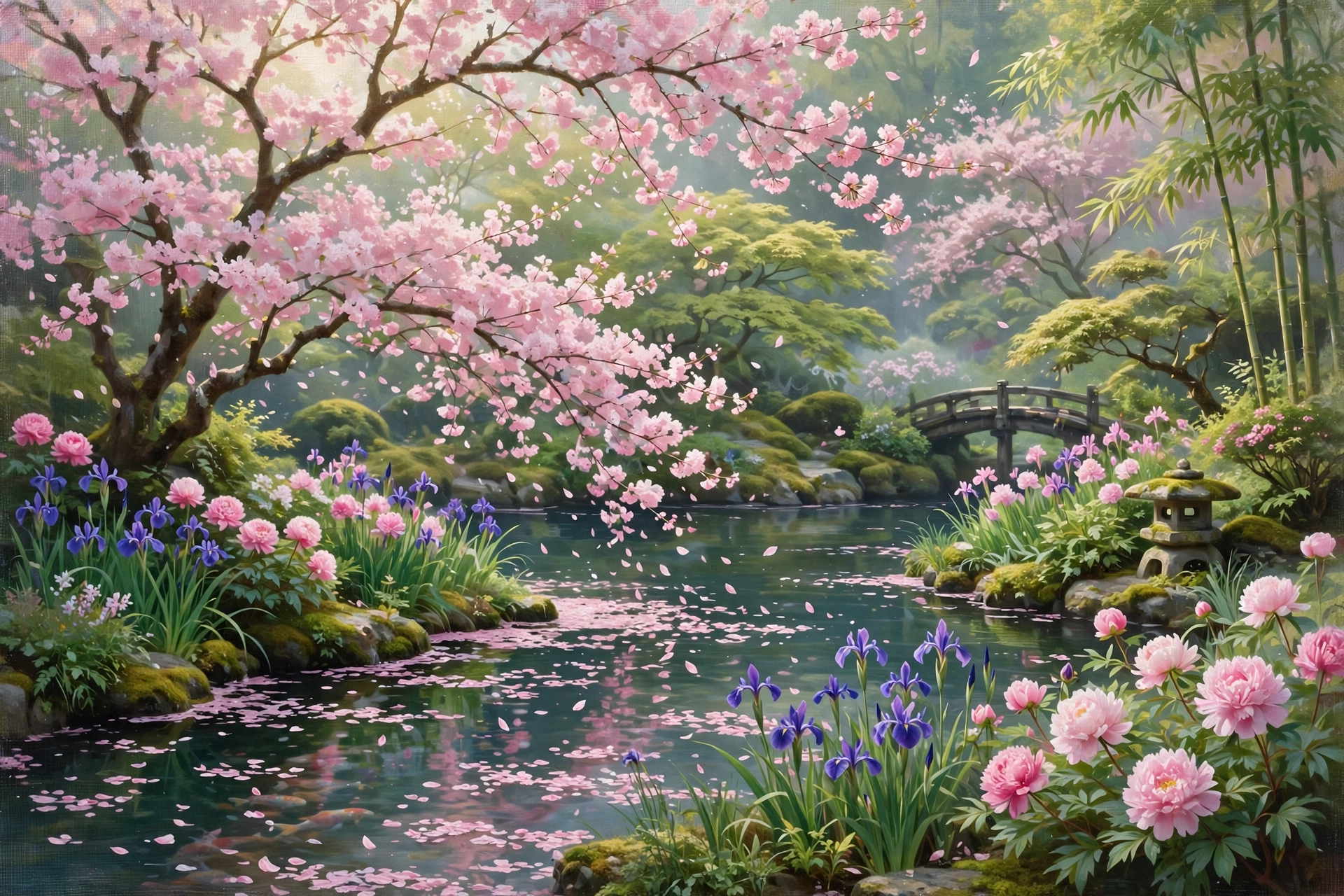
The cherry blossom is Japan’s national flower and its most loved name source. In hanakotoba, sakura means a kind and gentle heart — and because the blossoms fall within a week, the name also carries beautiful transience. Beyond Sakura itself, the kanji 桜 supports a whole family of readings and combinations.
| Name | Origin | Meaning | Note |
|---|---|---|---|
| Sakura | Japanese | Cherry blossom (桜) | One of Japan’s most popular girl names |
| Sakurako | Japanese | Cherry blossom + child (桜子) | Classic -ko name |
| Ōka | Japanese | Cherry blossom (桜花) — the flowers themselves, grand reading | Also the word for cherry-blossom viewing splendour |
| Ōko | Japanese | Cherry blossom + child (桜子), ō reading | Same kanji as Sakurako, different reading |
| Mio | Japanese | Beautiful cherry blossom (美桜) | Popular modern name |
| Rio | Japanese | Jasmine/cherry-blossom combination (莉桜) | Popular modern name; kanji vary |
| Io | Japanese | Cloth + cherry blossom (衣桜) | Kanji combination |
| Mao | Japanese | True cherry blossom (真桜) | Kanji combination |
| Aio | Japanese | Love + cherry blossom (愛桜) | Kanji combination |
| Sakuya | Japanese | Blooming night (咲夜); princess Konohanasakuya of myth is the cherry-blossom goddess | Mythological — goddess of Mount Fuji and blossom |
| Sakuyo | Japanese | Bloom + generation (咲代) | Kanji combination |
| Sakumi | Japanese | Bloom + beauty (咲美) | Kanji combination |
| Misakura | Japanese | Beautiful cherry blossom (美桜) in full reading | Kanji combination |
| Yozakura | Japanese | Night cherry blossom (夜桜) — blossoms lit after dark | Word name |
| Hatsuzakura | Japanese | First cherry blossom of the year (初桜) | Word name; also an early-blooming variety |
| Sakuran | Japanese | Cherry-blossom confusion/beauty (桜乱 is a film title reading) | Modern name from film and fiction |
| Yaeka | Japanese | Layered blossom (八重花) — double-flowered cherry | Kanji combination |
| Yaeko | Japanese | Double blossom + child (八重子) | Classic name; double cherry (yaezakura) reference |
| Yaemi | Japanese | Double blossom + beauty (八重美) | Kanji combination |
| Yaena | Japanese | Double blossom + na (八重奈) | Kanji combination |
| Yaeno | Japanese | Double blossom + no (八重乃) | Kanji combination |
| Sakurae | Japanese | Cherry blossom (桜恵) — with e, ‘blessing’ | Kanji combination |
| Sakurami | Japanese | Cherry blossom (桜美) — with mi, ‘beauty’ | Kanji combination |
| Sakurana | Japanese | Cherry blossom (桜奈) — with na (phonetic) | Kanji combination |
| Sakurano | Japanese | Cherry blossom (桜乃) — with no (phonetic) | Kanji combination |
| Sakuraka | Japanese | Cherry blossom (桜香) — with ka, ‘fragrance’ | Kanji combination |
| Sakurari | Japanese | Cherry blossom (桜莉) — with ri (jasmine kanji) | Kanji combination |
| Sakurane | Japanese | Cherry blossom (桜音) — with ne, ‘sound’ | Kanji combination |
| Sakurayo | Japanese | Cherry blossom (桜代) — with yo, ‘generation’ | Kanji combination |
| Sakuraho | Japanese | Cherry blossom (桜穂) — with ho, ‘ear of grain’ | Kanji combination |
| Sakuraha | Japanese | Cherry blossom (桜葉) — with ha, ‘leaf’ | Kanji combination |
| Sakuraki | Japanese | Cherry blossom (桜姫) — with ki, ‘princess’ | Kanji combination |
| Sakurara | Japanese | Cherry blossom (桜良) — with ra (phonetic) | Kanji combination |
| Sakurame | Japanese | Cherry blossom (桜芽) — with me, ‘bud/sprout’ | Kanji combination |
Hana Names: Names Built on the Word ‘Flower’
Hana (花) is simply ‘flower’, and it is the engine of Japanese flower naming: read hana- at the start, -ka in the middle of compounds, and combined with almost any suffix. Hanakotoba’s meaning for hana in general is purity and a love of nature.
| Name | Origin | Meaning | Note |
|---|---|---|---|
| Hana | Japanese | Flower (花) | The single most direct flower name in Japanese |
| Hanako | Japanese | Flower child (花子) | The archetypal classic Japanese girl name |
| Hanae | Japanese | Flower + blessing/picture (花恵/花絵) | Classic name |
| Hanami | Japanese | Flower + beauty (花美); also the word for blossom-viewing (花見) | Real name with a festival double meaning |
| Hanayo | Japanese | Flower + generation (花代) | Classic name |
| Hanaka | Japanese | Flower + fragrance (花香) | Kanji combination |
| Hanana | Japanese | Flower + na (花奈) | Kanji combination |
| Hanano | Japanese | Flower + no (花乃) | Kanji combination |
| Hanane | Japanese | Flower + sound (花音) — usually read Kanon; hana-ne reading | Kanji combination |
| Hanari | Japanese | Flower + jasmine kanji (花莉) | Kanji combination |
| Hanara | Japanese | Flower + ra (花良) | Kanji combination |
| Hanaki | Japanese | Flower + princess (花姫) | Kanji combination |
| Hanaho | Japanese | Flower + ear/ho (花穂) | Kanji combination |
| Hanaha | Japanese | Flower + leaf (花葉) | Kanji combination |
| Hanaemi | Japanese | Flower + smiling beauty (花笑美) | Kanji combination |
| Hanabi | Japanese | Fireworks (花火) — literally ‘fire flower’ | Word name, summery |
| Kanon | Japanese | Flower sound (花音) | Popular modern name |
| Kaho | Japanese | Flower + ho (花穂) or fragrance + ho (香穂) | Popular name; kanji vary |
| Kaori | Japanese | Fragrance of flowers (香/香織) | Classic popular name |
| Kahori | Japanese | Fragrance + ri (香莉) variant reading of the kaori family | Kanji combination |
| Kahana | Japanese | Fragrance/flower + na (香花奈 combinations) | Kanji combination |
| Kanna | Japanese | Flower + na (花奈); also the canna lily’s name | Real name; also a flower name itself |
| Kano | Japanese | Flower + no (花乃) | Kanji combination |
| Kako | Japanese | Flower + child (花子) read kako | Same kanji as Hanako, alternate reading |
| Kae | Japanese | Flower + picture (花絵) | Short classic name |
| Kana | Japanese | Flower + greens (花菜) among many kanji options | Popular name; flower reading among its kanji |
| Kanona | Japanese | Flower sound + na (花音奈) | Kanji combination |
| Aihana | Japanese | Love + flower (愛花) | Kanji combination |
| Mihana | Japanese | Beauty + flower (美花) | Kanji combination |
| Yohana | Japanese | Sun + flower (陽花); also the Japanese form of Johanna | Kanji combination |
| Chihana | Japanese | Thousand flowers (千花) | Kanji combination |
| Ichika | Japanese | One flower (一花) | Very popular modern name |
| Ichina | Japanese | One flower + na (一花奈) | Kanji combination |
| Mika | Japanese | Beautiful flower (美花) | Popular name |
| Mikako | Japanese | Beautiful flower + child (美花子) | Kanji combination |
| Yuka | Japanese | Gentle/excellent flower (優花/由花) | Popular name |
| Yukako | Japanese | Flower (由花) + child (子) | Kanji combination |
| Ayaka | Japanese | Colourful flower (彩花) — among the most popular readings | Top-ranked modern name; kanji vary (彩花/綾花/彩香) |
| Ayako | Japanese | Colourful + child (彩子) | Classic name |
| Ayana | Japanese | Colourful flower/greens (彩花/彩菜) | Popular name |
| Ayano | Japanese | Colourful + no (彩乃) | Popular name |
| Saika | Japanese | Blooming/colourful flower (咲花/彩花) | Kanji combination |
| Erika | Japanese | Often written with flower kanji (花/莉) in modern combinations | Established name; flower-kanji writings common |
Yuri Names: Lily Names
The lily (百合, yuri) means purity and innocence in hanakotoba, and Yuriko was for decades one of the most given names in Japan. The yuri- stem combines with almost every classic suffix, which is how this one flower alone yields a whole nursery of names.
| Name | Origin | Meaning | Note |
|---|---|---|---|
| Yuri | Japanese | Lily (百合) | Classic name; the lily of purity in hanakotoba |
| Yuriko | Japanese | Lily + child (百合子) | One of the most classic Japanese girl names |
| Yurika | Japanese | Lily + fragrance (百合香) | Popular name |
| Yurina | Japanese | Lily + na (百合奈) | Popular name |
| Yurino | Japanese | Lily + no (百合乃) | Kanji combination |
| Yurie | Japanese | Lily + blessing (百合恵) | Kanji combination |
| Yurimi | Japanese | Lily + beauty (百合美) | Kanji combination |
| Yurira | Japanese | Lily + ra (百合良) | Kanji combination |
| Yuriha | Japanese | Lily + leaf (百合葉) | Kanji combination |
| Yuriho | Japanese | Lily + ho (百合穂) | Kanji combination |
| Yuriyo | Japanese | Lily + generation (百合代) | Kanji combination |
| Yurine | Japanese | Lily + sound (百合音) | Kanji combination |
| Yuriki | Japanese | Lily + princess/record (百合姫/百合紀) | Kanji combination |
| Sayuri | Japanese | Small lily (小百合) | Famous from Memoirs of a Geisha |
| Sayuriko | Japanese | Small lily + child (小百合子) | Kanji combination |
| Ayuri | Japanese | Colourful lily (彩百合) | Kanji combination |
| Mayuri | Japanese | True lily (真百合) | Real name; also a peacock reading by other kanji |
| Miyuri | Japanese | Beautiful lily (美百合) | Kanji combination |
| Yurara | Japanese | Lily + ra doubled softness (百合良々) | Kanji combination |
| Shirayuri | Japanese | White lily (白百合) | Word name; school and ship name too |
| Riri | Japanese | Lily in katakana (リリ, from English ‘lily’) | Modern katakana name |
| Riria | Japanese | Riri + a (リリア) | Modern katakana name |
| Yurisa | Japanese | Lily (百合紗) — with sa, ‘gauze’ | Kanji combination |
| Yurito | Japanese | Lily (百合翔) — with to, ‘soar’ (unisex) | Kanji combination |
Ume Names: Plum Blossom Names
Plum blossom (梅, ume) blooms in the cold of February and means patience, perseverance and faithfulness in hanakotoba — the scholar’s flower. Ume-names were the height of fashion a century ago and are now charmingly retro.
| Name | Origin | Meaning | Note |
|---|---|---|---|
| Ume | Japanese | Plum blossom (梅) | The beloved old-fashioned name; plum blooms first, in late winter |
| Umeko | Japanese | Plum + child (梅子) | Classic name of grandmothers’ generation |
| Umee | Japanese | Plum + blessing (梅恵) | Kanji combination |
| Umeno | Japanese | Plum + no (梅乃) | Kanji combination |
| Umemi | Japanese | Plum + beauty (梅美) | Kanji combination |
| Umeka | Japanese | Plum + fragrance (梅香) | Kanji combination |
| Umene | Japanese | Plum + sound (梅音) | Kanji combination |
| Umeyo | Japanese | Plum + generation (梅代) | Kanji combination |
| Umeki | Japanese | Plum + princess (梅姫) | Kanji combination |
| Baika | Japanese | Plum blossom in the on’yomi reading (梅花) | Poetic/word name |
| Baikako | Japanese | Plum blossom + child (梅花子) | Kanji combination |
| Kōbai | Japanese | Red plum blossom (紅梅) | Word name (written Koubai without macron) |
| Umehana | Japanese | Plum flower (梅花) read ume-hana | Kanji combination |
| Umeha | Japanese | Plum blossom (梅葉) — with ha, ‘leaf’ | Kanji combination |
| Umera | Japanese | Plum blossom (梅良) — with ra (phonetic) | Kanji combination |
| Umeme | Japanese | Plum blossom (梅芽) — with me, ‘bud’ | Kanji combination |
Kiku Names: Chrysanthemum Names
The chrysanthemum (菊, kiku) is the crest of the Imperial House and appears on the Japanese passport; in hanakotoba it means nobility and longevity, celebrated at the Kiku Matsuri every autumn.
| Name | Origin | Meaning | Note |
|---|---|---|---|
| Kiku | Japanese | Chrysanthemum (菊) | The imperial flower of Japan; long life in hanakotoba |
| Kikuko | Japanese | Chrysanthemum + child (菊子) | Classic name |
| Kikue | Japanese | Chrysanthemum + blessing (菊恵) | Classic name |
| Kikuna | Japanese | Chrysanthemum + na (菊奈) | Kanji combination |
| Kikuno | Japanese | Chrysanthemum + no (菊乃) | Real traditional name |
| Kikumi | Japanese | Chrysanthemum + beauty (菊美) | Kanji combination |
| Kikuka | Japanese | Chrysanthemum + fragrance (菊香) | Kanji combination |
| Kikuyo | Japanese | Chrysanthemum + generation (菊代) | Traditional name |
| Kikuri | Japanese | Chrysanthemum + ri (菊莉) | Kanji combination |
| Kikuhime | Japanese | Chrysanthemum princess (菊姫) | Traditional/aristocratic name |
| Nogiku | Japanese | Wild chrysanthemum (野菊) | Word name |
| Kikuha | Japanese | Chrysanthemum + leaf (菊葉) | Kanji combination |
Tsubaki Names: Camellia Names
Camellia (椿, tsubaki) blooms through winter into spring. Samurai once avoided it — the whole flower drops at once, like a severed head — but today Tsubaki is simply a beautiful, fashionable name.
| Name | Origin | Meaning | Note |
|---|---|---|---|
| Tsubaki | Japanese | Camellia (椿) | Popular modern name; camellia means love and longing in hanakotoba |
| Tsubakiko | Japanese | Camellia + child (椿子) | Kanji combination |
| Tsubakie | Japanese | Camellia + blessing (椿恵) | Kanji combination |
| Tsubakimi | Japanese | Camellia + beauty (椿美) | Kanji combination |
| Tsubakina | Japanese | Camellia + na (椿奈) | Kanji combination |
| Tsubakino | Japanese | Camellia + no (椿乃) | Kanji combination |
| Tsubakiho | Japanese | Camellia + ho (椿穂) | Kanji combination |
| Tsubakika | Japanese | Camellia + fragrance (椿香) | Kanji combination |
| Tsubakine | Japanese | Camellia + sound (椿音) | Kanji combination |
| Kantsubaki | Japanese | Winter camellia (寒椿) | Word name |
| Tsubakiri | Japanese | Camellia (椿莉) — with ri (jasmine kanji) | Kanji combination |
| Tsubakira | Japanese | Camellia (椿良) — with ra (phonetic) | Kanji combination |
| Tsubakiki | Japanese | Camellia (椿姫) — with ki, ‘princess’ | Kanji combination |
| Tsubakiha | Japanese | Camellia (椿葉) — with ha, ‘leaf’ | Kanji combination |
| Tsubakiyo | Japanese | Camellia (椿代) — with yo, ‘generation’ | Kanji combination |
Ayame Names: Iris Names
The iris (菖蒲) is the flower of the May Boys’ Festival, where its sword-shaped leaves stand for courage; as the girl’s name Ayame it is all elegance. Hanakotoba gives iris ‘good tidings’ and ‘hope’.
| Name | Origin | Meaning | Note |
|---|---|---|---|
| Ayame | Japanese | Iris (菖蒲/アヤメ) | Popular name; iris means good news and hope in hanakotoba |
| Ayameko | Japanese | Iris + child (菖蒲子) | Kanji combination |
| Ayamee | Japanese | Iris + blessing (菖蒲恵) | Kanji combination |
| Ayamemi | Japanese | Iris + beauty (菖蒲美) | Kanji combination |
| Ayamena | Japanese | Iris + na (菖蒲奈) | Kanji combination |
| Ayameno | Japanese | Iris + no (菖蒲乃) | Kanji combination |
| Shōbu | Japanese | Iris in the on’yomi reading (菖蒲) — Boys’ Festival flower for strength | Word name (written Shoubu without macrons) |
| Kakitsubata | Japanese | Rabbit-ear iris (杜若/燕子花) | Word name from classical poetry (Ise Monogatari) |
| Airisu | Japanese | Iris in katakana (アイリス) | Modern katakana name |
| Ayameka | Japanese | Iris (菖蒲香) — with ka, ‘fragrance’ | Kanji combination |
| Ayameri | Japanese | Iris (菖蒲莉) — with ri | Kanji combination |
| Ayamera | Japanese | Iris (菖蒲良) — with ra | Kanji combination |
| Ayameho | Japanese | Iris (菖蒲穂) — with ho | Kanji combination |
| Ayameha | Japanese | Iris (菖蒲葉) — with ha, ‘leaf’ | Kanji combination |
| Ayameki | Japanese | Iris (菖蒲姫) — with ki, ‘princess’ | Kanji combination |
| Ayameyo | Japanese | Iris (菖蒲代) — with yo, ‘generation’ | Kanji combination |
Fuji Names: Wisteria Names
Wisteria (藤, fuji) hangs in purple curtains every late April and was the flower crest of the great Fujiwara clan. In hanakotoba it means welcome and steadfast love. Note how the same kanji 藤子 yields both Fujiko and Tōko — readings, not spellings, are what make Japanese names distinct.
| Name | Origin | Meaning | Note |
|---|---|---|---|
| Fuji | Japanese | Wisteria (藤) — the reading fuji also belongs to Mt Fuji (富士) by other kanji | Flower reading of a famous name |
| Fujiko | Japanese | Wisteria + child (藤子) | Well-known traditional name |
| Fujie | Japanese | Wisteria + blessing (藤恵) | Kanji combination |
| Fujina | Japanese | Wisteria + na (藤奈) | Kanji combination |
| Fujino | Japanese | Wisteria + no (藤乃) | Kanji combination |
| Fujimi | Japanese | Wisteria + beauty (藤美) | Kanji combination |
| Fujika | Japanese | Wisteria + fragrance (藤香) | Kanji combination |
| Fujiyo | Japanese | Wisteria + generation (藤代) | Kanji combination |
| Fujine | Japanese | Wisteria + sound (藤音) | Kanji combination |
| Tōka | Japanese | Wisteria flower in the on’yomi reading (藤花) | Kanji combination (written Touka) |
| Tōko | Japanese | Wisteria + child (藤子) in on’yomi reading | Same kanji as Fujiko, different reading (written Touko) |
| Fujihime | Japanese | Wisteria princess (藤姫) | Aristocratic name; Fujiwara clan flower |
| Fujiri | Japanese | Wisteria (藤莉) — with ri | Kanji combination |
| Fujira | Japanese | Wisteria (藤良) — with ra | Kanji combination |
| Fujiki | Japanese | Wisteria (藤紀) — with ki, ‘record’ | Kanji combination |
| Fujiha | Japanese | Wisteria (藤葉) — with ha, ‘leaf’ | Kanji combination |
| Fujime | Japanese | Wisteria (藤芽) — with me, ‘bud’ | Kanji combination |
Ren Names: Lotus Names
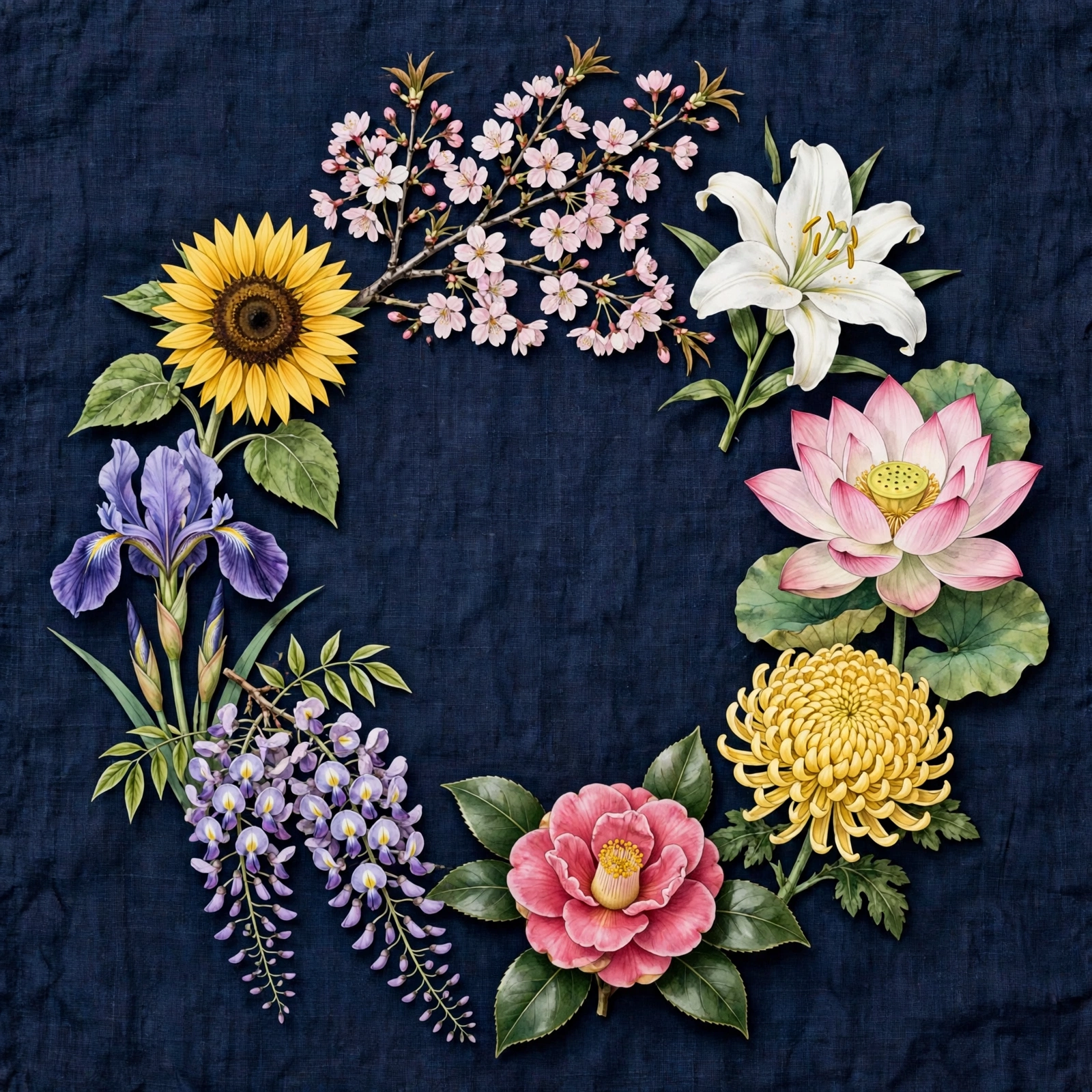
The lotus (蓮) rises from mud into perfect bloom, which is why it is Buddhism’s sacred flower and why Ren became Japan’s favourite unisex name. Read ren- in modern names and hasu- in classical ones — one kanji, two name families.
| Name | Origin | Meaning | Note |
|---|---|---|---|
| Ren | Japanese | Lotus (蓮) | Top unisex name of the last decade |
| Renka | Japanese | Lotus flower (蓮花) | Popular girl name |
| Renko | Japanese | Lotus + child (蓮子) | Kanji combination |
| Rene | Japanese | Lotus + blessing (蓮恵) | Kanji combination |
| Renna | Japanese | Lotus + na (蓮奈) | Kanji combination |
| Renno | Japanese | Lotus + no (蓮乃) | Kanji combination |
| Renmi | Japanese | Lotus + beauty (蓮美) | Kanji combination |
| Renri | Japanese | Lotus + ri (蓮莉) | Kanji combination |
| Renho | Japanese | Lotus + ho (蓮穂) | Kanji combination |
| Renge | Japanese | Lotus flower (蓮華) — the sacred Buddhist form | Religious-poetic name |
| Hasuna | Japanese | Lotus + na (蓮奈) in hasu reading | Kanji combination |
| Hasumi | Japanese | Lotus + beauty (蓮美) in hasu reading | Kanji combination |
| Hasuka | Japanese | Lotus flower (蓮花) in hasu reading | Kanji combination |
| Hasune | Japanese | Lotus + sound (蓮音) in hasu reading | Kanji combination |
| Hasuno | Japanese | Lotus + no (蓮乃) in hasu reading | Kanji combination |
| Renki | Japanese | Lotus (蓮姫) — with ki, ‘princess’ | Kanji combination |
| Renha | Japanese | Lotus (蓮葉) — with ha, ‘leaf’ | Kanji combination |
| Renme | Japanese | Lotus (蓮芽) — with me, ‘bud’ | Kanji combination |
| Renyo | Japanese | Lotus (蓮代) — with yo | Kanji combination |
| Renra | Japanese | Lotus (蓮良) — with ra | Kanji combination |
| Hasuko | Japanese | Lotus (hasu reading) (蓮子) — with ko, ‘child’ | Kanji combination |
| Hasue | Japanese | Lotus (hasu reading) (蓮恵) — with e, ‘blessing’ | Kanji combination |
| Hasuri | Japanese | Lotus (hasu reading) (蓮莉) — with ri | Kanji combination |
| Hasuha | Japanese | Lotus (hasu reading) (蓮葉) — with ha, ‘leaf’ | Kanji combination |
| Hasuho | Japanese | Lotus (hasu reading) (蓮穂) — with ho | Kanji combination |
Ran Names: Orchid Names
The orchid (蘭, ran) was one of the Four Gentlemen of East Asian art, and Ran is its sleek modern name form — one syllable, all refinement.
| Name | Origin | Meaning | Note |
|---|---|---|---|
| Ran | Japanese | Orchid (蘭) | Elegant short name; orchid means beauty and refinement in hanakotoba |
| Ranko | Japanese | Orchid + child (蘭子) | Traditional name |
| Rana | Japanese | Orchid + na (蘭奈) | Kanji combination |
| Ranna | Japanese | Orchid + na doubled (蘭菜) | Kanji combination |
| Ranno | Japanese | Orchid + no (蘭乃) | Kanji combination |
| Ranmi | Japanese | Orchid + beauty (蘭美) | Kanji combination |
| Ranri | Japanese | Orchid + ri (蘭莉) | Kanji combination |
| Rane | Japanese | Orchid + blessing (蘭恵) | Kanji combination |
| Ranho | Japanese | Orchid + ho (蘭穂) | Kanji combination |
| Aran | Japanese | Sub-orchid (亜蘭) — ‘second orchid’ | Kanji combination |
| Ranka | Japanese | Orchid + fragrance (蘭香) | Kanji combination |
| Ranne | Japanese | Orchid + sound (蘭音) | Kanji combination |
| Ranyo | Japanese | Orchid + generation (蘭代) | Kanji combination |
| Ranki | Japanese | Orchid + princess (蘭姫) | Kanji combination |
| Ranha | Japanese | Orchid + leaf (蘭葉) | Kanji combination |
| Ranme | Japanese | Orchid + bud (蘭芽) | Kanji combination |
Sumire Names: Violet Names
The violet (菫, sumire) is the modest spring flower of mountain paths; Sumire has been a quietly beloved girl’s name for generations.
| Name | Origin | Meaning | Note |
|---|---|---|---|
| Sumire | Japanese | Violet (菫) | Charming name; violet means sincerity and small happiness in hanakotoba |
| Sumireko | Japanese | Violet + child (菫子) | Kanji combination |
| Sumireka | Japanese | Violet + fragrance (菫香) | Kanji combination |
| Sumirena | Japanese | Violet + na (菫奈) | Kanji combination |
| Sumireno | Japanese | Violet + no (菫乃) | Kanji combination |
| Sumiremi | Japanese | Violet + beauty (菫美) | Kanji combination |
| Sumiree | Japanese | Violet (菫恵) — with e, ‘blessing’ | Kanji combination |
| Sumireri | Japanese | Violet (菫莉) — with ri | Kanji combination |
| Sumirera | Japanese | Violet (菫良) — with ra | Kanji combination |
| Sumirene | Japanese | Violet (菫音) — with ne, ‘sound’ | Kanji combination |
| Sumireyo | Japanese | Violet (菫代) — with yo | Kanji combination |
| Sumireho | Japanese | Violet (菫穂) — with ho | Kanji combination |
| Sumireha | Japanese | Violet (菫葉) — with ha, ‘leaf’ | Kanji combination |
| Sumireki | Japanese | Violet (菫姫) — with ki, ‘princess’ | Kanji combination |
Botan Names: Peony Names
The peony (牡丹, botan) is the king of flowers in East Asian tradition, standing for riches, honour and a happy marriage; its herbaceous sister shakuyaku (芍薬) stands for bashfulness.
| Name | Origin | Meaning | Note |
|---|---|---|---|
| Botan | Japanese | Tree peony (牡丹) | Peony is ‘king of flowers’ — wealth and honour in hanakotoba |
| Botanko | Japanese | Peony + child (牡丹子) | Kanji combination |
| Botane | Japanese | Peony + blessing (牡丹恵) | Kanji combination |
| Botanmi | Japanese | Peony + beauty (牡丹美) | Kanji combination |
| Shakuya | Japanese | Herbaceous peony (芍薬) shortened name reading | Kanji combination |
| Botanna | Japanese | Peony (牡丹奈) — with na | Kanji combination |
| Botanno | Japanese | Peony (牡丹乃) — with no | Kanji combination |
| Botanri | Japanese | Peony (牡丹莉) — with ri | Kanji combination |
| Botanka | Japanese | Peony (牡丹香) — with ka, ‘fragrance’ | Kanji combination |
| Botanne | Japanese | Peony (牡丹音) — with ne, ‘sound’ | Kanji combination |
| Botanyo | Japanese | Peony (牡丹代) — with yo | Kanji combination |
| Botanho | Japanese | Peony (牡丹穂) — with ho | Kanji combination |
Bara Names: Rose Names
The rose (薔薇, bara) is a beloved flower in Japan but a rare name source, because its kanji are pure ateji — borrowed for sound, not meaning. We list the few honest options rather than inventing dozens.
| Name | Origin | Meaning | Note |
|---|---|---|---|
| Bara | Japanese | Rose (薔薇) | Label: the word itself; rare as a given name but instantly understood |
| Barako | Japanese | Rose + child (薔薇子) | Label: kanji combination — the rose kanji are ateji, read as a unit |
| Barae | Japanese | Rose + blessing (薔薇恵) | Label: kanji combination |
| Sōbi | Japanese | Rose in its archaic reading (薔薇) | Label: archaic reading (written Soubi) |
| Rōza | Japanese | Rosa in katakana (ローザ) | Label: modern katakana name (written Rouza) |
| Barana | Japanese | Rose + na (薔薇奈) | Label: kanji combination |
| Barano | Japanese | Rose + no (薔薇乃) | Label: kanji combination |
| Barami | Japanese | Rose + beauty (薔薇美) | Label: kanji combination |
Himawari Names: Sunflower Names
The sunflower (向日葵, himawari — ‘turning toward the sun’) hides a naming secret: its kanji can also be read Hinata and Himari, which is how a flower few would name outright produced two of Japan’s favourite modern names.
| Name | Origin | Meaning | Note |
|---|---|---|---|
| Himawari | Japanese | Sunflower (向日葵) | Bright summer name; sunflower means adoration in hanakotoba |
| Himawariko | Japanese | Sunflower + child (向日葵子) | Kanji combination |
| Himari | Japanese | Sun + hollyhock/sunflower kanji (陽葵/向日葵) | One of Japan’s most popular girl names of the 2020s |
| Hinata | Japanese | Sunny place (陽向) — and 向日葵 itself can be read hinata | Popular unisex name; sunflower-kanji reading |
| Hima | Japanese | Sun + hollyhock (陽葵) short reading | Kanji combination |
| Himana | Japanese | Sunflower stem + na (向日葵奈) | Kanji combination |
| Himano | Japanese | Sunflower stem + no (向日葵乃) | Kanji combination |
| Himawarika | Japanese | Sunflower (向日葵香) — with ka, ‘fragrance’ | Kanji combination |
| Himawarimi | Japanese | Sunflower (向日葵美) — with mi, ‘beauty’ | Kanji combination |
| Himawarina | Japanese | Sunflower (向日葵奈) — with na | Kanji combination |
Saki Names: Bloom Names
Saki (咲) is not a flower but the moment a flower opens — which is why it became one of the most loved name elements in modern Japan. Any name built on 咲 is a flower name in spirit and in kanji.
| Name | Origin | Meaning | Note |
|---|---|---|---|
| Saki | Japanese | To bloom (咲) — the verb of flowers opening | Popular name; bloom is the flower in action |
| Sakiko | Japanese | Bloom + child (咲子) | Classic name |
| Sakika | Japanese | Bloom + flower (咲花) | Kanji combination |
| Sakina | Japanese | Bloom + na (咲奈) | Kanji combination |
| Sakino | Japanese | Bloom + no (咲乃) | Kanji combination |
| Sakie | Japanese | Bloom + blessing (咲恵) | Kanji combination |
| Sakimi | Japanese | Bloom + beauty (咲美) | Kanji combination |
| Sakira | Japanese | Bloom + ra (咲良) | Kanji combination |
| Sakisa | Japanese | Bloom + sa (咲紗) | Kanji combination |
| Sakuhana | Japanese | Blooming flower (咲花) in full reading | Kanji combination |
| Sakiyo | Japanese | Bloom + generation (咲代) | Kanji combination |
| Sakiho | Japanese | Bloom + ho (咲穂) | Kanji combination |
| Sakine | Japanese | Bloom + sound (咲音) | Kanji combination |
Kaori Names: Fragrance Names
A flower you cannot see can still be named — by its scent. The kaori/kaoru family (香, 薫) names the fragrance of blossom, and Kaoru is immortalised as the fragrant prince of The Tale of Genji. (Kaori and Kahori themselves appear in the Hana section above.)
| Name | Origin | Meaning | Note |
|---|---|---|---|
| Kaoru | Japanese | Fragrance (薫/香) — the scent of flowers and incense | Classic unisex name (Genji’s Kaoru) |
| Kaoruko | Japanese | Fragrance + child (薫子) | Traditional name |
| Kaorie | Japanese | Fragrance + blessing (香恵) | Kanji combination |
| Kaorina | Japanese | Fragrance + na (香奈) | Kanji combination |
| Kaorino | Japanese | Fragrance + no (香乃) | Kanji combination |
| Kaoriho | Japanese | Fragrance + ho (香穂) | Kanji combination |
| Kaoriyo | Japanese | Fragrance + generation (香代) | Kanji combination |
| Kaoriha | Japanese | Fragrance + leaf (香葉) | Kanji combination |
| Kaorine | Japanese | Fragrance + sound (香音) | Kanji combination |
| Kouko | Japanese | Fragrance + child (香子) in on’yomi-influenced reading | Kanji combination (written without macron as Kouko) |
More Japanese Flower Names: A Whole Garden
Beyond the famous eight, Japan names children for dozens of garden and wild flowers — dianthus, bellflower, gentian, hydrangea, azalea, jasmine and the Genji heroines’ own flowers, hollyhock and gromwell. This is the section that takes the list past any competitor.
| Name | Origin | Meaning | Note |
|---|---|---|---|
| Nadeshiko | Japanese | Dianthus/pink (撫子) — the emblem of the ideal Japanese woman, Yamato-nadeshiko | Flower name and national symbol |
| Kikyo | Japanese | Bellflower (桔梗) | Bellflower means unchanging love in hanakotoba |
| Kikyoko | Japanese | Bellflower + child (桔梗子) | Kanji combination |
| Kikyoe | Japanese | Bellflower + blessing (桔梗恵) | Kanji combination |
| Kikyona | Japanese | Bellflower + na (桔梗奈) | Kanji combination |
| Kikyomi | Japanese | Bellflower + beauty (桔梗美) | Kanji combination |
| Kikyori | Japanese | Bellflower + ri (桔梗莉) | Kanji combination |
| Shion | Japanese | Aster (紫苑) | Popular unisex name; aster means ‘I will not forget you’ |
| Shionko | Japanese | Aster + child (紫苑子) | Kanji combination |
| Shiono | Japanese | Aster + no (紫苑乃) | Kanji combination |
| Shionmi | Japanese | Aster + beauty (紫苑美) | Kanji combination |
| Shionka | Japanese | Aster + fragrance (紫苑香) | Kanji combination |
| Shionna | Japanese | Aster + na (紫苑奈) | Kanji combination |
| Shionri | Japanese | Aster + ri (紫苑莉) | Kanji combination |
| Shione | Japanese | Aster + blessing (紫苑恵) | Kanji combination |
| Rindo | Japanese | Gentian (竜胆) | Autumn mountain flower; name for girls and boys |
| Rindoko | Japanese | Gentian + child (竜胆子) | Kanji combination |
| Suzuran | Japanese | Lily of the valley (鈴蘭) — ‘bell orchid’ | Word name |
| Suzuranko | Japanese | Lily of the valley + child (鈴蘭子) | Kanji combination |
| Asagao | Japanese | Morning glory (朝顔) — ‘morning face’ | Word name; the summer festival flower |
| Asaka | Japanese | Morning flower (朝花) | Real name |
| Ajisai | Japanese | Hydrangea (紫陽花) | Word name; the rainy-season flower |
| Ajisaiko | Japanese | Hydrangea + child (紫陽花子) | Kanji combination |
| Akizakura | Japanese | Autumn cherry (秋桜) — the literal name of the cosmos flower | Poetic word name |
| Kosumosu | Japanese | Cosmos in katakana (コスモス) | Modern katakana word name |
| Momoka | Japanese | Peach + flower/fragrance (桃花/桃香) | Very popular name |
| Momoko | Japanese | Peach + child (桃子) | Classic popular name |
| Momoha | Japanese | Peach + leaf (桃葉) | Kanji combination |
| Momohana | Japanese | Peach flower (桃花) in full reading | Kanji combination |
| Momona | Japanese | Peach + na (桃奈) | Kanji combination |
| Momori | Japanese | Peach + ri (桃莉) | Kanji combination |
| Momone | Japanese | Peach + sound (桃音) | Kanji combination |
| Momoyo | Japanese | Peach + generation (桃代) | Kanji combination |
| Momo | Japanese | Peach (桃) — the blossom and fruit together | Popular short name |
| Tachibana | Japanese | Mandarin-orange blossom (橘) | Aristocratic name and famous surname |
| Hagi | Japanese | Bush clover (萩) — flower of autumn and melancholy poetry | Traditional name |
| Hagiko | Japanese | Bush clover + child (萩子) | Kanji combination |
| Hagie | Japanese | Bush clover + blessing (萩恵) | Kanji combination |
| Hagimi | Japanese | Bush clover + beauty (萩美) | Kanji combination |
| Hagira | Japanese | Bush clover + ra (萩良) | Kanji combination |
| Hagine | Japanese | Bush clover + sound (萩音) | Kanji combination |
| Suisen | Japanese | Daffodil/narcissus (水仙) — ‘water immortal’ | Word name |
| Suisenko | Japanese | Daffodil + child (水仙子) | Kanji combination |
| Suisenna | Japanese | Daffodil + na (水仙奈) | Kanji combination |
| Tanpopo | Japanese | Dandelion (蒲公英) | Word name; cheerful and childlike |
| Nanohana | Japanese | Rapeseed blossom (菜の花) — the yellow spring fields | Word name |
| Nanoka | Japanese | Rapeseed flower (菜乃花/菜花) | Popular name |
| Nanaka | Japanese | Rapeseed blossom (菜々花) reading | Real name |
| Nanako | Japanese | Greens + child (菜々子) | Popular name; the greens are the rapeseed plant |
| Yugao | Japanese | Bottle-gourd flower (夕顔) — ‘evening face’, Genji’s tragic lover | Literary flower name |
| Hirugao | Japanese | Bindweed (昼顔) — ‘noon face’, the morning glory’s sister | Word name |
| Murasaki | Japanese | Gromwell, the purple dye plant (紫) — and Genji’s heroine | Literary name |
| Aoi | Japanese | Hollyhock (葵) | Hugely popular name; Genji’s wife Aoi no Ue |
| Aoiko | Japanese | Hollyhock + child (葵子) | Kanji combination |
| Aoina | Japanese | Hollyhock + na (葵奈) | Kanji combination |
| Aoino | Japanese | Hollyhock + no (葵乃) | Kanji combination |
| Aoimi | Japanese | Hollyhock + beauty (葵美) | Kanji combination |
| Aoika | Japanese | Hollyhock + fragrance (葵香) | Kanji combination |
| Wakana | Japanese | Young greens (若菜) — the spring herbs of the Genji chapter | Real name |
| Azami | Japanese | Thistle (薊) | Real name; enka singer Azami’s flower |
| Azamiko | Japanese | Thistle + child (薊子) | Kanji combination |
| Azamina | Japanese | Thistle + na (薊奈) | Kanji combination |
| Azamino | Japanese | Thistle + no (薊乃) | Kanji combination |
| Yamabuki | Japanese | Kerria, the yellow ‘mountain blowing’ rose (山吹) | Word name from classical poetry |
| Yamabukiko | Japanese | Kerria + child (山吹子) | Kanji combination |
| Mokuren | Japanese | Magnolia (木蓮) — ‘tree lotus’ | Word name |
| Mokurenko | Japanese | Magnolia + child (木蓮子) | Kanji combination |
| Mokurenna | Japanese | Magnolia + na (木蓮奈) | Kanji combination |
| Fuyo | Japanese | Cotton rose / hibiscus (芙蓉) | Word name; also a classical beauty term |
| Fuyoko | Japanese | Hibiscus + child (芙蓉子) | Kanji combination |
| Fuyona | Japanese | Hibiscus + na (芙蓉奈) | Kanji combination |
| Fuyono | Japanese | Hibiscus + no (芙蓉乃) | Kanji combination |
| Mukuge | Japanese | Rose of Sharon (木槿) | Word name |
| Kuchinashi | Japanese | Gardenia (梔子) — ‘no mouth’, for its scent speaks | Word name |
| Deigo | Japanese | Coral-tree flower (梯梧), Okinawa’s prefectural flower | Regional word name |
| Shakunage | Japanese | Rhododendron (石楠花) | Word name |
| Hototogisu | Japanese | Toad lily (杜鵑草) | Word name (also a cuckoo’s name) |
| Senryo | Japanese | Coralberry (千両) — a New Year fortune plant | Word name |
| Satsuki | Japanese | Azalea (皐月) — also the old name of the fifth month | Popular name |
| Satsukiko | Japanese | Azalea + child (皐月子) | Kanji combination |
| Satsukina | Japanese | Azalea + na (皐月奈) | Kanji combination |
| Satsukino | Japanese | Azalea + no (皐月乃) | Kanji combination |
| Satsukimi | Japanese | Azalea + beauty (皐月美) | Kanji combination |
| Tsutsuji | Japanese | Azalea (躑躅) | Word name |
| Tsutsujiko | Japanese | Azalea + child (躑躅子) | Kanji combination |
| Tsutsujina | Japanese | Azalea + na (躑躅奈) | Kanji combination |
| Tsutsujino | Japanese | Azalea + no (躑躅乃) | Kanji combination |
| Fuuka | Japanese | Wind flower (風花) — snowflakes seen as flowers on the wind | Poetic real name (written Fuuka) |
| Robai | Japanese | Wintersweet (蝋梅) — ‘wax plum’ | Word name |
| Sakuraso | Japanese | Primrose (桜草) — ‘cherry herb’ | Word name |
| Matsuri | Japanese | Jasmine (茉莉) — the flower reading behind the festival spelling | Real name; jasmine kanji give the flower link |
| Mari | Japanese | Jasmine (茉莉) | Classic name; jasmine is one of its standard kanji |
| Marika | Japanese | Jasmine flower (茉莉花) | Popular name |
| Mariko | Japanese | Jasmine + child (茉莉子) | Kanji combination |
| Mariha | Japanese | Jasmine + leaf (茉莉葉) | Kanji combination |
| Marina | Japanese | Jasmine + na (茉莉奈) | Kanji combination |
| Rika | Japanese | Pear blossom (梨花) or jasmine flower (莉花) | Popular name |
| Riko | Japanese | Jasmine + child (莉子) | Popular name |
| Rina | Japanese | Jasmine + na (莉奈) | Popular name |
| Rino | Japanese | Jasmine + no (莉乃) | Kanji combination |
| Himesayuri | Japanese | Princess lily (姫小百合), the otome-yuri | Word name |
| Odamaki | Japanese | Columbine (苧環) | Word name |
| Katakuri | Japanese | Dogtooth violet (片栗) | Word name (also the famous starch) |
| Someiyoshino | Japanese | The Somei Yoshino cherry — Japan’s standard sakura variety | Word name; the blossom of every forecast |
| Benibana | Japanese | Safflower (紅花) — ‘crimson flower’ | Word name |
| Kobushi | Japanese | Kobus magnolia (辛夷) | Word name |
| Noibara | Japanese | Wild rose (野薔薇) | Word name |
| Hamanasu | Japanese | Beach rose (浜茄子), the northern shore rose | Word name |
| Anzu | Japanese | Apricot (杏) — blossom and fruit | Popular name |
| Yuzu | Japanese | Yuzu citrus (柚子) — blossom and fruit | Popular name; citrus-blossom link |
| Ringo | Japanese | Apple (林檎) — blossom and fruit | Name borne by singer Ringo Sheena; blossom link |
| Karin | Japanese | Quince (花梨) — ‘flower pear’ | Real name; the quince flower |
| Kasumi | Japanese | Mist (霞) — and baby’s-breath is kasumisō, ‘mist herb’ (霞草) | Popular name with a flower-kanji writing |
| Kasumiko | Japanese | Baby’s-breath + child (霞草子) | Kanji combination |
| Tsubomi | Japanese | A flower bud (蕾) | Word name |
| Suiren | Japanese | Water lily (睡蓮) | Word name |
| Hanashobu | Japanese | Japanese iris (花菖蒲) — ‘flower iris’ | Word name |
| Higanbana | Japanese | Red spider lily (彼岸花) — the equinox flower of cemeteries | Word name; beautiful but ominous — best for characters |
| Tsukimiso | Japanese | Evening primrose (月見草) — ‘moon-viewing herb’ | Word name |
| Gekkabijin | Japanese | Queen of the night cereus (月下美人) — ‘beauty under the moon’ | Word name |
| Utsugi | Japanese | Deutzia (空木), the snow-white June shrub | Word name |
| Sakurahime | Japanese | Cherry-blossom princess (桜姫) — a kabuki heroine | Stage/literary name |
| Sakuyahime | Japanese | Princess Sakuya in full (木花之佐久夜毘売), the blossom goddess | Mythological full name |
| Konohana | Japanese | Tree blossom (木花) — the goddess Sakuya’s name element | Mythological name element |
| Shakuyaku | Japanese | Herbaceous peony (芍薬) in full | Word name (see also Botan section) |
Japanese Flower Names for Boys and Unisex Picks
Flower names for boys are rarer but real: old-fashioned plum and chrysanthemum names (Umeji, Kikuo), iris for the Boys’ Festival, and modern combinations built on 桜 and 蓮. The great unisex flower names — Ren, Kaoru, Shion, Hinata, Saki — appear in their own sections above.
| Name | Origin | Meaning | Note |
|---|---|---|---|
| Sakuto | Japanese | Cherry blossom + soar (桜翔) | Kanji combination |
| Ousuke | Japanese | Cherry blossom + help (桜介) | Kanji combination |
| Outa | Japanese | Cherry blossom + big (桜大) | Kanji combination |
| Ouki | Japanese | Cherry blossom + shine (桜輝) | Kanji combination |
| Sakuro | Japanese | Cherry blossom + son (桜郎) | Kanji combination |
| Oujiro | Japanese | Cherry blossom + second son (桜次郎) | Kanji combination |
| Sakuhiro | Japanese | Cherry blossom + vast (桜弘) | Kanji combination |
| Hanabusa | Japanese | Flower (英) — the kanji for a flower’s calyx/petal cluster | Also a surname; used as a given name |
| Hanao | Japanese | Flower + husband (花夫) | Old-fashioned name; label: dated |
| Hanataro | Japanese | Flower + eldest son (花太郎) | Label: old-fashioned kanji combination |
| Umeo | Japanese | Plum + husband (梅夫) | Old-fashioned name; label: dated |
| Umeji | Japanese | Plum + govern/next (梅治/梅次) | Old-fashioned name |
| Umesuke | Japanese | Plum + help (梅助) | Kanji combination |
| Kikuo | Japanese | Chrysanthemum + man (菊男/菊夫) | Traditional boy name |
| Kikuji | Japanese | Chrysanthemum + govern (菊治) | Traditional boy name |
| Kikujiro | Japanese | Chrysanthemum + second son (菊次郎) | Traditional name (filmmaker Kitano’s Kikujiro) |
| Kikuto | Japanese | Chrysanthemum + soar (菊翔) | Kanji combination |
| Renji | Japanese | Lotus + govern (蓮治/蓮司) | Kanji combination |
| Renichi | Japanese | Lotus + one (蓮一) | Kanji combination |
| Renzo | Japanese | Lotus + three (蓮三) | Kanji combination |
| Rensuke | Japanese | Lotus + help (蓮介) | Kanji combination |
| Fujio | Japanese | Wisteria + husband (藤夫) | Traditional boy name |
| Fujito | Japanese | Wisteria + soar (藤翔) | Kanji combination |
| Saku | Japanese | To bloom (咲) | Unisex short name |
| Yuriya | Japanese | Lily + also (百合也) | Kanji combination |
| Yuriaki | Japanese | Lily + bright (百合昭) | Kanji combination |
How to Choose a Japanese Flower Name
Choose the flower before the sound. Each bloom carries a hanakotoba meaning and a season: sakura for spring and gentleness, himawari for summer adoration, kiku for autumn longevity, ume and tsubaki for winter endurance. Parents in Japan often match the flower to the birth month — a February baby is an ume, an April baby a sakura or fuji — or to a wish for the child, the way lotus Ren wishes purity and iris Ayame carries good news.
Then choose the kanji, because the kanji is the meaning. Hana written 花 is any flower; written 華 it is splendour. Kaori written 香織 is ‘fragrance weaving’; written 香 is fragrance alone. If you are outside Japan, favour readings that travel well — Sakura, Ren, Yuri, Hana, Aoi and Kaoru are all one or two clean syllables — and check that the reading you love matches the kanji you have seen, since reversing them is the most common mistake in this whole category. For dark-romantic alternatives to the blossom theme, our Japanese girl names that mean death explore the flowers and spirits of the other garden, while names that mean ice or snow cover the season plum blossom blooms through.
For boys, lean on structure: the old -ji and -o names (Kikuji, Fujio) are dated but distinguished, while modern combinations like Sakuto (桜翔, cherry blossom + soar) and the unisex giants Ren and Kaoru work at any age. And if the name is for a character or a pet, the word names — Tanpopo the dandelion, Yozakura the night blossom, Higanbana the spider lily — are pure atmosphere.
Frequently Asked Questions
What is the most popular Japanese flower name?
Sakura, by a wide margin — it has ranked among Japan’s favourite girl names for decades, and its kanji 桜 is instantly read by every Japanese speaker. Ren (lotus) is the most popular unisex flower name, and Himari — whose kanji 向日葵 are the sunflower’s — has topped recent girl-name rankings.
What does Sakura mean in hanakotoba?
In hanakotoba, the language of flowers, sakura means a kind, gentle heart and purity of spirit; because the blossoms fall so quickly it also symbolises the beauty of transience — the mono no aware feeling at the heart of Japanese aesthetics.
Can Japanese boys have flower names?
Yes, though they are less common. Historical boy names include Kikuo and Kikujiro (chrysanthemum), Umeji (plum) and Fujio (wisteria); modern parents use unisex Ren (lotus), Kaoru (fragrance) and combinations like Sakuto (桜翔). The iris is actually the emblem of the Boys’ Festival in May.
Why do lists of Japanese flower names vary so much in size?
Because of kanji and readings. One flower kanji supports many names: 百合 gives Yuri, Yuriko, Yurika, Sayuri and more; the same name can also be read different ways, like 藤子 as Fujiko or Tōko. Honest lists label which entries are classic names and which are kanji combinations — as we do here — rather than recycling the same fifty names under new headings.
What Japanese flower name means love?
The camellia (tsubaki) means love and longing in hanakotoba, the red rose means love in Japan as in the West, wisteria (fuji) means steadfast love and welcome, and the bellflower (kikyo) means unchanging, eternal love — so Tsubaki, Fuji, Bara and Kikyo are the four love-flower names.
Conclusion
From Sakura to spider lily, Japan’s flowers offer a name for every season, every wish and every temperament — 380 of them in this list alone, each with its kanji and its hanakotoba meaning attached. Pick the bloom whose meaning you want your child, character or pet to carry, then pick the reading that sings. If your taste runs to the magical rather than the botanical, our girl names that mean dream continue the garden by moonlight.