
Indian Food Delivery: Best Dishes, Prices and Order Tips
Indian food delivery makes it easy to build a satisfying meal around rich curries, fragrant rice, fresh breads and plenty of vegetarian choices. If you are deciding what to order, start with the dishes that keep their flavor during a trip: butter chicken, chicken tikka masala, biryani, dal makhani and chana masala are dependable choices. Add garlic naan for scooping, then choose a spice level that suits the people sharing the meal. The best Indian food delivery order is not necessarily the biggest one; it is the combination that arrives in good condition and gives everyone something they enjoy.
For a first order, a creamy curry with garlic naan and rice is a straightforward starting point. More adventurous diners can add tandoori chicken, goat biryani, vindaloo or a crisp starter. Vegetarian diners have a wide selection of paneer, lentil, chickpea and vegetable dishes. This guide covers popular delivery choices, sampled menu prices, what travels well, how spice levels work and how to order Indian food online with fewer surprises.
How Indian Food Delivery Works
Major platforms such as DoorDash, Uber Eats and Grubhub organize participating restaurants under an Indian cuisine category. Listings commonly show cuisine tags such as “Indian • Vegetarian” or “Indian • Biryani,” ratings, review counts, delivery fees, estimated times and filters for price or dietary tags. Some category pages use the phrase “indian food delivery near me” for location-based listings; this guide focuses on menu and ordering choices, not local recommendations. For another Asian-style delivery comparison, see our Chinese buffet and takeout guide.
Restaurant pages often begin with a “Most Ordered” section, then group menus into appetizers, tandoori, curries, biryani and rice, breads, vegetarian dishes, desserts and drinks. Some also show like percentages and spice or customization choices at checkout.
Compare DoorDash, Uber Eats, Grubhub and Seamless. Listings differ by restaurant and menu, so check the final checkout total rather than the menu price alone. DashPass-style subscriptions waive delivery fees on eligible orders; service fees and tip may still apply.
Availability, Scheduling and Delivery Fees
Indian cuisine categories on DoorDash, Uber Eats and Grubhub make it possible to browse participating restaurants and compare their listings. To find the best indian food delivery option for a particular order, compare the menu, ratings, delivery fee and estimated time rather than relying on one universal ranking. For current availability, check whether the restaurant is accepting orders when you open its live listing; a static guide cannot confirm what is open at a given moment.
If a restaurant offers scheduled ordering, the available time choices should appear during checkout. For lower delivery costs, check whether a DashPass-style subscription applies: these subscriptions waive delivery fees on eligible orders. Service fees and tip may still be added, so review the complete total before placing the order.
Why Indian Food Suits Takeout and Delivery
Many Indian dishes are built around sauces, rice and breads, which can remain flavorful during a trip. Sauced curries are often more forgiving than foods prized for crispness. Biryani is another natural choice: seasoned rice is cooked together and commonly arrives with raita on the side. Tandoori items and kebabs can also hold up respectably.
Indian takeout makes it easy to mix textures and preferences. Pair a curry with rice or naan, add a lentil dish for variety, and choose a cooling drink or side for spicy food. A shared order can include meat, vegetarian and different heat-level options.
Most-Ordered Indian Food Delivery Dishes
Across sampled Indian restaurant pages on DoorDash in November 2026, Butter Chicken repeatedly appeared at the top of “Most Ordered” or “Most Liked” sections. Chicken Tikka Masala, Chicken Biryani and Garlic Naan also appeared often; chicken tikka masala remains a familiar curry choice. This is a pattern in sampled listings, not a universal ranking.
- Butter Chicken: Chicken in a creamy tomato-based sauce; a familiar choice for butter chicken delivery.
- Chicken Tikka Masala: A spiced tomato-and-cream curry that pairs well with rice or naan.
- Chicken Biryani: Seasoned rice with chicken, often served with raita.
- Garlic Naan: Soft garlic-flavored bread for scooping up curry sauce.
Other delivery staples include lamb or goat biryani, Hyderabadi biryani, goat curry, chicken korma, lamb vindaloo, samosas, tandoori chicken, tandoori mixed grill, paneer butter masala, saag paneer, chana masala, dal makhani, masala dosa, chole bhature and mango lassi. For another familiar fast-casual meal, see our Panda Express bowl guide.
Best Indian Dishes to Order for Takeout
When choosing the best indian dishes to order, think about how you want to eat. Sauced curries pair easily with rice or bread; biryani gives you a seasoned rice-based main; and tandoori chicken or mixed grill adds grilled flavor. Paneer butter masala and saag paneer are substantial vegetarian choices. Biryani delivery is a practical pick when you want seasoned rice and a main in one dish.
For a shared order, combine a curry, a rice dish, bread and a starter. Samosas add a savory contrast when they arrive quickly. Chana masala or dal makhani brings another texture without requiring a second meat entrée. Chole bhature or masala dosa may also be available, though dosa is less reliable after a long trip. When comparing indian takeout, think about which dishes will still have the texture you want at serving time.
Think of the menu as a set of components rather than a list of unrelated entrées. Rice carries sauce, naan helps scoop it up, raita adds a cooling contrast and a mango lassi gives the meal a creamy drink option.
Which Indian Dishes Travel Well and Which Do Not?
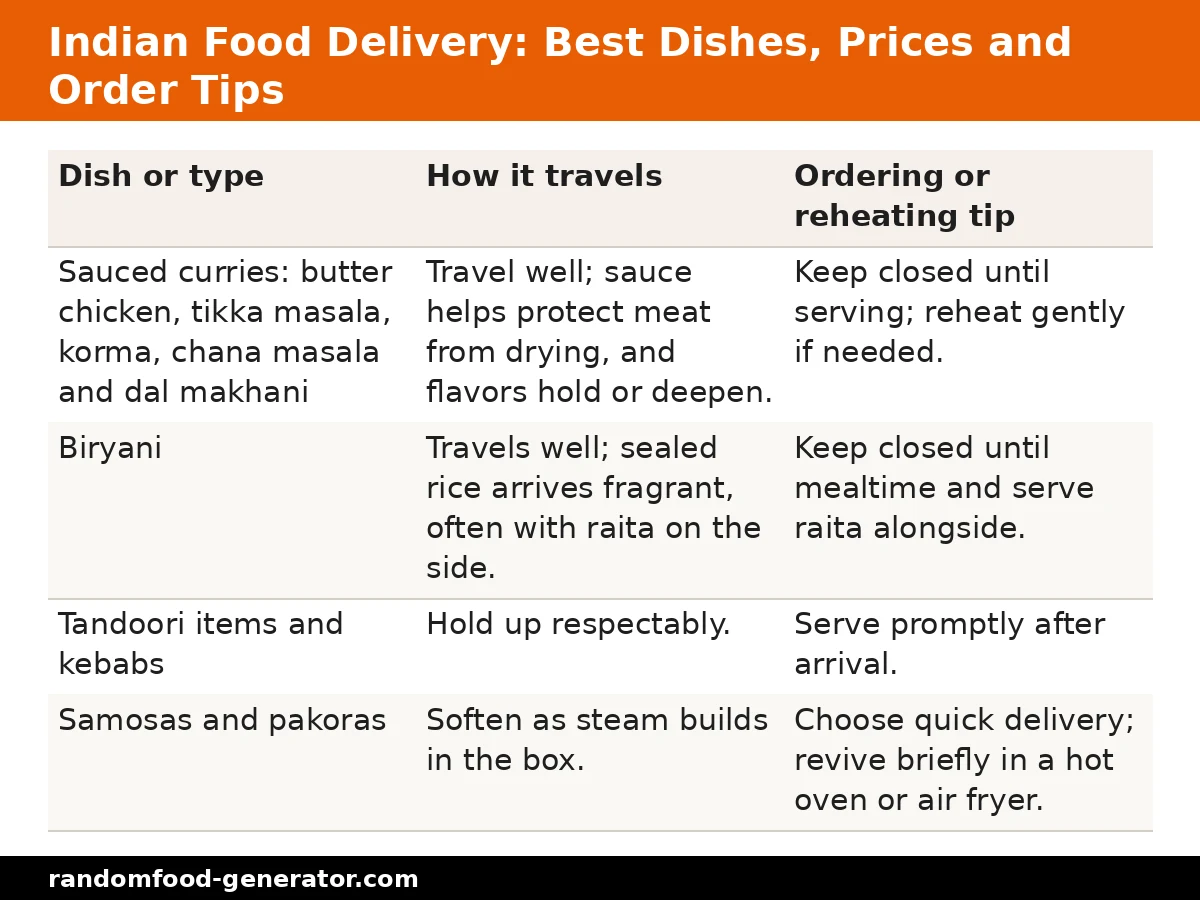
Texture matters in transit. Saucy dishes are usually more forgiving than foods that depend on crispness. Use this guide to choose items that suit delivery and to refresh them before serving.
| Dish or type | How it travels | Ordering or reheating tip |
|---|---|---|
| Sauced curries: butter chicken, tikka masala, korma, chana masala and dal makhani | Travel well; sauce helps protect meat from drying, and flavors hold or deepen. | Keep closed until serving; reheat gently if needed. |
| Biryani | Travels well; sealed rice arrives fragrant, often with raita on the side. | Keep closed until mealtime and serve raita alongside. |
| Tandoori items and kebabs | Hold up respectably. | Serve promptly after arrival. |
| Samosas and pakoras | Soften as steam builds in the box. | Choose quick delivery; revive briefly in a hot oven or air fryer. |
| Dosa | Can turn leathery or soggy quickly. | Order when delivery should be quick. |
| Naan | Can steam itself soft inside its package. | Warm over a flame or in a dry pan. |
| Creamy sauces | Can split if the order sits too long. | Choose prompt delivery and serve without a long wait. |
Order fried starters only when delivery should be quick. Keep rice and curry containers closed until serving, then reheat naan and fried items rather than microwaving them. A hot oven or air fryer can help samosas and pakoras regain texture; use a dry pan or direct flame for naan.
Typical Indian Food Delivery Prices
These are sampled, typical delivery-menu prices, not official nationwide prices. Prices vary by location and restaurant. Delivery prices are generally higher than dine-in, and the figures do not include delivery fees, service fees or tip.
| Menu item | Sampled typical delivery price |
|---|---|
| Main curries such as butter chicken, chicken tikka masala and korma | About $16–$24 per entrée |
| Biryani | About $14–$23 |
| Garlic naan | Approximately $5 |
| Plain or butter naan | Approximately $4 |
| Samosas and dosa | In the $12 range |
| Paneer and vegetable mains | About $14–$18 |
These ranges come from sampled DoorDash menus. Vegetable biryani appeared toward the lower end, while goat or lamb versions appeared toward the higher end. Several sampled curry menus clustered around $17–$18; one delivery-only brand listed mains at $23.99. These examples explain the range, not a guaranteed restaurant price.
Some restaurants promote direct pickup as less expensive than app ordering; one sampled restaurant advertised savings of up to 15% for direct pickup. Compare the final totals and pickup conditions rather than assuming every restaurant offers the same deal.
How to Choose an Indian Restaurant for Delivery
Start with the menu. Look for a mix of curries, biryani, breads and vegetarian dishes if you are ordering for a group. The “Most Ordered” section highlights featured choices, while ratings and review counts add context. Read dish descriptions and customization options before deciding.
Compare delivery fees and estimated times, then check the final total. A low menu price may not mean a lower bill after fees. If crisp starters matter, choose a delivery estimate that suits food best eaten hot; curries and biryani are generally more forgiving.
Review spice and dietary details before checkout. Do not assume a vegetable dish is vegan: confirm whether it contains cream, butter or ghee. For a group, mix mild choices with more strongly spiced dishes.
Indian Food Spice Levels: Mild to Indian Hot
Indian food spice levels vary by restaurant. Many menus offer mild, medium and hot, sometimes adding “Indian hot” or extra hot. A medium curry can be hotter than a medium dish in another cuisine, so first-timers should start mild-to-medium.
| Menu heat level | What to expect | Dish guidance |
|---|---|---|
| Mild | Gentler, often creamy or tomato-based. | Butter chicken, chicken tikka masala and korma. |
| Medium | Noticeable heat; often hotter than medium elsewhere. | Choose if you enjoy some warmth. |
| Hot | Stronger chili heat. | Vindaloo is traditionally the hottest curry on the menu. |
| Indian hot or extra hot | Highest heat option where offered. | Chicken 65 and chilli chicken sit toward the hot end. |
A quick guide to indian food spice levels helps set expectations before choosing a heat setting. Raita, naan and mango lassi can soften the heat. Rice can also spread the sauce across a larger mouthful. Water alone is not the most useful cooling partner, so consider a cooling side or drink.
Best Indian Food Delivery for Beginners
For indian food for beginners, choose familiar flavors and mild-to-medium spice. Butter chicken is a straightforward first curry; chicken tikka masala is another approachable choice. Biryani works when you prefer a rice-based main.
A simple meat-eater order is butter chicken or chicken tikka masala, garlic naan, vegetable samosas, biryani or basmati rice, and mango lassi. Choose mild-to-medium spice.
For a vegetarian first order, try paneer butter masala with chana masala and garlic naan. If heat is uncertain, ask for mild or medium rather than hot.
Vegetarian Indian Food Delivery
Vegetarian indian food offers more than side dishes. Menus commonly include paneer butter masala, saag paneer, paneer tikka, lentil dals, chana masala, aloo gobi, baingan bharta and vegetable biryani.
For a balanced order, combine a paneer dish with a lentil or chickpea dish, then add rice or garlic naan. Samosas or dosa can add variety, although dosa is best when delivery is quick.
Vegan Indian Food: Check the Dairy Fine Print
Vegetarian does not automatically mean vegan. Many dishes are finished with cream, butter or ghee, and paneer is dairy-based. For a vegan order, look for dishes cooked in oil and confirm preparation with the restaurant. Dal and chana masala are commonly vegan-friendly defaults, but recipes vary. Check whether bread also contains dairy or ghee.
How to Order Indian Food Online
- Choose the meal: curry with rice and bread, biryani, tandoori items or a vegetarian combination.
- Check featured dishes: scan “Most Ordered,” then read the descriptions.
- Set the heat: start mild or medium if you are unfamiliar with the restaurant.
- Add sides: pair curry with rice or naan; consider raita or mango lassi.
- Check dietary details: look for cream, butter and ghee if ordering vegan.
- Compare the total: review menu prices, delivery fees, service fees and tip; compare direct pickup if practical.
- Serve thoughtfully: keep rice and curry closed until serving; warm naan and fried starters with dry heat.
This approach helps you order indian food online with a clearer sense of spice, texture and total cost.
FAQs
What is the most popular Indian delivery dish?
Butter Chicken repeatedly tops the “Most Ordered” or “Most Liked” sections on sampled DoorDash Indian menus. Chicken Tikka Masala, Chicken Biryani and Garlic Naan also appear close behind; this is a sampled pattern, not a universal ranking.
How much does Indian food delivery cost?
Sampled menus put main curries at about $16–$24 and biryanis at about $14–$23. Garlic naan was approximately $5, plain or butter naan approximately $4, samosas and dosa in the $12 range, and paneer or vegetable mains about $14–$18. Fees and tip are extra; direct pickup may cost less.
Which Indian dishes travel best for delivery?
Sauced curries and biryani travel well, and tandoori items or kebabs hold up respectably. Samosas and pakoras soften, while dosa can become leathery or soggy. A hot oven or air fryer can help revive fried starters.
What should a first-timer order?
Try butter chicken or chicken tikka masala at mild-to-medium spice, with garlic naan, vegetable samosas and rice or biryani. Mango lassi is a cooling drink to have alongside the meal. A vegetarian version is paneer butter masala with chana masala and garlic naan.
Is Indian food good for vegetarians and vegans?
Indian menus offer many vegetarian choices, including paneer, dal, chana masala and aloo gobi. Vegan diners need to check for cream, butter and ghee, which can be used to finish otherwise vegetable- or lentil-based dishes. Ask whether a dish is cooked in oil and confirm the ingredients with the restaurant.
How spicy is “medium” at an Indian restaurant?
“Medium” is usually hotter than a medium setting in other cuisines, although each restaurant sets its own scale. Vindaloo is traditionally the hottest curry on the menu, while butter chicken, tikka masala and korma are at the mild, creamy end. If you are unsure, start mild-to-medium and use raita, naan or mango lassi to cool the heat.