270 Names That Mean Sun and Moon: Celestial and Luminous Names
Introduction
The two oldest names in the world are the sun and the moon. Before there were kings to name children after, there were the two lights that divided day from night, made the calendar, and filled every mythology with brothers, sisters, lovers and rivals. A child named for the sun or the moon is named for something every human culture has watched, worshipped and told stories about — which is why these names exist in literally every language on earth.
This list is built differently from most. Every name below appears exactly once — no two-word pairings are used to inflate the count — and every name is real: a genuine given name, a deity, a word in a living language, or a moon that actually circles a planet. Where a meaning is traditional lore rather than certain etymology, the table says so honestly.
Read it by sky-region. The deity shelves hold the heavyweights; the word-name tables give you ‘sun’ and ‘moon’ in thirty languages; dawn and dusk cover the borderlands where the two lights meet; and the twin shelf exists for the happiest reason of all — two babies, one for each light.
Quick Picks: The 15 Best Names That Mean Sun and Moon
| Name | Origin | Meaning |
|---|---|---|
| Apollo | Greek | Sun god; prophecy and music |
| Artemis | Greek | Moon goddess; the hunt |
| Surya | Sanskrit | The sun god |
| Chandra | Sanskrit | The moon god |
| Helios | Greek | The sun, who drives the sky chariot |
| Selene | Greek | The moon goddess |
| Amaterasu | Japanese | Sun goddess of Shinto |
| Tsukuyomi | Japanese | Moon god of Shinto |
| Sol | Latin / Norse | Sun |
| Luna | Latin | Moon |
| Ravi | Sanskrit | Sun |
| Elio | Italian / Spanish | Sun (from Helios) |
| Cynthia | Greek | Of Mount Cynthus; the moon |
| Phoebe | Greek | Bright; a Titaness of the moon |
| Mahina | Hawaiian | Moon |
Names That Mean Sun and Moon Together
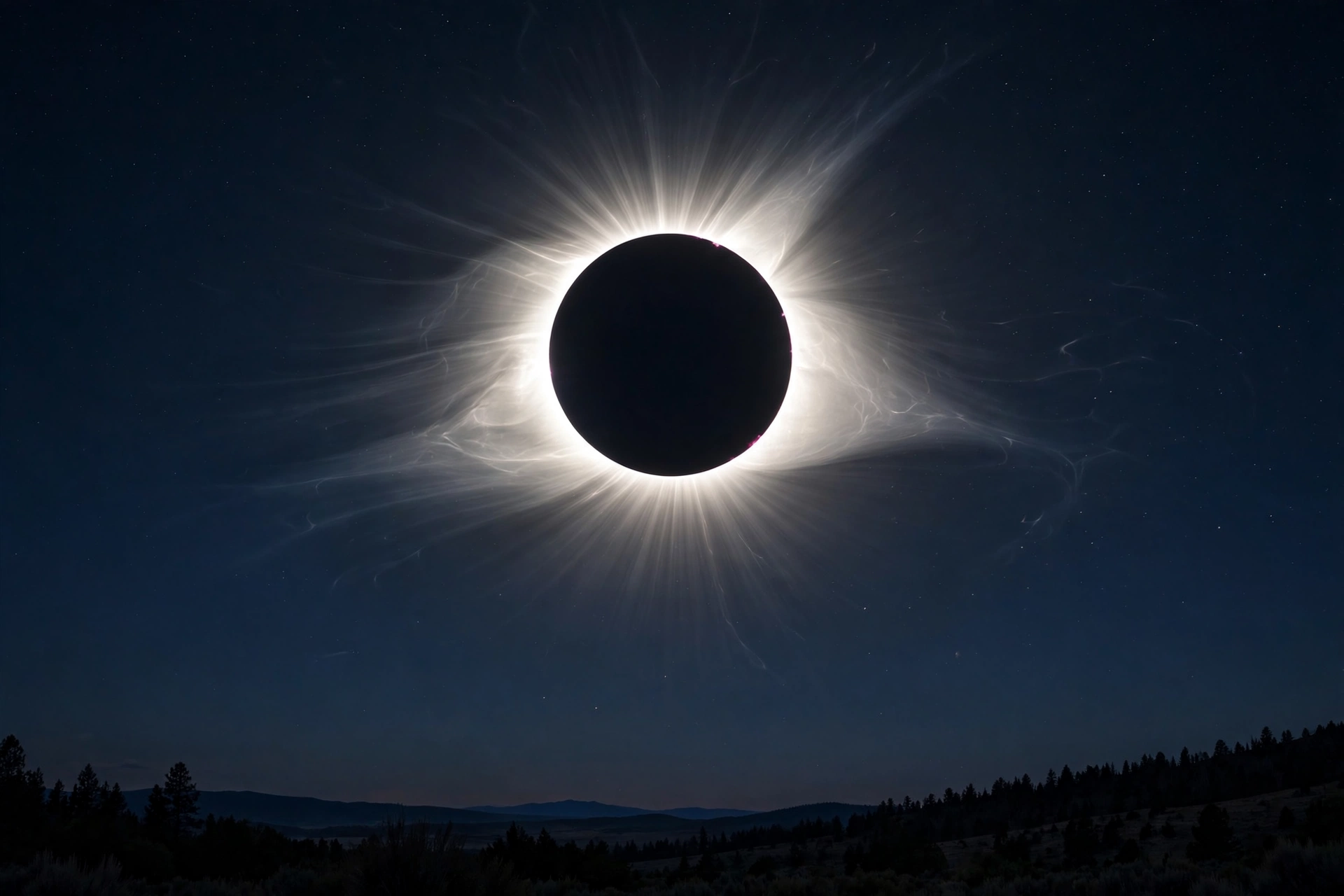
A handful of names hold both lights at once: Turkish names that fuse gün (sun) and ay (moon), Sanskrit compounds of Ravi and Chandra, and the Chinese character for ‘bright’ — which is quite literally drawn by putting the sun and the moon side by side. Around them gather the eclipse and alignment words, the moments when sun and moon meet.
| Name | Origin | Meaning | Note |
|---|---|---|---|
| Günay | Turkish | Sun and moon | Gün (sun, day) joined to ay (moon) in one Turkish name |
| Aygün | Azerbaijani / Turkish | Moon and sun | The elements reversed: ay (moon) before gün (sun) |
| Mitsuki | Japanese | Light and moon | Written with kanji that are literally ‘light’ and ‘moon’ |
| Ming | Chinese | Bright | The character is drawn from the sun and the moon together |
| Akira | Japanese | Bright | Often written with the sun-and-moon character |
| Minh | Vietnamese | Bright | From the same sun-and-moon character as Ming |
| Chandrabhanu | Sanskrit | Moon and sun | Chandra (moon) with bhanu (sun) in one classical name |
| Ravichandra | Sanskrit | Sun and moon | Ravi (sun) with Chandra (moon); a name of perfect balance |
| Saros | Greek | The eclipse cycle | The 18-year rhythm by which eclipses repeat; a rare word name |
| Syzygy | Greek | Yoked together | The alignment of sun, moon and earth; astronomy’s prettiest word |
| Eclipse | Greek / English | The darkened sun or moon | From Greek ekleipsis, ‘a failing’; a bold word name |
| Solstice | Latin | The sun stands still | The year’s two turning points of the sun |
| Equinox | Latin | Equal night | When day and night, sun and moon, stand equal |
| Umbra | Latin | Shadow | The darkest heart of an eclipse’s shadow |
| Corona | Latin | Crown | The sun’s crown of light, visible only when the moon covers it |
Sun Gods: Solar Deities of the World
Every pantheon keeps a sun, and their names are the boldest in this article — from Ra sailing his sky-boat to the Aztec fifth sun. Wikipedia’s survey of the solar deity traces the pattern across cultures; our own dedicated list of names that mean the sun goes deeper still.
| Name | Origin | Meaning | Note |
|---|---|---|---|
| Ra | Egyptian | God of the sun | Creator and king; sailed the sky in a boat |
| Aten | Egyptian | The sun disc | The single god of Akhenaten’s revolution |
| Shamash | Akkadian | God of the sun and justice | Babylon’s all-seeing sun |
| Utu | Sumerian | God of the sun | Shamash in the older Sumerian tongue |
| Tonatiuh | Aztec | God of the sun | The fifth sun of Aztec myth |
| Inti | Inca / Quechua | God of the sun | Father of the Inca emperors |
| Savitr | Sanskrit | God of the rising sun | The impeller, praised in the Gayatri mantra |
| Aditya | Sanskrit | The sun; son of Aditi | One of the solar Adityas; now a favourite Indian name |
| Vivasvat | Sanskrit | The shining sun god | Father of Manu, mankind’s ancestor |
| Mithra | Persian | God of the covenant and sun | The light that watches every oath |
| Lugh | Irish | God of light and skill | The many-skilled one, shining at Lughnasa |
| Belenus | Celtic | God of the bright sun | His feast is Beltane, the May fire festival |
| Grannus | Celtic | God of sun and healing springs | Worshipped from Scotland to Hungary |
| Baldr | Norse | God of light | The shining god whose death darkened the world |
| Dagr | Norse | Day personified | Son of Night, riding the bright horse Skinfaxi |
| Kinich Ahau | Maya | God of the sun | The sun-faced lord of the Maya |
| Lisa | Fon | God of the sun | Male twin of Mawu in Dahomey myth; the sun to her moon |
| Khepri | Egyptian | God of the morning sun | The scarab who rolls the sun into the sky |
| Atum | Egyptian | God of the evening sun | The finisher, first god of Heliopolis |
| Horus | Egyptian | God of sky and sun | The falcon whose two eyes were the sun and moon |
| Phaethon | Greek | Son of the sun | The boy who borrowed Helios’s chariot and fell |
| Svarog | Slavic | God of fire and sun (in lore) | The heavenly smith of Slavic myth |
| Dazhbog | Slavic | God of the sun | The giving god of the Slavs |
| Khors | Slavic | God of the sun | Named in the Russian Primary Chronicle |
Sun Goddesses: Solar Goddesses of the World
In the north, the sun is a goddess: Norse Sól drives her chariot ahead of a wolf, Baltic Saulė mothers the world, and Japan’s Amaterasu rules heaven itself. These are the sun’s female names, from Ireland’s shining queens to the Basque Grandmother Sun.
| Name | Origin | Meaning | Note |
|---|---|---|---|
| Sól | Norse | Goddess of the sun | She drives the sun’s chariot, chased by a wolf |
| Sunna | German | Goddess of the sun | Sól in the old German tongue |
| Saulė | Lithuanian / Baltic | Goddess of the sun | The Baltic mother of light and fertility |
| Étaín | Irish | Goddess of the sun (in lore) | The shining heroine of the Wooing of Étaín |
| Áine | Irish | Goddess of summer sun | Queen of the fairies of Munster, radiant at midsummer |
| Gráinne | Irish | Sun (in name lore) | The runaway bride of the Fenian tales |
| Sulis | Romano-British | Goddess of the sun and springs | Her temple stood at Bath; Sulis Minerva to Rome |
| Xihe | Chinese | Goddess of the sun | Mother of the ten suns of Chinese myth |
| Marici | Buddhist / Sanskrit | Goddess of dawn’s light | She rides ahead of the sun in a chariot drawn by seven pigs |
| Arinna | Hittite | Goddess of the sun | Supreme goddess of the Hittite empire |
| Shapash | Canaanite | Goddess of the sun | ‘Torch of the gods’ in the Ugaritic poems |
| Malina | Inuit | Goddess of the sun | She races her brother the moon across the sky |
| Beiwe | Sami | Goddess of the sun | Her spring feast welcomed back the light |
| Ekhi | Basque | The sun, a goddess | Grandmother Sun, who sends night’s evils underground |
Moon Gods: Lunar Deities of the World
The moon is just as often a god: the measurer of months, the traveller of the night sky, and — in Greenland myth — the brother forever chasing his sister the sun. Several of these names are simply their language’s word for moon, worn by a god first and by children ever since.
| Name | Origin | Meaning | Note |
|---|---|---|---|
| Sin | Akkadian | God of the moon | Father of the sun god Shamash; lord of Ur |
| Nanna | Sumerian | God of the moon | Sin in the older Sumerian tongue; the moon imagined as a bull |
| Khonsu | Egyptian | God of the moon | ‘Traveller’ of the night sky; a healer god |
| Thoth | Egyptian | God of the moon and wisdom | Reckoner of time, inventor of writing |
| Iah | Egyptian | God of the moon | His name is simply ‘moon’ |
| Máni | Norse | God of the moon | He guides the moon across the sky and takes the moon’s phases as his work |
| Tecciztecatl | Aztec | God of the moon | The humble god who leapt into the fire second and became the moon |
| Alignak | Inuit | God of the moon | Lord of weather and tides in Inuit myth |
| Ta’lab | Sabaean | God of the moon | Oracle god of ancient Yemen |
| Almaqah | Sabaean | God of the moon | Great god of the Sabaean kingdom |
| Aglibol | Palmyrene | God of the moon | Worshipped at Palmyra beside the sun god |
| Yarikh | Canaanite | God of the moon | Husband of the moon goddess Nikkal |
| Kusuh | Hittite / Hurrian | God of the moon | He fell from heaven in the Hurrian tale |
| Arma | Luwian | God of the moon | An Anatolian moon lord |
| Men | Anatolian / Greek | God of the moon | Mēn, ‘month’: the moon that measures time |
| Mah | Persian | God of the moon | Mah is both the god and the Persian word for moon |
| Napir | Elamite | God of the moon | The shining lord of ancient Elam |
| Anningan | Inuit | God of the moon | In Greenland myth he chases his sister the sun |
Moon Goddesses: Lunar Goddesses of the World
The moon’s goddesses rule crossroads, childbirth, rabbits and rain: Chang’e in her palace with the jade rabbit, Mama Quilla keeping the calendar of the Inca, Hecate at the dark of the moon. Our lists of names that mean the moon and female names that mean moon are this shelf’s closest kin.
| Name | Origin | Meaning | Note |
|---|---|---|---|
| Diana | Roman | Goddess of the moon and hunt | Artemis in Rome; her temple stood on the Aventine |
| Hecate | Greek | Goddess of the moon’s dark side | Keeper of crossroads, keys and ghosts |
| Bendis | Thracian | Goddess of the moon | Athens held a torch-race festival for her |
| Trivia | Roman | Goddess of crossroads and moon | Diana of the three ways; her name means ‘three roads’ |
| Mama Quilla | Inca | Goddess of the moon | Mother Moon, wife of Inti the sun |
| Coyolxauhqui | Aztec | Goddess of the moon | Her brother the sun re-enacts her defeat every dawn |
| Mayari | Philippine | Goddess of the moon | One-eyed moon queen of Tagalog myth |
| Chang’e | Chinese | Goddess of the moon | She flew to the moon and lives there with a jade rabbit |
| Jaci | Tupi (Brazil) | Goddess of the moon | Protector of lovers and plants |
| Ix Chel | Maya | Goddess of the moon | Lady Rainbow; moon, water and childbirth |
| Awilix | K’iche’ Maya | Goddess of the moon | One of the three great gods of the K’iche’ |
| Metztli | Aztec | Deity of the moon | The moon itself in Nahuatl myth |
| Losna | Etruscan | Goddess of the moon | Her oracle spoke from a sacred grove |
| Arianrhod | Welsh | Silver wheel | Her name is the spinning wheel of stars and moon |
| Cerridwen | Welsh | Goddess of the cauldron | Linked with the moon in modern pagan lore; keeper of inspiration |
| Ratih | Balinese | Goddess of the moon | Dewi Ratih; the moon swallowed monthly by Kala Rau |
| Hina | Polynesian | Goddess of the moon | She beats tapa cloth in the moon for eternity |
| Sina | Samoan | Goddess of the moon | Heroine of Samoa’s moon and eel legends |
| Chía | Muisca (Colombia) | Goddess of the moon | Wife of Bochica in Muisca myth |
| Selardi | Urartian | Goddess of the moon | Moon goddess of the ancient kingdom of Urartu |
| Ningal | Sumerian | Goddess, wife of the moon god | Great Lady of Ur, mother of the sun god |
| Nikkal | Ugaritic | Goddess of the moon | Bride of Yarikh; her wedding hymn survives |
| Ilargi | Basque | Goddess of the moon | Grandmother Moon; ilargi is still the Basque word for moon |
| Kuutar | Finnish | Goddess of the moon | The moon’s queen, who weaves cloth of moonlight |
Sun Words as Names Around the World
These are the sun’s dictionary names — the actual word for sun, sunlight or sunbeam in Turkish, Persian, Sanskrit, Welsh and a dozen more tongues, each genuinely worn as a name. For boys specifically, our list of male names that mean sun rounds up the masculine side of the family.
| Name | Origin | Meaning | Note |
|---|---|---|---|
| Kiran | Sanskrit | Sunbeam | A ray of the sun; for boys and girls in India |
| Taiyo | Japanese | The sun | Taiyō, the everyday Japanese word, bold as a name |
| Hinata | Japanese | Sunny place | Facing the sun; a beloved modern Japanese name |
| Gün | Turkish | Sun; day | The sun half of Turkey’s sun-moon names |
| Güneş | Turkish / Azerbaijani | Sun | The word for sun, worn as a name |
| Khurshid | Persian | Sun | The radiant; borne by sultans and poets |
| Mehr | Persian | Sun; love | Mehr is sunlight, kindness and Mithra at once |
| Aftab | Persian / Urdu | Sunlight | Sunshine, in Persian and Urdu poetry |
| Shams | Arabic | Sun | The root of Shamsuddin, ‘sun of the faith’ |
| Suraj | Hindi | Sun | India’s everyday sun name for boys |
| Arka | Sanskrit | Sun | A short, shining Vedic name |
| Bhaskar | Sanskrit | Maker of light | The sun as light-maker; a classic Indian name |
| Divakar | Sanskrit | Maker of day | The sun again, in his day-making role |
| Prabhakar | Sanskrit | Maker of light | Another sun title worn as a name |
| Soleil | French | Sun | The French word; famous from actress Soleil Moon Frye |
| Solveig | Norwegian | Sun-strength | Sol with veig, strength: Norway’s radiant classic |
| Solfrid | Norwegian | Sun-beautiful | Sol joined with frid, beautiful — and, happily, peace |
| Marisol | Spanish | Mary of the sun | María del Sol worn as one golden name |
| Cyrus | Persian | The sun (in lore) | Greek name lore glossed Cyrus as ‘sun’; more likely ‘young’ |
| Samson | Hebrew | Sun | From shemesh, sun: the strongman was a sun-child |
| Heliodoro | Spanish | Gift of the sun | Helios with doron, gift |
| Sunday | English | The sun’s day | A cheerful word name |
| Ravindra | Sanskrit | Lord of the sun | Ravi with Indra, king of gods |
| Athit | Thai | Sun | From Sanskrit Aditya; a Thai boy’s name |
| Tawan | Thai | Sun | Thailand’s own bright word name |
| Naran | Mongolian | Sun | Mongolia’s sun name, often for girls, sometimes boys |
| Arev | Armenian | Sun | The Armenian word, worn as a name |
| Areg | Armenian | Sun | A classic Armenian boy’s name |
| Heulwen | Welsh | Sunshine | Wales’s sunshine name for girls |
| Eguzki | Basque | Sun | The Basque word for the sun, used as a name |
| Saulius | Lithuanian | Of the sun | The masculine form of Saulė, the sun goddess |
Moon Words as Names Around the World
The moon’s word names are softer and stranger than the sun’s: Turkish builds a whole family on ay, Sanskrit gives us the hare-marked moon and the full moon’s lord, and Finland’s Kalevala treats Kuu, the moon, as a person in his own right.
| Name | Origin | Meaning | Note |
|---|---|---|---|
| Tsuki | Japanese | Moon | The everyday Japanese word, tsuki |
| Mizuki | Japanese | Beautiful moon | One of Japan’s most loved names, written ‘beautiful moon’ |
| Ay | Turkish | Moon | The moon half of a dozen Turkish names |
| Aylin | Turkish | Moon glow | The halo of light around the moon |
| Aysel | Turkish | Moonlight flood | Ay with sel, a flood of moonlight |
| Ayla | Turkish | Halo of the moon | Also a Hebrew oak name elsewhere; in Turkish, pure moonlight |
| Aysun | Turkish | Bright as the moon | Ay with sun: ‘as lovely as the moon’ |
| Qamar | Arabic | Moon | A whole sura of the Quran is called Al-Qamar, The Moon |
| Badr | Arabic | Full moon | Badr is the full moon; a battle and a name |
| Hilal | Arabic | Crescent moon | The new crescent that opens the holy month |
| Chandran | Tamil / Malayalam | Moon | Chandra in South Indian dress |
| Indu | Sanskrit | Moon | ‘Bright drop’: the moon as a drop of light |
| Yue | Chinese | Moon | Yuè, a graceful Chinese name element |
| Nguyệt | Vietnamese | Moon | The Sino-Vietnamese moon, common in girls’ names |
| Chantra | Thai | Moon | Sanskrit Chandra in Thai form |
| Nila | Tamil | Moon | In Tamil, nila is the moon (in Sanskrit, blue) |
| Bulan | Malay / Indonesian | Moon; month | One word for the moon and the month it measures |
| Purnama | Indonesian / Sanskrit | Full moon | The full moon’s own name in Bali and Java |
| Levana | Hebrew | Moon; white | From levana, the white one; a poetic Hebrew name |
| Lune | French | Moon | The French word, chic as a name |
| Lua | Portuguese | Moon | Portugal’s small moon name |
| Kuu | Finnish | Moon | Finland’s word; the moon as a character in the Kalevala |
| Saran | Mongolian | Moon | Mongolia’s moon name |
| Lusin | Armenian | Moon | An Armenian girl’s name straight from the word |
| Marama | Maori | Moon; month | Also light and clarity in te reo Māori |
| Masina | Samoan | Moon | Samoa’s word for the moon |
| Chandrika | Sanskrit | Moonlight | Moonbeams as a name |
| Jyotsna | Sanskrit | Moonlight | The light of the moon, classical and lovely |
| Shashi | Sanskrit | The moon | ‘The hare-marked one’ — the hare in the moon |
| Shashank | Sanskrit | The moon | Another hare-marked moon name, for boys |
| Rakesh | Sanskrit | Lord of the full moon | Raka, full moon, with ish, lord |
| Purnima | Sanskrit | Full moon | The full-moon day itself, a name of completeness |
Dawn Names: Where Moon Meets Sun
Dawn is the daily truce of sun and moon: night hands the sky over, and for a few minutes both lights share it. Its goddesses — Vedic Ushas, Greek Eos, Slavic Zorya — are among the oldest deities named in this article.
| Name | Origin | Meaning | Note |
|---|---|---|---|
| Aurora | Roman | Goddess of dawn | She flies ahead of the sun, renewing herself daily |
| Dawn | English | Dawn | The daybreak word name |
| Ushas | Sanskrit | Goddess of dawn | The Vedic dawn, hymned more than any other goddess |
| Eos | Greek | Goddess of dawn | Rosy-fingered Eos opens the gates for Helios |
| Zorya | Slavic | Goddess of dawn | The Morning Star who opens heaven’s gates |
| Akatsuki | Japanese | Dawn | Daybreak; a bold modern Japanese name |
| Asahi | Japanese | Morning sun | Written ‘morning’ and ‘sun’: the sun of morning |
| Shachar | Hebrew | Dawn | The dawn itself; also a Canaanite dawn god |
| Sahar | Arabic | Dawn | The last darkness before daybreak |
| Fajr | Arabic | Dawn | The dawn prayer; daybreak as a name |
| Danica | Slavic | Morning star | Dawn’s star; Venus at first light |
| Aušra | Lithuanian | Dawn | Lithuania’s dawn word and goddess |
| Aušrinė | Lithuanian | Morning star | Goddess of the morning star, dawn’s herald |
| Eostre | Germanic | Goddess of dawn | Her name survives in Easter |
| Hemera | Greek | Day personified | Daughter of Night, mother of brightness |
| Alectrona | Greek | Goddess of the morning | Daughter of Helios who wakes the world |
| Roxana | Persian | Dawn (in lore) | Alexander’s wife; her name is glossed ‘little star’ and ‘dawn’ |
| Alba | Spanish / Italian | Dawn | Also means white; dawn in two languages |
Dusk and Night Names: Where Sun Meets Moon
At dusk the exchange happens in reverse: the evening star appears, the moon takes office, and night — feared even by Zeus in the form of Nyx — covers the world. These are twilight’s names, from the Scots ‘gloaming’ to the Vedic night mother Ratri.
| Name | Origin | Meaning | Note |
|---|---|---|---|
| Hesperus | Greek | The evening star | Venus at dusk; father of the Hesperides |
| Vesper | Latin | Evening | Evening prayer and the evening star |
| Dusk | English | Dusk | A rare, moody word name |
| Twilight | English | Twilight | The sun-moon borderland as a name |
| Gloaming | Scots | Twilight | The Scots word for dusk; pure atmosphere |
| Astraeus | Greek | God of dusk | Father of the stars and the winds |
| Erebus | Greek | Darkness | The primordial gloom beneath the world |
| Nox | Roman | Night | Nyx in Latin dress |
| Nyx | Greek | Night personified | Even Zeus feared the night goddess |
| Ratri | Sanskrit | Goddess of night | The Vedic night, a starry protective mother |
| Layla | Arabic | Night | Night itself; the beloved of Majnun’s legend |
| Nisha | Sanskrit | Night | A calm Indian night name |
| Rajani | Sanskrit | Night | The darkened, starry one |
| Yamini | Sanskrit | Night | Night in Sanskrit poetry |
| Sharvari | Sanskrit | Night; twilight | Also a year-name in the Hindu cycle |
Star Names: The Third Light
Sun and moon rule the sky, but the stars keep its calendar — and our list of names that mean sky or stars charts them all. This shelf holds the essentials: the brightest stars, the Pleiades, and the word for ‘star’ from Wales to Turkey.
| Name | Origin | Meaning | Note |
|---|---|---|---|
| Stella | Latin | Star | The star name of a thousand saints and actresses |
| Astra | Greek | Stars | As in ‘ad astra’: to the stars |
| Sirius | Greek | The glowing one | The dog star, brightest in the night sky |
| Vega | Arabic | The falling eagle | The harp star, fifth-brightest of all |
| Altair | Arabic | The flying eagle | The eye of the eagle Aquila |
| Orion | Greek | The hunter | The sky’s great hunter, loved by dawn herself |
| Lyra | Greek | The lyre | Orpheus’s lyre among the stars, holding Vega |
| Leo | Latin | The lion | A constellation and a pope’s name |
| Castor | Greek | The shining twin (in lore) | The mortal twin, now a star in Gemini |
| Antares | Greek | Rival of Mars | The red heart of Scorpius |
| Electra | Greek | Amber; shining | A lost Pleiad and a tragic princess |
| Maia | Greek | Mother | Eldest of the Pleiades, mother of Hermes |
| Alcyone | Greek | Kingfisher | The brightest Pleiad; the halcyon days are hers |
| Andromeda | Greek | The chained princess (myth) | Rescued by Perseus, set among the stars, now a galaxy |
| Callisto | Greek | Most beautiful | Turned into a bear, set among stars; also a moon of Jupiter |
| Celeste | French / Italian | Heavenly | Of the sky; a name of pure air |
| Seren | Welsh | Star | Wales’s own star name |
| Izar | Basque | Star | The Basque word for star |
| Hoku | Hawaiian | Star | As in Hōkūleʻa, the voyaging star of gladness |
| Najm | Arabic | Star | An-Najm, ‘The Star’, is a sura of the Quran |
| Tara | Sanskrit | Star | Also a Buddhist goddess, the saviouress |
| Setareh | Persian | Star | Persia’s star name for girls |
| Yıldız | Turkish | Star | As in the Star Palace of Istanbul |
| Astraea | Greek | Goddess of stars and justice | The last immortal to leave the earth |
Light Names: Sunlight and Moonlight
Between the two great lights lies light itself. These names mean light, brightness and shining in Hebrew, Arabic, Persian, Japanese and the classical tongues — the gentlest corner of the sun-and-moon theme.
| Name | Origin | Meaning | Note |
|---|---|---|---|
| Lucius | Latin | Light | Born at daybreak, said the Romans |
| Noor | Arabic | Light | For boys and girls across the Arab world |
| Chiara | Italian | Bright | Saint Clare of Assisi in Italian |
| Clara | Latin | Bright; famous | Clear and bright across Europe |
| Phoebus | Greek | The bright one | Apollo’s sun-epithet as a name |
| Lior | Hebrew | My light | A modern Israeli favourite |
| Uri | Hebrew | My light; my flame | One of the craftsmen of the Tabernacle in Exodus |
| Uriel | Hebrew | God is my light | The archangel of light |
| Meir | Hebrew | One who shines | A rabbi’s name, and a prime minister’s surname: Golda Meir |
| Zohar | Hebrew | Brilliance | The great book of Kabbalah is the Zohar, ‘Splendour’ |
| Anwar | Arabic | Lights; brighter | ‘Lights’, the plural of nur, as a name |
| Munir | Arabic | Luminous | The shining one |
| Roshan | Persian | Bright; luminous | Light across Persia and South Asia |
| Abner | Hebrew | Father of light | Saul’s commander in the Bible |
| Jair | Hebrew | He shines | A judge of Israel |
| Hikari | Japanese | Light | Usually a girl’s name; pure light either way |
| Hikaru | Japanese | To shine | For boys and girls; a J-pop superstar’s name |
| Akari | Japanese | Light; brightness | A modern Japanese favourite |
Twin and Pair Names: Sun-Moon Sibling Stories
Sun and moon are so often siblings — or twins — that their stories make a shelf of their own: Leto, mother of Apollo and Artemis; Hyperion and Theia, parents of sun, moon and dawn together; the Vedic dawn twins, the Ashvins; and Freyr and Freyja, the Norse twins of sunshine and love. Use these for one child who carries the whole story, or as inspiration for actual twins.
| Name | Origin | Meaning | Note |
|---|---|---|---|
| Leto | Greek | The hidden one (in lore) | Mother of the twins Apollo and Artemis |
| Asteria | Greek | Of the stars | Mother of Hecate; aunt of Apollo and Artemis |
| Hyperion | Greek | The high one | Titan father of Helios, Selene and Eos |
| Theia | Greek | Divine sight | Titaness mother of sun, moon and dawn |
| Pollux | Greek / Latin | The immortal twin | Castor’s brother, set with him in Gemini |
| Romulus | Latin | Founder of Rome | His mythic twin was Remus |
| Gemini | Latin | The twins | The constellation of Castor and Pollux as a name |
| Ashvin | Sanskrit | The twin horsemen | Twin Vedic gods of dawn and healing |
| Nasatya | Sanskrit | Kind; helpful (in lore) | One of the dawn twins, the Ashvins |
| Dasra | Sanskrit | Effective (in lore) | The other dawn twin |
| Freyr | Norse | Lord | Twin brother of Freyja; god of sunshine and good seasons |
| Freyja | Norse | Lady | Twin sister of Freyr; goddess of love and beauty |
| Amphion | Greek | A twin of myth | His music raised the walls of Thebes; twin of Zethus |
| Helen | Greek | Torch; bright (in lore) | Twin sister of Pollux in the Dioscuri tales |
Moons of Uranus: Shakespeare in Orbit
Astronomers named the moons of Uranus after Shakespeare and Pope, which makes this the most literary shelf in the sky: Miranda still marvels, Titania still reigns, and the dusky sprite Umbriel circles in shadow — a ready-made set of moon names with stories attached.
| Name | Origin | Meaning | Note |
|---|---|---|---|
| Miranda | Latin | Marvellous | Shakespeare’s heroine, now a moon of Uranus |
| Ariel | Hebrew | Lion of God | The Tempest’s spirit; a moon and a mermaid |
| Umbriel | Latin | Shadow | The ‘dusky melancholy sprite’ of Pope’s poem, now a moon |
| Titania | Greek | Of the Titans | Shakespeare’s fairy queen; a great moon of Uranus |
| Oberon | Germanic | Elf king | A Midsummer Night’s fairy king and a moon |
| Portia | Latin | A Shakespeare heroine | The Merchant of Venice’s heiress, now a moon |
| Bianca | Italian | White | The Taming of the Shrew’s younger sister, now a moon |
| Ophelia | Greek | Help; aid | Hamlet’s Ophelia, circling Uranus |
| Juliet | Italian | Youthful (in lore) | Romeo’s Juliet, now a small bright moon |
| Cordelia | Celtic / Latin | Heart (in lore) | King Lear’s true daughter, now the innermost moon |
| Desdemona | Greek | Ill-starred | Othello’s wife; her name honestly means ‘ill-fated’ |
| Cressida | Greek | Gold (in lore) | Troilus and Cressida’s heroine, now a moon |
Literary and Modern Sun and Moon Names
Poets keep the theme alive: Keats gave us Endymion, the shepherd the moon loved; the morning star gives us Venus, Ishtar and — handle with care — Lucifer, ‘light-bringer’ itself. Modern parents add Solaris, Sunniva and a girl simply named Moon.
| Name | Origin | Meaning | Note |
|---|---|---|---|
| Endymion | Greek | Beloved of Selene | The shepherd the moon loved; Keats’s great poem |
| Tithonus | Greek | Dawn’s beloved | Eos begged him eternal life and forgot eternal youth |
| Cephalus | Greek | Head | The hunter Eos carried off at dawn |
| Icarus | Greek | The sun-flyer | He flew too close to the sun on wax wings |
| Moon | English | The moon | Worn by actress Moon Bloodgood; also Keith Moon’s surname |
| Sterling | English | Little star (in lore) | Also genuine silver; a surname name |
| Esther | Persian | Star (in lore) | The queen who saved her people; her name is tied to Ishtar and stars |
| Ishtar | Akkadian | Goddess of the morning star | Venus as a goddess of love and war |
| Astarte | Phoenician / Greek | Goddess of the star | Ishtar in Greek and Phoenician dress |
| Venus | Latin | Goddess; the morning star | The brightest light in our sky after sun and moon |
| Lucifer | Latin | Light-bringer | The morning star’s Latin name; choose with eyes open |
| Solaris | Latin | Of the sun | Lem’s novel and Tarkovsky’s film made it a name |
| Sunniva | Norwegian / Irish | Sun gift | An Irish princess-saint of Norway |
| Solana | Spanish | Sunny place | A modern name of Mediterranean light |
| Eliana | Italian / Hebrew | Daughter of the sun (in lore) | Italian lore links her to Helios; in Hebrew, ‘my God answered’ |
How to Choose a Sun and Moon Name
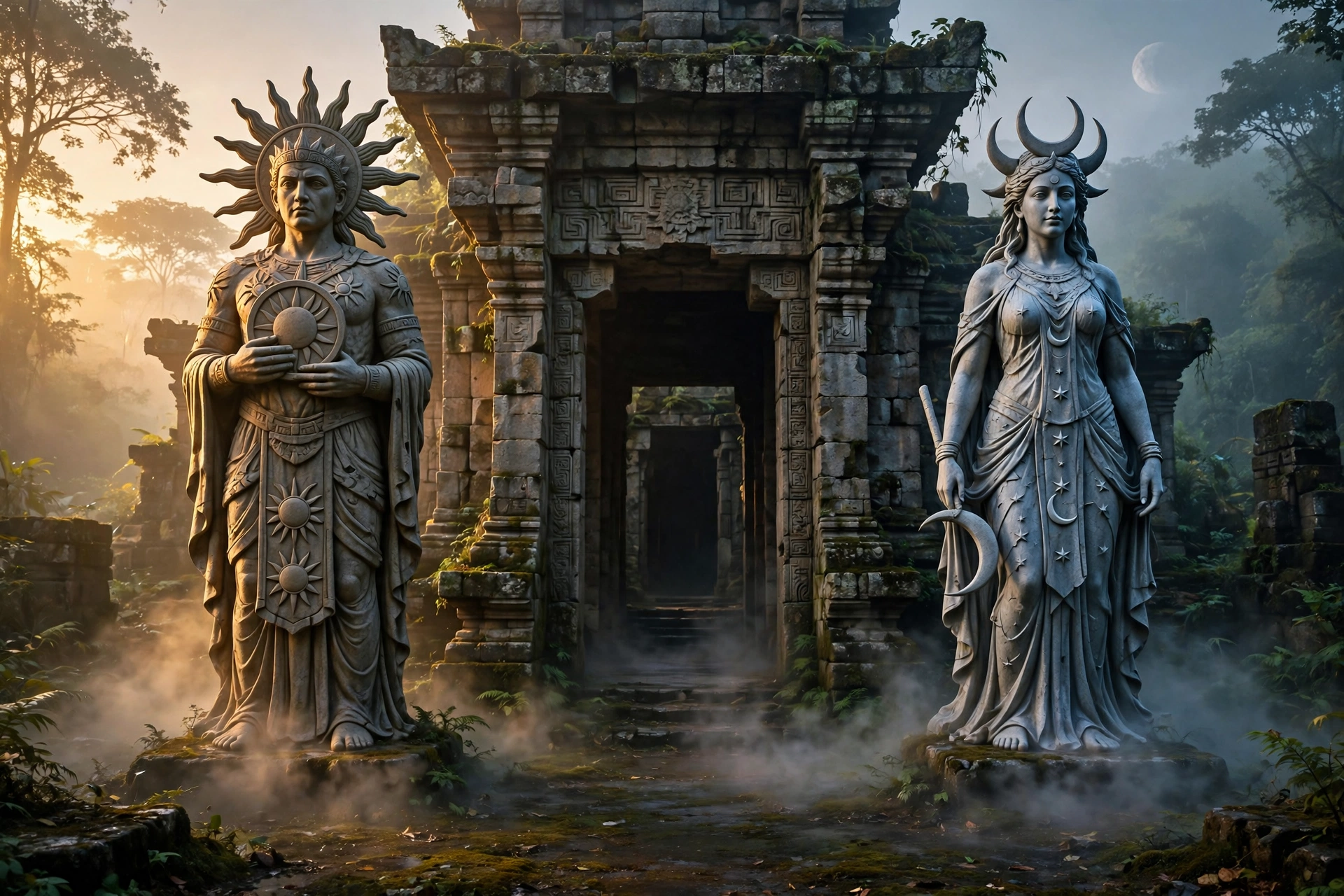
Start by choosing a side — or don’t. Sun names (Helios, Surya, Solveig, Khurshid) are warm, public and confident, the names of noon. Moon names (Selene, Chandra, Aylin, Tsuki) are cooler, quieter and more mysterious, the names of midnight. Dual and eclipse names (Günay, Ravichandra, Syzygy) refuse to choose, and make the boldest statements of all.
For twins and siblings, mythology has done the pairing work for you: Apollo and Artemis, Amaterasu and Tsukuyomi, Freyr and Freyja, Sol and Máni. A sun name for one child and a moon name for the other gives siblings a shared sky without matching outfits.
Finally, honour the source. Many of these names are living gods in living religions — Amaterasu in Shinto, Surya and Chandra in Hinduism, Chang’e in Chinese folk tradition. Learn the pronunciation, know the story, and be ready to tell your child both; a celestial name chosen with respect tends to be worn with pride.
Frequently Asked Questions
What name means both sun and moon?
Turkey’s Günay and Aygün fuse gün (sun) with ay (moon) in a single name, and Sanskrit does the same with Ravichandra and Chandrabhanu (Ravi/Chandra, sun and moon). The Chinese character for ‘bright’ — Ming, Minh, Akira — is literally drawn from the sun and moon radicals together.
What are good sun and moon names for twins?
Mythology’s own pairs are the classics: Apollo and Artemis (Greek twins), Amaterasu and Tsukuyomi (Japan’s sun goddess and moon god), Freyr and Freyja (Norse twins of sunshine and love), and Sol and Máni in Scandinavia. For a subtler match, pair a sun word (Elio, Ravi) with a moon word (Luna, Ayla).
What name means sun and moon in Japanese?
No single everyday Japanese name means both, but Mitsuki written with the kanji for ‘light’ and ‘moon’ comes close, and Akira written with the sun-and-moon character means ‘bright’. Japan’s true sun-moon pair is the deities: Amaterasu, sun goddess, and her brother Tsukuyomi, god of the moon.
What are the best sun names for boys and moon names for girls?
For boys, the strongest sun names are Helios, Surya, Ravi, Samson (‘sun’ in Hebrew) and Cyrus. For girls, the loveliest moon names are Selene, Luna, Aylin and Aysel from the Turkish ay family, Mizuki (‘beautiful moon’) and Diana. All of them reverse gracefully, too — Chandra is a god, and Sol a goddess in Norse myth.
What name means eclipse?
Eclipse itself is a rare English word name. Astronomy offers the beautiful Saros (the 18-year cycle by which eclipses repeat), Syzygy (the sun-moon-earth alignment), Umbra (the eclipse’s darkest shadow) and Corona (the sun’s crown, visible only during totality).
Conclusion
Sun or moon, dawn or dusk, a celestial name connects a child to the first stories ever told. Choose the blazing confidence of Surya, the silver quiet of Selene, the perfect balance of Ravichandra, or the sheer poetry of Syzygy — and every time your child looks up, their name is looking back. Clear skies to them, whichever light they carry.