370 Girl Names That Mean Healing: Restorative and Nurturing Names
Introduction
Every culture keeps a list of names it reaches for in the sickroom. Some are prayers disguised as names — God has healed, cure, mercy. Some belong to the healers themselves: the Egyptian lioness whose priests were doctors, the Norse goddess called the best of physicians, the Roman widow who built a hospital out of her own fortune. And some are simply the vocabulary of getting better — life, peace, dawn, rebirth — in forty languages.
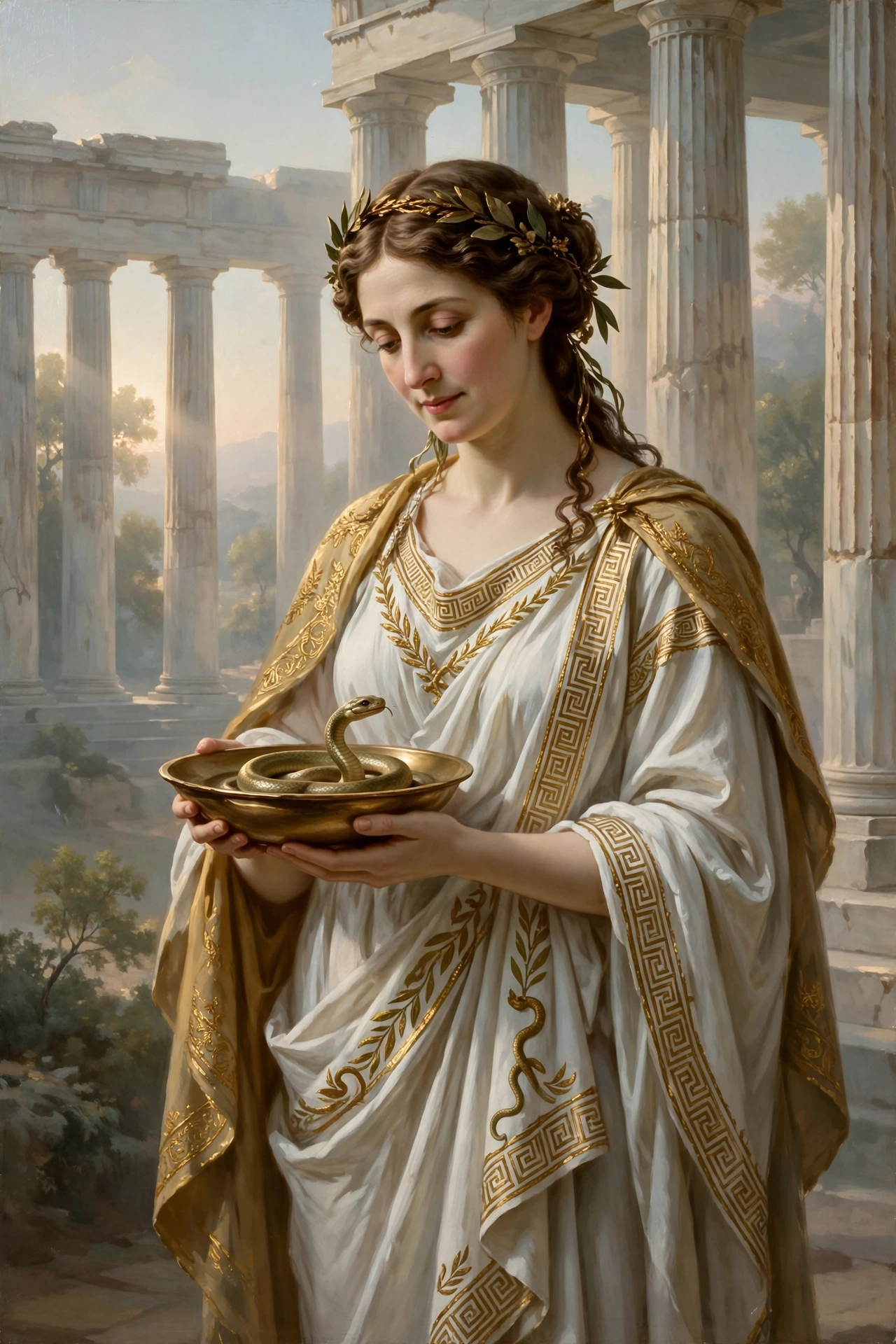
This list is built to be the deepest and the most honest one available. Every name below is real, appears exactly once, and carries its origin and meaning beside it. The categories separate the true healing goddesses from the wider family: saint-physicians, midwives of scripture, healing herbs, sacred springs, history’s first women doctors, and the recovery names — healthy, reborn, risen — chosen for children who are themselves the answer to a prayer. The Greek healing family is the natural place to begin: you can read more about its most famous daughter in the article on Hygieia, the goddess whose name gave us the word hygiene.
A healing name is often chosen in a hard season, and that is no bad thing: it carries the story of the season and the proof that it ended. If the strength to keep going is the other half of your story, see our girl names that mean strength, and for the children named as answers to prayer, our names that mean miracle girl.
Quick Picks: The 15 Best Girl Names That Mean Healing
| Name | Origin | Meaning |
|---|---|---|
| Panacea | Greek | Cure-all — the goddess who healed everything |
| Iaso | Greek | Healing; recovery — daughter of Asclepius |
| Eir | Norse | The best of physicians among the Norse gods |
| Salus | Roman | Health and safety personified |
| Aceso | Greek | Healing — the goddess of the healing process |
| Rafaela | Hebrew / Spanish | God has healed |
| Afiya | Arabic | Health; wellness |
| Brigid | Irish | Goddess and saint of healing wells and midwives |
| Hildegard | German | The visionary abbess who wrote medicine books |
| Hygieia | Greek | Health — the goddess behind the word hygiene |
| Sekhmet | Egyptian | The lioness whose priests were physicians |
| Airmed | Irish | The goddess who gathered every healing herb |
| Isis | Egyptian | The great healer who reassembled Osiris |
| Galena | Greek | Calm; also the mineral named for the physician Galen |
| Melissa | Greek | Honey bee; lemon balm, the healer’s herb |
Greek and Roman Healing Goddesses
Greek medicine began as a family business: Asclepius, the god of healing, had five daughters, and each one personifies a stage of getting well. Rome adopted them all and added goddesses of her own.
| Name | Origin | Meaning | Note |
|---|---|---|---|
| Aegle | Greek | Radiance; glow of health | Daughter of Asclepius — the healthy glow itself |
| Epione | Greek | Soothing; softening pain | Wife of Asclepius and mother of the healing sisters |
| Aglaia | Greek | Splendour; brightness | Listed among the daughters of Asclepius and Epione in later tradition |
| Paeonia | Greek | From Paeon, healer of the gods | The peony flower carries the divine physician’s name |
| Therapeia | Greek | Healing; cure; care | The Greek word behind ‘therapy’, occasionally given as a name |
| Meditrina | Roman | The healer (from mederi, to heal) | Her festival drank new wine to ask for health |
| Angitia | Roman / Oscan | The snake goddess | The Marsi tribe’s goddess of snakebite cures and herbal lore |
| Febris | Roman | Fever | Rome prayed to Febris to keep fever away — protection by naming |
| Carna | Roman | Flesh; the organs | Goddess who guarded the health of the heart and inner organs |
| Valetudo | Roman | Health; good condition | Rome’s own name for the Greek Hygieia |
| Bona | Latin | The good one | From Bona Dea, the Good Goddess, whose temple healed the sick |
Norse, Celtic and European Healing Goddesses
Northern healing was women’s work and goddesses’ glory: the Norse called Eir the best of physicians, and the Celtic world raised temples to spring goddesses whose waters still draw pilgrims today.
| Name | Origin | Meaning | Note |
|---|---|---|---|
| Menglod | Norse | Necklace-glad (name lore) | The maiden of Lyfjaberg, the Healing Mountain, whose nine attendants heal all who climb to her |
| Eira | Welsh / Scandinavian | Snow (Welsh); from Eir (Scandinavian use) | In Scandinavia it is widely read as Eir’s name in modern form |
| Liv | Norse | Life; protection | Líf is the woman who survives the end of the world to begin it again |
| Sirona | Gaulish | Star goddess (name lore) | A healing goddess of springs, worshipped from Brittany to the Danube |
| Sulis | Celtic British | The goddess of Bath | Her sacred spring at Bath healed Romans and Britons alike |
| Damona | Gaulish | Divine cow | Consort of Borvo of the bubbling springs, honoured at healing sanctuaries |
| Sequana | Gaulish | Goddess of the Seine’s source | The sick slept in her temple and left carved models of healed limbs |
| Coventina | Celtic British | The water goddess of Carrawburgh | Her well on Hadrian’s Wall was filled with coins and prayers for health |
| Nantosuelta | Gaulish | Winding stream (name lore) | A goddess of hearth and plenty shown with a little house of provision |
| Aventia | Gaulish | Goddess of the Aventicum springs | A Swiss water goddess known from healing dedications |
| Aveta | Gaulish | Mother goddess of birth and springs | Worshipped at a healing spring sanctuary in Trier |
| Icovellauna | Gaulish | The good water-finder (name lore) | A spring goddess of eastern Gaul |
| Sulevia | Celtic | The good guide / mother | One of the mother goddesses invoked at healing shrines |
| Modron | Welsh | Divine mother | The mother of Mabon, from the old goddess Matrona of the rivers |
| Zhiva | Slavic | Alive; life | The goddess of life and vitality among the Polabian Slavs |
| Devana | Slavic | The maiden huntress | A forest goddess of wild health and freedom |
| Mokosh | Slavic | The moist earth mother | Protector of women’s work, childbirth and fate |
| Vesna | Slavic | Spring | The goddess of spring’s return and renewal |
| Ausrine | Lithuanian | Dawn | The morning star goddess whose rays were prayed to for health |
| Saule | Baltic | The sun | The sun goddess who carries warmth, fertility and health across the sky |
Egyptian, African and Middle Eastern Goddesses of Healing
Egypt’s lioness Sekhmet sent plague and withdrew it, so her priests doubled as doctors. Across Africa and Mesopotamia, the pattern repeats: the great healing powers are mothers and grandmothers.
| Name | Origin | Meaning | Note |
|---|---|---|---|
| Serqet | Egyptian | She who makes the throat breathe | The scorpion goddess who heals stings and bites |
| Bastet | Egyptian | The ointment-jar goddess (name lore) | The cat goddess who protected homes against disease |
| Hathor | Egyptian | House of Horus | Mother goddess of joy, music and restoration |
| Wadjet | Egyptian | The green one; the cobra | The protective cobra of Lower Egypt, guardian against harm |
| Meretseger | Egyptian | She who loves silence | The cobra goddess of the Theban hills who healed the penitent |
| Neith | Egyptian | The creator (name lore) | The great weaver goddess whose temple at Sais was famed for its physicians |
| Maat | Egyptian | Truth; balance; right order | Health as cosmic balance — her feather weighs every heart |
| Ala | Igbo | The earth | Mother earth goddess of morality, fertility and the ancestors |
| Asase | Akan | The earth (from Asase Yaa) | The Akan earth goddess, grandmother of humanity |
| Oya | Yoruba | She tore (the wind) | Orisha of storms and transformation, who clears the way for healing |
| Oshun | Yoruba | The river orisha | Orisha of sweet waters, love and healing |
| Yemoja | Yoruba | Mother whose children are fish | The great mother orisha of the waters, protector of mothers |
| Aja | Yoruba | The forest spirit | The orisha who teaches which leaves heal — patron of herbalists |
| Gula | Mesopotamian | The great one | The great physician goddess of Sumer — ‘the lady who makes the dead live’ |
| Ninisina | Sumerian | Lady of Isin | The city goddess worshipped as chief physician of the land |
| Bau | Sumerian | The mother (name lore) | Healing goddess of Lagash, called the merciful mother |
| Nintinugga | Sumerian | Lady who revives the dead | A healing goddess of Nippur who made the dead whole |
| Ninkarrak | Akkadian | Lady of Karrak | A healing goddess invoked in prayers against disease |
| Ishtar | Akkadian | The goddess (name lore) | Love and war goddess to whom the sick also prayed for recovery |
| Shapash | Ugaritic | The sun; torch of the gods | The sun goddess who searches out and restores the lost in myth |
| Astarte | Phoenician | The goddess (from Athtar) | Healing and love goddess worshipped from Cyprus to Egypt |
Hindu, Buddhist and East Asian Healing Goddesses
In South Asia, fevers have goddesses of their own — Shitala who cools them, Mariamman who sends the rain that ends them — while Buddhism answers sickness with Tara, the mother who rescues.
| Name | Origin | Meaning | Note |
|---|---|---|---|
| Shitala | Sanskrit | The cooling one | The goddess who cools fever and pox, riding with her broom and water pot |
| Mariamman | Tamil | Mother Mari (rain mother) | The beloved goddess who heals pox and fever and brings the rain |
| Manasa | Sanskrit | The mindful one (from manas, mind) | The snake goddess who alone can cure the snakebite |
| Oladevi | Bengali | The goddess Ola | Worshipped for protection against cholera in Bengal |
| Annapurna | Sanskrit | Full of food; nourisher | The goddess whose kitchen of plenty heals hunger itself |
| Shakti | Sanskrit | Power; divine energy | The great goddess energy through which all healing flows |
| Lakshmi | Sanskrit | The sign; the goal | Goddess of fortune and wellbeing, invoked for health as much as wealth |
| Tara | Sanskrit / Tibetan | The star; the saviouress | White Tara grants long life and healing to all who call on her |
| Pandaravasini | Sanskrit | Clad in white | The White Tara by her Sanskrit name, goddess of longevity |
| Kurukulla | Sanskrit / Tibetan | The red Tara (name lore) | A fiery goddess of power and magnetising prayer |
| Janguli | Sanskrit / Buddhist | The poison-remover | The goddess who neutralises snake venom and every poison |
| Vasudhara | Sanskrit | Stream of gems; earth-bearer | Goddess of prosperity, abundance and wellbeing |
| Marici | Sanskrit / Buddhist | Ray of light; mirage | The dawn goddess who protects travellers and the sick |
| Usnisavijaya | Sanskrit / Buddhist | Victorious crown goddess | One of the three deities of long life in Tibetan Buddhism |
| Cunda | Sanskrit / Buddhist | The bodhisattva (name lore) | A gentle saviouress invoked for protection and recovery |
| Hariti | Sanskrit / Buddhist | The mother of demons, converted | The child-stealing demoness the Buddha turned into the protector of children from disease |
| Mazu | Chinese | The ancestral mother | The sea goddess whose legends are full of healings and rescues |
| Bixia | Chinese | From Bixia Yuanjun, Lady of the Azure Clouds | The goddess of childbirth and children’s health on Mount Tai |
| Guanyin | Chinese | She who hears the cries of the world | The bodhisattva of compassion, healer of every suffering |
| Kannon | Japanese | She who hears the cries | Guanyin’s Japanese form, the most beloved figure in Japanese Buddhism |
Saints and Holy Women Who Healed
Before hospitals, there were saints: an abbess who wrote two medical textbooks, a girl whose well still cures eyes, a Roman widow who built a hospital with her own fortune. Their names are a pharmacy of hope.
| Name | Origin | Meaning | Note |
|---|---|---|---|
| Fabiola | Roman / Latin | Little bean (family name Fabius) | The Roman widow who founded one of the first public hospitals in Europe |
| Marcella | Latin | Little warrior | Fabiola’s friend, who nursed Rome’s poor in her own palace |
| Paula | Latin | Small; humble | Saint Paula built hostels and a hospital for pilgrims in Bethlehem |
| Melania | Greek | Dark; black | Melania the Younger spent her fortune on hospitals and ransomed captives |
| Olympias | Greek | From Mount Olympus | The deaconess who funded Constantinople’s care of the sick |
| Clare | Latin | Clear; bright | Clare of Assisi, whose order tended the sick poor of Italy |
| Clara | Latin | Clear; bright | The continental form of Clare, borne by Clara Barton, founder of the American Red Cross |
| Agatha | Greek | Good | Patron saint of nurses and of breast disease |
| Lucia | Latin | Light | Patron saint of the blind and of eye healing |
| Apollonia | Greek | Of Apollo | Patron saint of toothache and dentistry |
| Bibiana | Latin | Alive (from Viviana) | Her legend is twined with a healing herb garden in Rome |
| Veronica | Latin | True image | The woman whose faith touched a hem and was healed; she then wiped the suffering face |
| Martha | Aramaic | The lady; mistress of the house | She ran to meet the healer and her brother rose |
| Magdalene | Hebrew | Of Magdala | Mary Magdalene, healed and first witness of the resurrection |
| Magdala | Hebrew | Tower | The town-name form, rare and lovely |
| Salome | Hebrew | Peace | One of the myrrh-bearing women at the tomb |
| Joanna | Hebrew | God is gracious | Luke names her among the women healed — who then funded the ministry |
| Susanna | Hebrew | Lily | Another of the healed women who followed and provided |
| Tabitha | Aramaic | Gazelle | Dorcas in Greek — the seamstress raised from death, mourned by every widow she had clothed |
| Phoebe | Greek | Bright; radiant | The deacon Paul commends as a helper and patron of many |
| Catherine | Greek | Pure | Catherine of Siena nursed plague victims when others fled |
| Elizabeth | Hebrew | God is my oath | Elizabeth of Hungary built a hospital and washed lepers’ feet; Elizabeth Blackwell was the first modern woman doctor |
| Hedwig | German | Battle refuge | The duchess saint who founded hospitals across Silesia |
| Radegund | German | Counsel battle | The queen who founded a hospital abbey at Poitiers |
| Walburga | German | Fortress guardian | Healing oil flows from her tomb at Eichstätt to this day |
| Odilia | German | Wealth; heritage | Born blind and healed at baptism — patron saint of eyesight |
| Gertrude | German | Spear-strong | Gertrude of Nivelles, patron of travellers and the mentally ill in folk devotion |
| Ita | Irish | Thirst (for justice, in lore) | The foster-mother of the Irish saints, whose well drew the sick |
| Gobnait | Irish | Little smith (from gobha) | The saint of bees and beekeepers, healer of her district in Cork |
| Dymphna | Irish | The fawn (name lore) | Patron saint of mental health, whose shrine at Geel pioneered humane care |
| Serafina | Italian / Hebrew | Burning one; seraph | Fina of San Gimignano, the patient invalid saint of Tuscany |
| Rita | Italian | Pearl (from Margarita) | Patron saint of impossible causes and of wounds that will not heal |
| Gemma | Italian | Gem; jewel | Gemma Galgani, the passionist saint invoked in sickness |
| Gianna | Italian | God is gracious | Saint Gianna Molla, the twentieth-century paediatrician saint |
| Kateri | Mohawk | Catherine (in Mohawk form) | Kateri Tekakwitha, the Lily of the Mohawks, whose tomb draws healing pilgrims |
| Barbara | Greek | The foreigner | In folk devotion, invoked against fever and sudden death |
| Margaret | Greek | Pearl | Patron saint of childbirth and of women in labour |
| Anne | Hebrew | Grace | Grandmother of Jesus; her wells and shrines were healing places across Europe |
| Helena | Greek | Torch; bright one | The empress whose pilgrimage mapped the healing holy places |
| Winefride | Welsh | Blessed and white (Gwenfrewi) | Her well at Holywell has drawn healing pilgrims for thirteen centuries |
Biblical Names of Healing and Rescue
Scripture’s healing stories have midwives at the centre of them — the two Hebrew midwives who defied a king — and women who saved babies, warmed kings and were raised or restored themselves.
| Name | Origin | Meaning | Note |
|---|---|---|---|
| Raphaelle | Hebrew / French | God has healed | The French feminine of Raphael, the archangel of healing |
| Shiphrah | Hebrew | Beautiful; to make fair | The midwife who defied Pharaoh and saved the Hebrew boys |
| Puah | Hebrew | Splendour; to cry out | The second midwife of Exodus, Shiphrah’s partner in courage |
| Jochebed | Hebrew | God is glory | The mother who hid Moses and nursed him back to life a nation |
| Miriam | Hebrew | Bitter; beloved (contested) | The prophetess healed of leprosy after Moses cried ‘Please, heal her’ |
| Huldah | Hebrew | Weasel; to endure (name lore) | The prophetess consulted when the lost Book was found |
| Abishag | Hebrew | Father of wandering (name lore) | The young woman whose warmth nursed the dying King David |
| Naamah | Hebrew | Pleasant; lovely | Named in Genesis among the first families of makers and healers of the world |
| Serah | Hebrew | Abundance; overflowing | Asher’s daughter, of whom legend says she lived for centuries |
| Bithiah | Hebrew | Daughter of God | Pharaoh’s daughter, who drew Moses from the river and raised him |
| Keturah | Hebrew | Incense | Abraham’s wife — incense was the ancient world’s medicine chest |
| Hadassah | Hebrew | Myrtle | Esther’s Hebrew name — the myrtle is a healing herb of the ancient world |
| Esther | Persian | Star | The queen whose courage healed her people’s fate |
| Ruth | Hebrew | Companion; friend | Her devotion restored Naomi from bitterness to joy |
| Naomi | Hebrew | Pleasantness | The widow restored — ‘call me Mara’ becomes grandmother of kings |
| Zipporah | Hebrew | Bird | Moses’s wife, whose quick action saved his life on the road |
Arabic, Persian and Turkish Names of Health and Cure
Islamic history opens its medical tradition with two women: Rufaydah, who ran a treatment tent beside the Prophet’s mosque, and al-Shifa, appointed over the market’s health. Their word-field — shifa, cure itself — is one of the richest in this whole list.
| Name | Origin | Meaning | Note |
|---|---|---|---|
| Shifa | Arabic | Healing; cure | The Quran calls itself a shifa, a healing — the word itself as a name |
| Shafiqa | Arabic | Compassionate; tender-hearted | The tenderness that nursing is made of |
| Shafaqat | Arabic / Urdu | Compassion; loving care | A virtue name of gentle care |
| Dawa | Arabic | Medicine; remedy | The everyday word for medicine, occasionally given as a name |
| Ruqayyah | Arabic | From ruqyah, healing recitation | Ruqyah is the prayer of healing recited over the sick |
| Sakina | Arabic | Tranquillity; calm sent from God | The healing calm that descends on the anxious heart |
| Rahat | Turkish / Arabic | Comfort; rest; ease | A name of convalescent rest across the Middle East |
| Aram | Persian | Calm; rest; peace | A gentle Persian name of restorative quiet |
| Tabiba | Arabic | Female physician | The word itself — a girl named Doctor |
| Hakima | Arabic | Wise woman; physician | Hakim means both sage and doctor in Arabic |
| Maryam | Arabic / Hebrew | Mary (meaning contested) | Mary, whose healing intercession is prayed for in Islam and Christianity alike |
| Zahra | Arabic | Radiant; shining | Fatimah al-Zahra, the Radiant, mother of the Prophet’s line |
| Fatimah | Arabic | The weaning one (name lore) | The Prophet’s daughter, centre of centuries of healing devotion |
| Khadijah | Arabic | Born early (name lore) | The first believer, whose comfort healed the Prophet’s fear |
| Aisha | Arabic | Alive; living well | A name that means being alive and thriving |
| Nusaybah | Arabic | Of noble lineage (name lore) | Nusaybah bint Ka’b defended the Prophet at Uhud and treated the wounded |
| Rufaydah | Arabic | Gentle support (name lore) | Rufaidah al-Aslamia, remembered as Islam’s first nurse, ran a clinic tent in Medina |
Japanese, Korean and Chinese Healing Names
East Asia contributes the mushroom of immortality, the herb that won a Nobel Prize, and the Ming dynasty’s great woman doctor, Tan Yunxian, whose casebook of women’s medicine survives.
| Name | Origin | Meaning | Note |
|---|---|---|---|
| Iyashi | Japanese | Healing; soothing | The Japanese word for healing itself, source of a whole wellness culture |
| Yasuragi | Japanese | Peace; tranquillity | The calm of recovery as a word name |
| Nodoka | Japanese | Calm; tranquil; gentle | A soft modern name of settled weather and settled hearts |
| Kokoro | Japanese | Heart; spirit; mind | The heart that nursing tends |
| Megumi | Japanese | Blessing; grace | A blessing name borne by countless kind characters |
| Ayame | Japanese | Iris | The iris, long used in Japanese herbal baths for healing |
| Chiyu | Korean | Healing; cure | The Korean word for healing, used as a gentle modern name |
| Bom | Korean | Spring | The season of recovery and return |
| Saebom | Korean | New spring | A fresh start after the winter of illness |
| Ning | Chinese | Peace; tranquillity | The stillness at the heart of convalescence |
| Anning | Chinese | Peaceful and calm | A compound name of settled wellness |
| Ankang | Chinese | Peace and health | The everyday Chinese blessing — health and stability in two characters |
| Kangning | Chinese | Health and peace | The state of being well, given as a name |
| Lingzhi | Chinese | The spirit mushroom | The reishi, China’s mushroom of immortality, and a real girl’s name |
| Baizhi | Chinese | White angelica root | A cornerstone herb of Chinese medicine, worn as a poetic name |
| Banxia | Chinese | Pinellia (the herb) | A classic medicinal herb whose name is pure poetry |
| Qinghao | Chinese | Green artemisia | The herb from which Tu Youyou won the Nobel Prize for curing malaria |
| Xinyi | Chinese | Magnolia bud | The magnolia bud of the medicine chest and the spring garden |
| Mudan | Chinese | Peony | The tree peony, whose root bark is a classic remedy |
| Shaoyao | Chinese | White peony | The white peony root, keystone of women’s medicine formulas |
| Chunyu | Chinese | The physician’s surname | For Chunyu Yan, a woman physician of the Han dynasty |
| Yunxian | Chinese | Cloud immortal (name lore) | For Tan Yunxian, the Ming dynasty woman doctor whose casebook survives |
| Baogu | Chinese | Embrace the valley (name lore) | For Bao Gu, one of China’s first women acupuncturists |
| Menlha | Tibetan | Medicine deity | The Tibetan name of the Medicine Buddha’s realm of healers |
Healing Herbs and Plants as Names
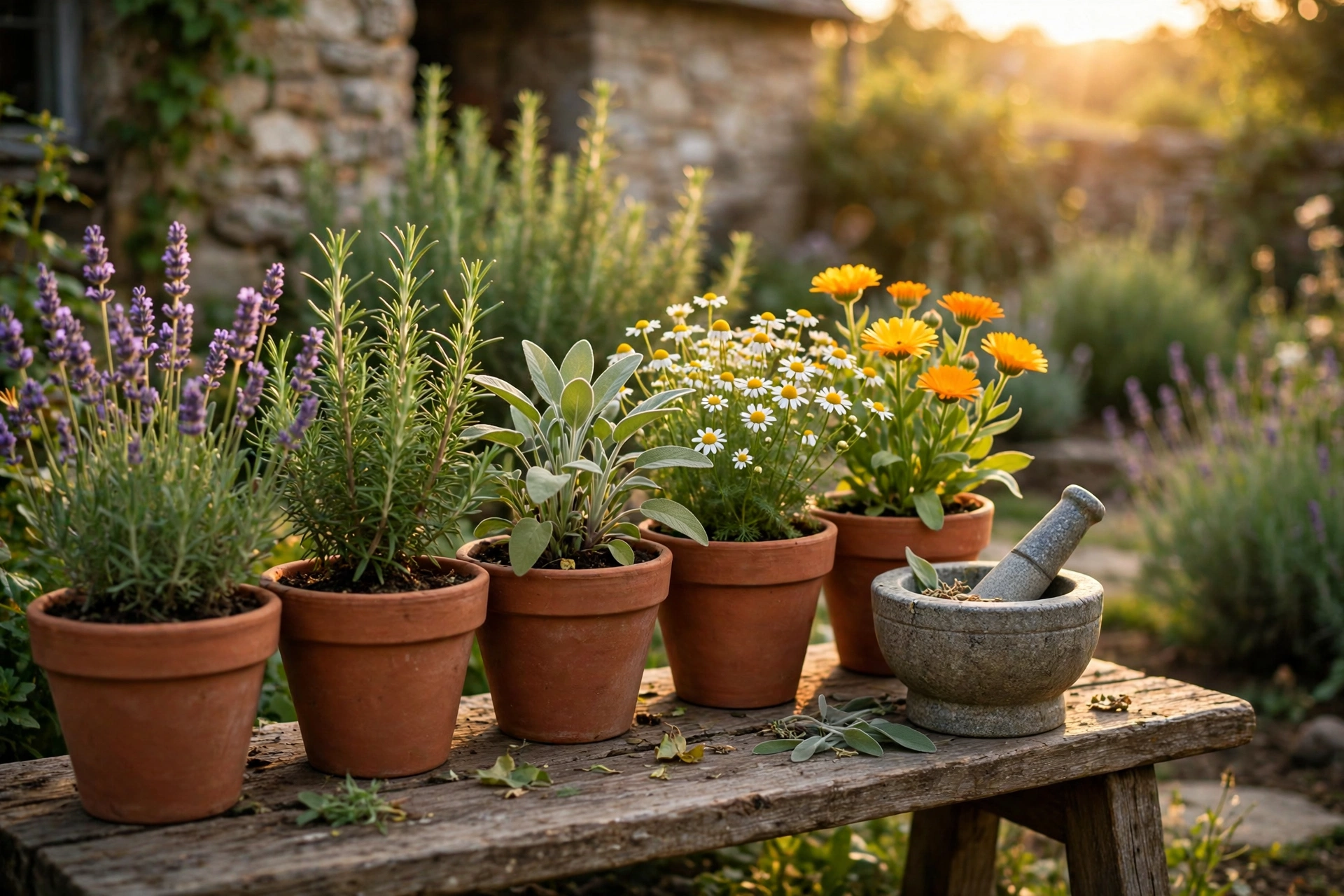
The oldest pharmacy is a garden. Lemon balm, knitbone, woundwort, the herb Achilles carried into battle — the plant names below all come with centuries of healing use behind them, and most are already beloved as girls’ names.
| Name | Origin | Meaning | Note |
|---|---|---|---|
| Althaea | Greek | Healer (from althainein, to heal) | The marsh-mallow plant and a Greek name that literally means healer |
| Sage | English / Latin | Wise; the herb | Salvia, from salvare, to save — the saving herb |
| Rosemary | Latin | Dew of the sea | The herb of remembrance, steeped for headaches since antiquity |
| Lavender | Latin | To wash (lavare) | Washed into hospital linen for centuries for its calming scent |
| Yarrow | English | The wound herb | Achillea’s folk twin — soldiers staunched wounds with it |
| Achillea | Greek | Of Achilles | The genus named for the hero who healed Telephus with its leaves |
| Vervain | Celtic / English | The sacred bough | A holy healing herb of Druids and Romans alike |
| Verbena | Latin | Sacred foliage | The altar herb of Rome, kin to vervain |
| Betony | English / Celtic | The wound herb (vettones lore) | Once sold in every market as a cure for forty-seven ills |
| Comfrey | Latin / English | To grow together | Folk-named knitbone — the herb believed to knit fractures |
| Rue | Greek / English | To set free (in lore) | The herb of grace, carried against plague |
| Mallow | Greek / English | Soft (malakos) | The soothing marsh plant of poultices and teas |
| Calendula | Latin | Little calendar; marigold | The wound-healing marigold of every cottage garden |
| Arnica | Greek / Latin | Lamb’s skin (name lore) | The mountain flower that is still the first remedy for bruises |
| Echinacea | Greek | Sea urchin (for its spiky cone) | The prairie remedy of Native American healers, now the world’s immune herb |
| Valeriana | Latin | To be strong; to be well | Valerian root, the great calming herb — its root word is valere, to be well |
| Angelica | Latin | Angelic | The archangel’s herb, said to have been revealed in a dream during plague |
| Poppy | Latin / English | The milk flower (name lore) | Source of sleep and of pain relief — comfort and caution in one flower |
| Belladonna | Italian | Beautiful lady | Deadly nightshade — beautiful, medicinal in careful hands, and dangerous: a name with a warning in it |
| Foxglove | English | Folk’s glove | Source of digitalis, the heart medicine — healing and hazard together |
| Willow | English | The willow tree | Its bark gave the world salicin, and then aspirin |
| Myrrh | Semitic | Bitter | The resin that dressed wounds from Egypt to the Cross |
| Saffron | Arabic / Persian | The golden spice | Medicine, dye and treasure in a single flower |
| Ginger | Sanskrit | Horn-shaped root (name lore) | The travelling remedy of every sea voyage against sickness |
| Aloe | Greek / Arabic | The burn plant (in use) | Aloe vera, the plant on every windowsill for burns |
| Sorrel | German / English | Sour (the cooling herb) | A cooling spring herb of old physic gardens |
| Tulsi | Sanskrit | The incomparable one | Holy basil, Ayurveda’s queen of herbs, grown at every temple door |
| Ashoka | Sanskrit | Without sorrow | The saraca tree, classic remedy of women’s health in Ayurveda |
| Jasmine | Persian | Gift of God (in lore) | The calming flower of teas and night gardens |
| Lotus | Greek / Egyptian | The flower of rebirth | Sacred across Asia, its seeds and roots are medicine as well as symbol |
| Padma | Sanskrit | Lotus | The lotus name of goddesses and healing waters |
| Kumuda | Sanskrit | Water lily; lotus of the moon | The night-blooming water lily of Ayurvedic gardens |
| Neroli | Italian | Orange blossom | The blossom oil named for a princess of Nerola, used to calm the heart |
| Tiare | Tahitian | The gardenia flower | Tahiti’s flower, infused in monoi oil for skin and hair |
| Hyssop | Hebrew / Greek | The holy herb | ‘Purge me with hyssop’ — the Bible’s herb of cleansing |
| Tansy | Greek | Immortality (athanatos) | A genuine vintage girl’s name and a fever herb of old gardens |
| Clary | Latin / English | Clear (the sage) | Clary sage, the ‘clear-eye’ herb of medieval medicine |
| Laurel | Latin | The bay tree | Bay leaves were medicine and victory wreath in one |
| Cassia | Greek / Hebrew | The bark spice | Cinnamon’s sister bark, an anointing oil and remedy of the ancient world |
| Anise | Greek / Latin | The dill-like seed | A name in its own right and the soothing seed of a hundred syrups |
Healing Waters, Shrines and Stones
Pilgrims walked to Lourdes and Holywell for a thousand years before they walked to hospitals. The names of the healing places — and of the stones the old lapidaries prescribed — carry that hope.
| Name | Origin | Meaning | Note |
|---|---|---|---|
| Undine | Latin / German | Little wave | The water spirit of Paracelsus’s healing lore |
| Melusine | French | The water fay (name lore) | The serpent-fay of Lusignan, builder and healer of her line |
| Bethesda | Hebrew / Aramaic | House of mercy | The Jerusalem pool where the sick waited for the water to stir |
| Siloam | Hebrew | Sent | The pool where the blind man washed and came back seeing |
| Jordan | Hebrew | The descender (river) | The river where Naaman washed seven times and was healed |
| Lourdes | French / Basque | The shrine town (name lore) | The Pyrenean spring of Bernadette — now one of the world’s great healing names |
| Bernadette | German / French | Brave as a bear | The miller’s daughter of Lourdes, who dug the healing spring with her hands |
| Guadalupe | Spanish / Arabic | Valley of the wolf / of light (contested) | Our Lady of Guadalupe, Mexico’s beloved healer of a nation |
| Montserrat | Catalan | Jagged mountain | The Catalan shrine whose Black Madonna draws the sick |
| Salette | French | From La Salette | The Alpine apparition shrine of healing pilgrimage |
| Walsingham | English | The Walsingas’ village | England’s great healing shrine, refounded for modern pilgrims |
| Jade | Spanish / Chinese | The stone of the loin | Named piedra de ijada for its use against kidney pain — and China’s stone of healing |
| Amber | Arabic | The golden resin | Worn for centuries as a protective, soothing amulet |
| Coral | Greek / Latin | The sea gift | Set in children’s amulets against illness across the Mediterranean |
| Pearl | Latin / English | The pearl | Pearl powder is a classic of Chinese medicine and skincare |
| Beryl | Greek | The sea-green jewel | A healing and seeing stone of the old lapidaries |
| Amethyst | Greek | Not drunken | The stone believed to protect against poison and excess |
| Crystal | Greek | Ice; clear quartz | The modern emblem of healing energy itself |
| Opal | Sanskrit / Latin | Precious stone (upala) | A stone of hope and healing in Indian and Roman lore |
| Turquoise | French | The Turkish stone | A healing and protection stone from Persia to the Navajo |
| Agate | Greek | From the Achates river | Prescribed in medieval lapidaries for bites, fevers and clear sight |
Indigenous Healers and Medicine Women
This section names real, documented women — a Cherokee Beloved Woman, the first Native American woman physician, an Apache medicine woman — rather than the invented ‘Native’ names found elsewhere. Use them with the respect their bearers earned.
| Name | Origin | Meaning | Note |
|---|---|---|---|
| Sacagawea | Shoshone | Bird Woman | The guide whose knowledge of roots and foods kept the Lewis and Clark expedition alive |
| Matoaka | Powhatan | Playful one (name lore) | Pocahontas’s given name — the woman whose diplomacy healed two peoples, for a while |
| Nanyehi | Cherokee | One who goes about | The Beloved Woman of the Cherokee, healer, warrior and peacemaker |
| Susette | Omaha / French | From Susette La Flesche | Sister of Susan La Flesche, the first Native American woman physician |
| Wilma | German / American | Resolute protector | For Wilma Mankiller, the Cherokee chief who rebuilt her nation’s healthcare |
| Lozen | Apache | Little sister (name lore) | The Apache medicine woman and warrior who could sense the enemy’s approach |
| Dahteste | Apache | The warrior woman (name lore) | An Apache healer and warrior who rode with Geronimo |
| Ixchel | Maya | Lady rainbow (name lore) | The Maya goddess of medicine, midwifery and childbirth |
| Tlazolteotl | Aztec / Nahuatl | Eater of filth (the purifier) | The goddess who purified and healed moral and bodily sickness |
| Hina | Polynesian | The goddess (name lore) | The great Polynesian goddess, invoked in healing chants |
| Rongo | Maori | Peace; the god of cultivated food | The Maori god invoked in rongoā, traditional healing |
Short and Gentle Names of Life and Peace
Healing ends in ordinary mornings: life, peace, dawn, joy. The short names below are the vocabulary of recovery itself — several of them mean ‘life’ outright in their languages.
| Name | Origin | Meaning | Note |
|---|---|---|---|
| Fay | English / French | Faith; fairy | The light touch — faith and enchantment in three letters |
| May | English | The month of Maia | May dew was gathered at dawn for healing in folk custom |
| Joy | English / Latin | Joy | The emotion convalescence is made of |
| Grace | Latin | Grace; favour | The grace that folk prayer asks for the sick |
| Hope | English | Hope | The virtue every sickroom runs on |
| Faith | English | Faith; trust | ‘Your faith has made you well’ — the Gospel sentence itself |
| Dawn | English | Daybreak | The first morning after the fever breaks |
| Lux | Latin | Light | Light as a name — the ward window at sunrise |
| Bliss | English | Perfect joy | The old word for heaven’s happiness |
| Peace | English / Latin | Peace | The end of every illness is peace |
| Shanti | Sanskrit | Peace; calm | The peace chanted at the end of Hindu prayer |
| Salma | Arabic | Safe; whole; unharmed | From salima — to be safe and sound |
| Sana | Arabic | Radiance; brilliance | It also sounds exactly like Spanish sana, ‘she heals’ |
| An | Chinese | Peace; quiet | One character of pure calm |
| Ping | Chinese | Peaceful; level | The level ground after the storm |
| Ai | Japanese | Love; affection | Love, the first ingredient of care |
| Ren | Japanese / Chinese | Lotus; benevolence | Benevolence in Chinese, the lotus in Japanese |
| Mei | Chinese / Japanese | Beautiful; plum blossom | The plum that blooms through winter into recovery |
| Noa | Hebrew / Japanese | Gentle motion; my love | A soft name of gentle movement |
| Una | Latin / Irish | One; wholeness | Wholeness in a single syllable — and Spenser’s lady of truth |
| Eden | Hebrew | Delight; paradise | The garden where nothing had ever been ill |
| Blythe | English | Joyous; carefree | The spirit of the convalescent garden |
| Alba | Latin / Italian | Dawn; white | The dawn after the long night |
| Ora | Latin / Hebrew | Light; pray | Light in Latin, prayer in Hebrew — both belong in this list |
| Zoe | Greek | Life | Simply: life itself |
| Eve | Hebrew | Life; living | The mother of all the living |
| Vita | Latin | Life | Life, in the language of medicine |
| Viva | Latin / Spanish | Alive; long live | The cheer of the recovery ward |
| Asha | Sanskrit / Avestan | Truth; life; hope | In Avestan it is the order of life itself; in India, hope |
| Chava | Hebrew | Life | Eve’s Hebrew name — ‘mother of all living’ |
| Hayat | Arabic | Life | Life itself, as a name |
| Enid | Welsh | Life; soul; spirit | The Welsh name that means the life inside |
| Sola | Latin / Spanish | Comfort (from solace root) | A modern short form carrying solace in its sound |
| Solace | Latin / English | Comfort; consolation | The word every healer offers |
| Consolata | Italian / Latin | The consoled one | Our Lady Consolata of Turin, comforter of the afflicted |
| Dolores | Spanish | Sorrows | Our Lady of Sorrows — the devotion of everyone who has sat with suffering |
Names That Mean Health, Rebirth and Recovery
Some names do not describe the healer but the outcome: healthy, reborn, risen, rescued. This is the ‘second chance’ shelf — the names chosen after illness, after loss, for the child who is the answer.
| Name | Origin | Meaning | Note |
|---|---|---|---|
| Valentina | Latin | Strong; healthy; vigorous | From valens — being well is the meaning itself |
| Valentine | Latin | Healthy; strong | The unisex form, sainted and storied |
| Valencia | Latin / Spanish | Strength; health | The Spanish city whose name is the valour-and-health root |
| Sihha | Arabic | Health | The Arabic word for health itself, rarely but really given |
| Afiyat | Urdu / Arabic | Wellness; freedom from illness | The state everyone prays for — from the same root as Afiya |
| Sehat | Turkish / Urdu | Health | The everyday word for health from Istanbul to Lahore |
| Salamet | Azerbaijani / Turkish | Safety; health; wellbeing | The greeting of wellbeing across the Caucasus |
| Renata | Latin | Reborn | The recovery name of Christian Europe |
| Renee | French | Reborn | The French form of Renata |
| Nova | Latin | New | A new star, a new start |
| Neoma | Greek | New moon | The first moon after darkness |
| Genesis | Greek | Beginning; origin | The modern name of brand-new starts |
| Anastasia | Greek | Resurrection | The name that means rising again — recovery’s patron name |
| Beata | Latin | Blessed | Blessedness as the mark of the healed |
| Benigna | Latin | Kind; favourable; benign | Every patient longs for that exact word in a diagnosis |
| Remedios | Spanish | Remedies | Our Lady of Remedies — a classic Spanish name meaning cures |
| Socorro | Spanish | Help; succour | Our Lady of Perpetual Help under her Spanish name |
| Auxiliadora | Spanish | The helper (female) | María Auxiliadora, Mary the Helper, patroness of the sick |
| Milagros | Spanish | Miracles | The name given when the cure itself was the miracle |
| Consuelo | Spanish | Consolation; comfort | Our Lady of Consolation |
| Amparo | Spanish | Protection; shelter | Our Lady of Protection, Valencia’s patroness |
| Refugio | Spanish | Refuge | Our Lady of Refuge — the safe place after the storm |
| Salvadora | Spanish | Saviour (female) | The feminine of Salvador, the rescuer |
| Vida | Spanish | Life | Life, in the language of the recovery names |
| Vitalia | Latin / Italian | Vitality; life | The long form of the life names |
| Jaya | Sanskrit | Victory | Recovery spoken of as what it is — a win |
| Victoria | Latin | Victory | The victory name in its classic form |
| Phoenix | Greek | The reborn firebird | The emblem of rising from the ashes of illness |
Goddesses of Renewal and History’s Women Healers
The modern half of the story belongs to named women: the founder of modern nursing, the first women doctors on three continents, and a Ming casebook’s author already met above. Literature’s healers stand beside them.
| Name | Origin | Meaning | Note |
|---|---|---|---|
| Florence | Latin | Flourishing; blooming | For Florence Nightingale, who made nursing a profession of light |
| Dorothea | Greek | Gift of God | For Dorothea Dix, who reformed the care of the mentally ill across America |
| Rebecca | Hebrew | To bind; to join | For Rebecca Lee Crumpler, the first Black woman physician in the United States |
| Louisa | German / French | Famous warrior | For Louisa Garrett Anderson and Louisa Aldrich-Blake, pioneering surgeons |
| Sophia | Greek | Wisdom | For Sophia Jex-Blake, who fought open the doors of medical school to women |
| Agnes | Greek | Pure; holy | For Agnes Hunt, founder of orthopaedic nursing |
| Edith | English | Prosperous in war | For Edith Cavell, the nurse martyred for treating soldiers of both sides |
| Anandi | Sanskrit | Joyful | For Anandibai Joshi, the first Indian woman to earn a medical degree |
| Kadambini | Bengali | From the kadamba tree | For Kadambini Ganguly, among India’s first women physicians |
| Ginko | Japanese | Ginkgo (the maidenhair tree) | For Ginko Ogino, Japan’s first licensed woman doctor — the ginkgo is a healing tree |
| Eowyn | Old English (Tolkien) | Horse joy | Tolkien’s shieldmaiden who lays down the sword: ‘I will be a healer, and love all things that grow’ |
| Arwen | Welsh / Sindarin (Tolkien) | Noble maiden | The Evenstar, whose grace and healing run through the tale |
| Luthien | Sindarin (Tolkien) | Enchantress; daughter of flowers | Her singing breaks prisons and recalls the dead to life |
| Rapunzel | German | Rampion (the herb) | In Grimm’s tale her tears heal the prince’s blindness |
| Rhea | Greek | Flow; ease (name lore) | The great mother of the Olympians, who hid and healed her line |
| Cybele | Phrygian | The mountain mother (name lore) | The great mother whose cult promised healing and ecstasy |
| Eostre | Germanic | Dawn; east | The spring dawn goddess whose festival became Easter — renewal itself |
| Brigantia | Celtic British | The high one | The northern British goddess kin to Brigid, of high places and healing waters |
More Healing Goddesses: Rivers, Mothers and Spring Deities
A second shelf of goddesses the shorter lists miss — the healing rivers of India, Rome’s mothers of childbirth, and the Norse goddesses of protection who stand behind the sickbed.
| Name | Origin | Meaning | Note |
|---|---|---|---|
| Matuta | Roman | Of the morning | Mater Matuta, the dawn mother who watched over women and children |
| Lucina | Roman | She who brings to light | The goddess who brings babies safely into the light — patroness of midwives |
| Ceres | Roman | To grow (ker, growth) | The grain mother whose nourishment heals hunger |
| Ops | Roman | Plenty; help | The goddess of abundance whose name is also the Latin for help |
| Perenna | Roman | Lasting through the year | From Anna Perenna, goddess of the long year and long life |
| Frigg | Norse | Beloved | In the Merseburg Charm it is Frigg and her sisters who sing the healing spell |
| Fulla | Norse | Plenty; bountiful | Frigg’s maiden, keeper of her treasures |
| Hlin | Norse | Protection; refuge | The goddess Frigg sends to protect those she wishes to save |
| Syn | Norse | Denial; defence | The goddess who guards the door against harm |
| Ganga | Sanskrit | The river Ganges | The river goddess whose waters are Hinduism’s great medicine of body and soul |
| Yamuna | Sanskrit | The twin river | The sacred river goddess, sister of the death god and healer of her banks |
| Godavari | Sanskrit | Bestower of cattle / the great river | The Ganges of the south, a purifying sacred river |
| Narmada | Sanskrit | The giver of delight (name lore) | The river whose very sight is said to purify |
| Kaveri | Sanskrit | The river Kaveri | The goddess-river of Karnataka and Tamil Nadu |
| Sindhu | Sanskrit | The river Indus | The great river named in the oldest hymns |
| Saraswati | Sanskrit | She who flows | First a river goddess, then the goddess of learning — flow is her essence |
| Durga | Sanskrit | The inaccessible fortress | The mother invoked as remover of suffering and disease |
| Taweret | Egyptian | The great one (female) | The hippopotamus goddess who protected mothers in childbirth |
| Heqet | Egyptian | The frog | The frog goddess who breathed life into newborns |
| Beset | Egyptian | From Bes, the protector | The household goddess who guarded mothers and infants |
| Mut | Egyptian | Mother | The great mother of Thebes, vulture-crowned |
| Nephthys | Egyptian | Lady of the temple | The mourning goddess who nursed and restored the dead Osiris |
| Cerridwen | Welsh | Blessed poetry / the cauldron keeper | Keeper of the cauldron of rebirth and inspiration in Welsh tale |
| Eluned | Welsh | Image; idol (name lore) | Saint Eluned, whose healing well drew pilgrims in Breconshire |
| Wenna | Cornish | Blessed; white | A Cornish saint of healing wells |
| Keyne | Cornish | The saint of the well (name lore) | Saint Keyne, whose Cornish well was famed for cures |
| Melangell | Welsh | Dear angel (in lore) | The abbess whose valley was a sanctuary for the hunted and the sick |
Healer Word Names from Around the World
Several languages keep an honoured word for the healer herself — the curandera, the ticitl, the babylan. Worn as names they are rare and proud, and each is labelled here for exactly what it is.
| Name | Origin | Meaning | Note |
|---|---|---|---|
| Tabibe | Turkish | Female physician (old form) | The Ottoman word for a woman doctor |
| Hekime | Turkish | Female physician | A modern Turkish word name for a girl doctor-to-be |
| Tabibu | Swahili | Physician; doctor | East Africa’s doctor word, from the Arabic root |
| Babylan | Visayan / Filipino | Healer-priestess | The women who were the Philippines’ healers and ritual leaders |
| Amchi | Tibetan / Ladakhi | Doctor | The traditional physician of the Himalayas |
| Curandera | Spanish | The woman healer | Latin America’s folk healer — midwife, herbalist and counsellor in one |
| Ticitl | Nahuatl | Physician; midwife | The Aztec healer-woman, honoured in the Florentine Codex |
| Hampiq | Quechua | Healer; the one who cures | The Andes’ healer word |
| Onisegun | Yoruba | Master of medicine | The Yoruba herbalist title, worn as a proud name |
| Dibia | Igbo | Diviner-healer | The Igbo healer-priest who treats body and spirit |
| Sangoma | Zulu / Nguni | Traditional healer | Southern Africa’s healer, called by the ancestors |
| Vaidya | Sanskrit | Physician; knower | The Ayurvedic doctor’s title, also a surname name |
| Chikitsika | Sanskrit | Female physician | The Sanskrit word for a woman doctor, from chikitsa, medical treatment |
| Kabiraj | Bengali | King of poets; Ayurvedic physician | In Bengal the word honours the traditional doctor |
Names of Mercy, Comfort and Compassion
The last ingredient of every cure is kindness. These names mean mercy, compassion and gentle care — the bedside virtues — in Sanskrit, Arabic, Spanish and the virtue-name tradition.
| Name | Origin | Meaning | Note |
|---|---|---|---|
| Karuna | Sanskrit | Compassion | The compassion that moves a healer to act — a Buddhist perfection |
| Metta | Pali | Loving-kindness | The meditation of wishing every being well |
| Daya | Sanskrit | Compassion; mercy | Tenderness toward all creatures |
| Rahima | Arabic | Merciful; compassionate | From the same root as al-Rahman, the Most Merciful |
| Rahma | Arabic | Mercy | Mercy itself as a name |
| Latifa | Arabic | Gentle; kind; pleasant | The gentle touch in a name |
| Halima | Arabic | Gentle; mild; forbearing | The Prophet’s foster mother — the nurturer who raised him |
| Gentille | French | Kind; gentle | A rare old French name that simply means kind |
| Bonnie | Scottish | Pretty; good; wholesome | Scotland’s word for healthy good looks and goodness |
| Caridad | Spanish | Charity | Our Lady of Charity, patroness of Cuba |
| Charity | English / Latin | Love; generous care | The greatest of the virtues in the old naming trio |
| Mercy | English / Latin | Mercy; compassion | A Puritan virtue name that needs no explaining |
| Clemence | French / Latin | Mercy; mildness | The mildness of the good physician |
| Clementina | Latin / Italian | Merciful; mild | The long, musical form of Clemence |
| Blaga | Slavic | Gentle; blessed; mild | A South Slavic name of gentle blessedness |

How to Choose a Healing Name
Start with whose healing you mean. Goddess names — Panacea, Eir, Sekhmet, Iaso — are the boldest, and each carries a mythology worth reading before you commit; a fever goddess and a spring goddess raise different daughters, at least in the imagination. Saint and historical healer names — Hildegard, Florence, Kateri, Gianna — are the most wearable of the story names, grounded in real women whose work can be pointed to. Herb and place names — Melissa, Sage, Lourdes, Bethesda — are the gentle modern register: soft, familiar, and quietly meaningful.
Next, decide how literal you want to be. Shifa, Tabiba and Chikitsika say ‘healer’ outright in their languages; Valentina and Anastasia say the outcome instead — healthy, risen again. The recovery names are often chosen after a family’s own hard chapter; the girl names that mean survivor list is their closest kin, and names that mean new hope carries the same dawn.
Finally, honour the source. A Yoruba herb name or a Maya medicine goddess is a gift from a living tradition — learn its pronunciation, know its story, and be ready to tell it. A healing name chosen with respect tends to be worn with gratitude, which is the healthiest way to wear anything.
Frequently Asked Questions
What girl name literally means healing?
Iaso and Aceso are Greek goddesses of healing and recovery; Shifa is the Arabic word for healing itself; Chiyu is the Korean word; Iyashi the Japanese; and Althaea is a Greek name built on the verb ‘to heal’. Tabiba in Arabic and Chikitsika in Sanskrit go further and mean ‘female physician’.
What name means God has healed?
Rafaela and Raphaelle, the feminine forms of Raphael — the archangel whose name is ‘God heals’ and who guides Tobias home in scripture. Their parent name heads our Quick Picks for a reason.
What are some healing goddess names?
Greece gives Panacea, Hygieia and Iaso; Egypt gives Sekhmet and Isis; the Norse give Eir, called the best of physicians; Ireland gives Airmed and Brigid; Mesopotamia gives Gula, the great physician; the Maya give Ixchel, goddess of medicine and midwifery; and Buddhism gives Tara and Janguli, remover of poisons.
What name means healthy or reborn, for a baby after illness?
Valentina means healthy and strong; Anastasia means resurrection; Renata and Renee mean reborn; Phoenix is the emblem of rising again; and the Spanish devotion names Remedios (remedies), Milagros (miracles) and Socorro (help) were made for exactly this moment. Our names that mean goddess list gathers the divine names in one place too.
Are healing names suitable for real babies?
Most of them already are real babies’ names: Clara, Catherine, Elizabeth, Lucia, Joy, Faith, Sage, Rosemary, Lourdes and Valentina are everyday names in their home countries. Save the fiercest plague goddesses for the mythology shelf, and check the note column — every name here is labelled for exactly what it is.
Conclusion
Three hundred and seventy names, and every one of them is a wish for wholeness spoken aloud. Some are the healers — goddesses with herb bundles, saints with hospital keys, the first women to hold medical degrees on three continents. Some are the medicines — balm and marigold, knitbone and the mushroom of immortality. And some are the morning after: dawn, peace, life, victory, resurrection. Whichever register you choose, you are naming a child for the oldest human hope there is — that broken things mend. They do. This list is the proof, in forty languages.