330 Girl Names That Mean Chaos: Bold, Wild and Stormy Names
Introduction
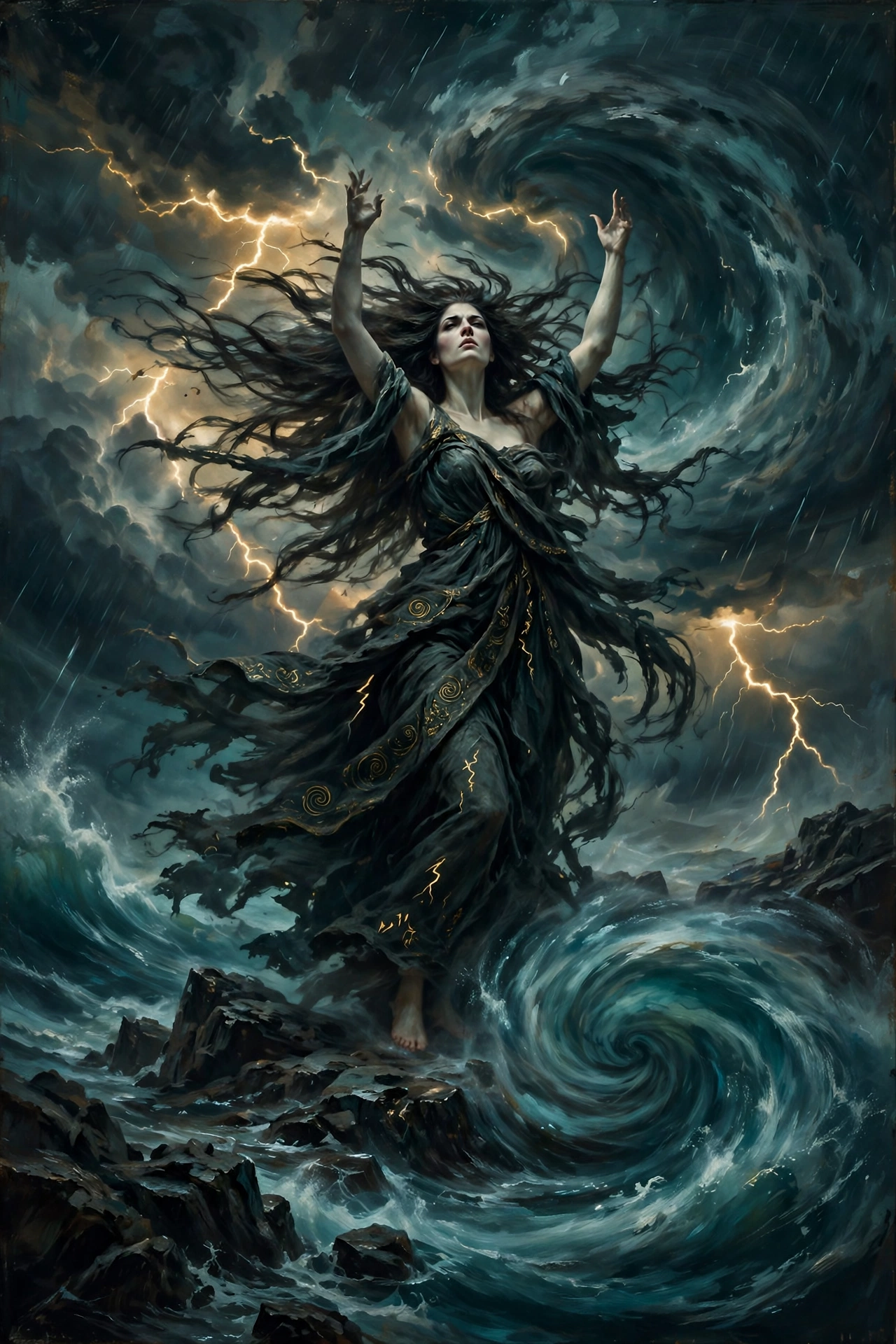
Some names whisper. These names thunder. A girl named for chaos is named for the force that shakes the world out of its routines — the storm that clears the air, the goddess who would not be ruled, the wild heart that answers to no one. Every culture has kept a name for her: the Greeks had Eris, Egypt feared Sekhmet, the Norse rode with the valkyries, and India still dances with Kali.
This list is built differently from the usual chaos round-ups. Every name below is real — a genuine given name, goddess, spirit or legendary figure with a checkable origin — every name appears exactly once, and the categories separate true chaos names from their wider family: discord goddesses, furies, storm spirits, monsters, madness, warrior queens, witches and modern word names. If you love this energy, you will also feel at home among names that mean wrath and names that mean anger — but start here, with the biggest and most honest chaos list on the site.
Quick Picks: The 15 Best Girl Names That Mean Chaos
| Name | Origin | Meaning |
|---|---|---|
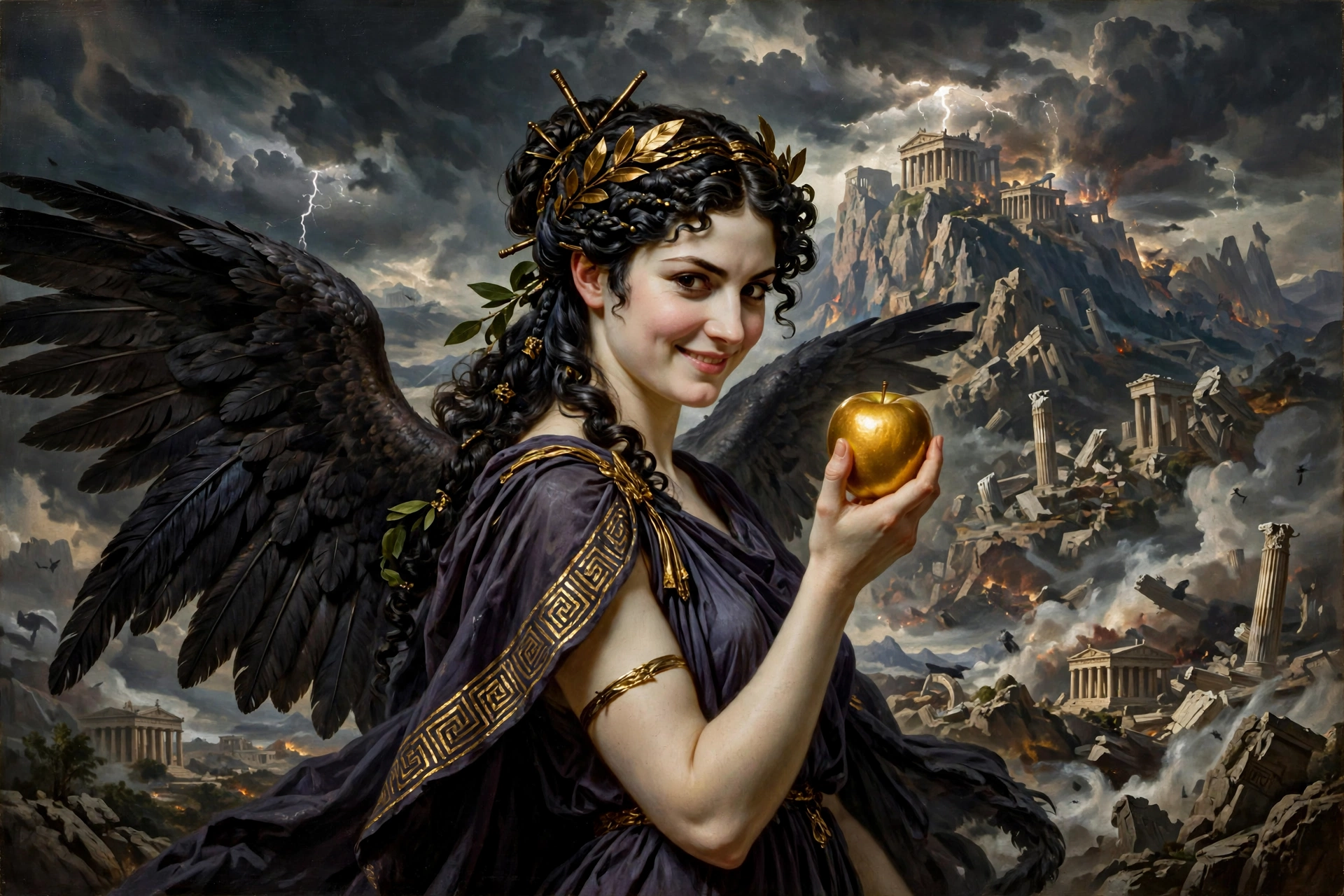
| Eris | Greek | Goddess of strife and discord; her golden apple sparked the Trojan War |
| Kali | Sanskrit (Hindu) | The black goddess of time, destruction and renewal |
| Tempest | English | A violent storm — a bold, literary word name |
| Tiamat | Babylonian | Primordial dragon-goddess of the salt sea and chaos |
| Nyx | Greek | Night itself, a primordial power even Zeus feared |
| Pandora | Greek | All-gifted; she opened the jar that released every trouble |
| Morrigan | Irish | Phantom queen, goddess of war and fate |
| Lilith | Mesopotamian / Hebrew legend | Night demon and first rebel — a symbol of independence |
| Sekhmet | Egyptian | Lioness goddess of war and plague whose rage nearly ended humankind |
| Hecate | Greek | Goddess of witchcraft, ghosts and crossroads |
| Circe | Greek | The enchantress who turned Odysseus’s men into swine |
| Discordia | Roman | Goddess of discord, Rome’s Eris |
| Nemesis | Greek | Goddess of retribution, the inescapable balancer of fortune |
| Bellona | Roman | Goddess of war who drove her chariot beside Mars |
| Erishkigal | Sumerian | Queen of the Great Below, ruler of the underworld |
Chaos, Discord and Fury: Goddesses of Greece and Rome
These are the spirits the classical world blamed when everything fell apart — discord, ruin, madness and the three Furies who hunted the guilty. Eris’s own children, Lawlessness and Forgetfulness, close the table.
| Name | Origin | Meaning | Note |
|---|---|---|---|
| Ate | Greek | Goddess of ruin, folly and delusion | Zeus hurled her from Olympus for blinding him |
| Enyo | Greek | Goddess of war and destruction | Sacker of cities who fought beside Ares |
| Lyssa | Greek | Spirit of mad rage and frenzy | Set Heracles against his own family |
| Mania | Greek / Roman | Spirit of madness and the frenzied dead | Her name gives us the word ‘mania’ |
| Alala | Greek | Personification of the war cry | Daughter of Polemos, War himself |
| Adikia | Greek | Spirit of injustice and wrongdoing | Painted wrestling Dike, justice, on ancient vases |
| Apate | Greek | Spirit of deceit and fraud | One of the evils that flew from Pandora’s jar |
| Ara | Greek | Spirit of curses | The curses of the wronged, made divine |
| Poina | Greek | Spirit of vengeance and penalty | Attendant of Nemesis |
| Ker | Greek | Spirit of violent death | One of the Keres who haunted battlefields |
| Alecto | Greek / Roman | The unceasing Fury | Stirred up the war in Italy in the Aeneid |
| Tisiphone | Greek | The avenging Fury | Punished murderers with a whip of serpents |
| Megaera | Greek | The jealous Fury | Her name survives in French ‘megere’, a shrew |
| Bia | Greek | Personification of force and violence | Sister of Nike, Victory |
| Furina | Roman | Dark goddess of thieves and robbers | Her festival hid her rites from outsiders |
| Laverna | Roman | Goddess of thieves and cheats | Gave her name to a gate of Rome |
| Dysnomia | Greek | Lawlessness, daughter of Eris | Now also the moon of the dwarf planet Eris |
| Lethe | Greek | Spirit of forgetfulness and oblivion | Her river in Hades erased every memory |
Chaos Goddesses Around the World
Chaos wears a different face in every culture: India’s many-armed destroyers, Egypt’s lionesses, the Aztec earth monster, Japan’s death queen and the Yoruba storm orisha all belong in one table — the widest on this list.
| Name | Origin | Meaning | Note |
|---|---|---|---|
| Durga | Sanskrit (Hindu) | Warrior goddess who slays the buffalo demon | Her wrathful forms defend the cosmic order |
| Chamunda | Sanskrit (Hindu) | Emaciated goddess of war and pestilence | Fiercest of the seven mother goddesses |
| Chinnamasta | Sanskrit (Hindu) | The self-decapitated goddess | A symbol of wild, paradoxical power |
| Dhumavati | Sanskrit (Hindu) | The smoky widow goddess of misfortune | One of the ten Mahavidyas |
| Nirriti | Sanskrit (Hindu) | Goddess of decay, calamity and death | Guardian of the southwest in Vedic ritual |
| Alakshmi | Sanskrit (Hindu) | Goddess of misfortune and strife | The inauspicious elder sister of Lakshmi |
| Jyestha | Sanskrit (Hindu) | Goddess of inauspicious and unlucky things | The elder, darker counterpart of Fortune |
| Bhadrakali | Sanskrit (Hindu) | The fierce yet auspicious form of Kali | Patron goddess of Kerala’s warriors |
| Rangda | Balinese | Demon queen and witch of Bali | Locked in eternal battle with Barong |
| Loviatar | Finnish | Blind daughter of Death who births disease | Mother of the Nine Diseases in the Kalevala |
| Louhi | Finnish | Witch-queen of Pohjola | Shape-shifting mistress of the dark north |
| Baba Yaga | Slavic | The wild witch of the deep forest | Her hut walks on chicken legs |
| Marzanna | Slavic | Goddess of winter and death | Her effigy is ritually drowned each spring |
| Kikimora | Slavic | Restless female house spirit | Spins by night and torments sleepers |
| Lamashtu | Mesopotamian | Demoness who struck mothers and children | Feared on amulets across the ancient Near East |
| Anat | Ugaritic | Violent goddess of war and hunting | Waded in blood up to her thighs in myth |
| Astarte | Phoenician | Goddess of war and love | Spread from the Levant to Egypt and Greece |
| Ishtar | Akkadian | Goddess of love and war | Threatened to smash the gates of the underworld |
| Inanna | Sumerian | Queen of Heaven, goddess of love and war | Descended living into the underworld |
| Coatlicue | Nahua (Aztec) | Serpent-skirt mother of gods | Earth mother of creation and destruction |
| Itzpapalotl | Nahua (Aztec) | Obsidian-butterfly goddess of the night sky | A skeletal star demon of the tzitzimime |
| Mictecacihuatl | Nahua (Aztec) | Lady of the Dead | Queen of Mictlan, honoured at the Day of the Dead |
| Tlaltecuhtli | Nahua (Aztec) | The earth monster dismembered to make the world | Her body became land, rivers and sky |
| Hel | Norse | Queen of the dead | Half living, half corpse in appearance |
| Angrboda | Norse | The grief-bringer, mother of monsters | Bore Fenrir, Jormungandr and Hel |
| Ran | Norse | Goddess of the drowning sea | Dragged sailors down in her great net |
| Sedna | Inuit | Vengeful goddess of the sea and its creatures | Her fingers became the sea mammals in myth |
| Pele | Hawaiian | Goddess of volcanoes and fire | Her temper builds and reshapes the islands |
| Namaka | Hawaiian | Sea goddess, sister and rival of Pele | Their battles scattered the island chains |
| Agrat | Jewish legend | Queen of demons | One of the four demon queens of folklore |
| Naamah | Jewish legend | Demoness of seduction | A night spirit of later legend |
| Eisheth | Jewish legend | Demoness, princess of the night | One of the four queens of demons |
| Perchta | Germanic / Alpine | Terrifying winter goddess | Leads the wild Perchten of folk processions |
| Oya | Yoruba | Goddess of storms, winds and the River Niger | Warrior orisha of transformation and cemeteries |
| Marinette | Haitian Vodou | Fierce loa of liberation | Invoked for freedom and vengeance |
| Menhit | Egyptian | Lioness goddess of slaughter | Her name literally means ‘she who massacres’ |
| Pakhet | Egyptian | Lioness huntress of the desert wadis | ‘She who scratches’, a night-stalking war goddess |
| Tefnut | Egyptian | Lioness goddess of moisture and rage | Fled to Nubia in fury and had to be coaxed home |
| Mehit | Egyptian | Lioness war goddess | Rode beside the war god Anhur |
| Nephthys | Egyptian | Goddess of death, night and lamentation | Sister of Isis who guarded the coffins |
| Izanami | Japanese | Goddess of creation and death | Became the decayed queen of Yomi |
Primordial Powers: Chaos Before the World
Before the gods came the unformed stuff of everything — the void, the waters, darkness and formlessness. These six names are the oldest chaos names in the world.
| Name | Origin | Meaning | Note |
|---|---|---|---|
| Khaos | Greek | The primordial void from which all began | The very first being in Hesiod’s creation |
| Nammu | Sumerian | Primordial sea who bore heaven and earth | Mother of the first gods |
| Nunet | Egyptian | Female form of the primordial waters | One of the eight gods of the Ogdoad |
| Hehut | Egyptian | Personification of formlessness and infinity | Female half of the Ogdoad’s Heh pair |
| Kekuit | Egyptian | Personification of primeval darkness | Also written Kauket |
| Amunet | Egyptian | The hidden one of the primeval waters | A shadow goddess of the Ogdoad |
Storm, Wind and Tempest Names
Chaos with weather in it. The Harpies open the table — their names are pure whirlwind — followed by storm words and rain names from Greece to Japan to the Basque Country.
| Name | Origin | Meaning | Note |
|---|---|---|---|
| Aello | Greek | Storm-swift, one of the Harpies | Her name simply means whirlwind |
| Celaeno | Greek | The dark Harpy of storm clouds | Also a star of the Pleiades |
| Ocypete | Greek | Swift-flying Harpy | Tormentor of the prophet Phineus |
| Podarge | Greek | Fleet-footed Harpy | Mother of Achilles’ immortal horses |
| Nephele | Greek | Cloud nymph made in Hera’s image | Mother of the centaurs in one telling |
| Kymopoleia | Greek | Goddess of violent sea storms | Daughter of Poseidon |
| Thyella | Greek | Storm, tempest | A modern Greek given name straight from the word |
| Tempesta | Italian | Storm | Italy’s theatrical word for tempest |
| Tormenta | Spanish | Storm, torment | A rare and dramatic Spanish word name |
| Arashi | Japanese | Storm, tempest | Written with the kanji for raging storm |
| Amaya | Basque | Night rain | A beloved Basque name of soft storm energy |
| Raina | Slavic | Queenly; linked in use to rain | A soft storm name across eastern Europe |
| Raine | French / English | Rain | A sleek modern spelling used for girls |
| Varsha | Sanskrit | Rain, the monsoon | India’s beloved rainy-season name |
| Megha | Sanskrit | Cloud | The storm-cloud of Sanskrit poetry |
| Nami | Japanese | Wave | Bright sea energy; a One Piece favourite |
| Storm | English | A violent weather disturbance | A direct, powerful word name |
| Stormy | English | Full of storms | A spirited American word name |
| Mistral | French | The fierce cold wind of Provence | A windswept French word name |
| Alizée | French | Trade wind | Popularised by the French singer Alizee |
| Alizeh | Persian | Wind | A graceful Persian name |
| Haizea | Basque | Wind | A fresh Basque nature name |
| Avel | Breton | Wind | A short Celtic word name |
| Zephyrine | French | Of the west wind | The elegant feminine of Zephyrus |
| Aura | Greek / Latin | Breeze; a Titaness of the dawn wind | Hunted at Artemis’s side in myth |
Lightning Names
The fastest chaos of all. Lightning had its own goddesses — Astrape marched beside Zeus — and Sanskrit alone gives this table four shining names.
| Name | Origin | Meaning | Note |
|---|---|---|---|
| Astrape | Greek | Goddess of lightning | Attendant of Zeus beside her sister Thunder |
| Bronte | Greek | Thunder | Made immortal by the Bronte sisters |
| Damini | Sanskrit | Lightning | A shining Hindi name |
| Bijli | Hindi / Urdu | Lightning | An everyday crackling word turned name |
| Saudamini | Sanskrit | A flash of lightning | A classical, poetic Indian name |
| Tadit | Sanskrit | Lightning | A short Vedic word name |
| Chapala | Sanskrit | Lightning; restless | Quicksilver in temperament |
| Chanchala | Sanskrit | Restless, flickering like lightning | An epithet of Lakshmi in her fickle aspect |
| Electra | Greek | Amber, shining | Agamemnon’s daughter, myth’s great avenger |
| Fulgora | Roman | Goddess of lightning | An obscure power of Roman state religion |
| Dianmu | Chinese | Mother of Lightning | Her mirrors flash across the sky |
Monsters, Demons and Dark Spirits
The Gorgons, the Sirens, the grey Graeae and the demon-brides of Japan — the beautiful, terrifying women of the old stories who turned seas, songs and snow into chaos.
| Name | Origin | Meaning | Note |
|---|---|---|---|
| Scylla | Greek | The six-headed sea monster | Snatched sailors opposite the whirlpool |
| Charybdis | Greek | The whirlpool monster | Swallowed the whole sea three times a day |
| Echidna | Greek | Mother of Monsters | Half woman, half serpent |
| Medusa | Greek | The Gorgon whose gaze turned men to stone | The most famous monster name of all |
| Euryale | Greek | A Gorgon sister of Medusa | Her name means far-roaming |
| Stheno | Greek | The mightiest Gorgon | Eldest of the three sisters |
| Lamia | Greek | Child-devouring demoness | Once a beautiful Libyan queen in myth |
| Empusa | Greek | Shape-shifting bogey of Hecate’s train | Wore one bronze leg and one donkey’s leg |
| Mormo | Greek | A child-frightening spirit | Invoked by Corinthian nurses |
| Gello | Greek | Demoness who plagued mothers and infants | Feared from antiquity into Byzantine times |
| Sphinx | Greek / Egyptian | The riddle-asking monster of Thebes | Lion’s body, woman’s head, serpent’s tail |
| Ceto | Greek | Primordial goddess of sea monsters | Mother of the Gorgons and Echidna |
| Thalassa | Greek | The sea herself, a primordial goddess | Mother of the tribes of fish |
| Sirena | Greek / Spanish | Siren | The luring singer of the rocks |
| Parthenope | Greek | A Siren of Naples | The city of Naples rose by her tomb |
| Ligeia | Greek | A Siren, the clear-toned | Poe borrowed her name for a tale |
| Leucosia | Greek | A Siren | An island off Campania bears her name |
| Thelxiepeia | Greek | A Siren, the mind-soothing | Named in the Odyssey’s tradition |
| Aglaope | Greek | A Siren, beautiful-voiced | Listed among the Sirens by Apollodorus |
| Pisinoe | Greek | A Siren | One of the three named by Apollodorus |
| Molpe | Greek | A Siren, ‘song’ | Said to be a daughter of the Muse Melpomene |
| Raidne | Greek | A Siren in later lists | Rare even among myth names |
| Teles | Greek | A Siren in the Suda’s list | Obscure and genuinely ancient |
| Rusalka | Slavic | Drowned maiden turned dangerous water spirit | The heroine of Dvorak’s opera |
| Deino | Greek | The terrible one, a Graea | One of the three grey sisters |
| Pemphredo | Greek | The wasp, a Graea | Shared one eye and one tooth with her sisters |
| Amanozako | Japanese | Wrath-born goddess of storms and serpents | Spat out from the god Susanoo’s fury |
| Hashihime | Japanese | The jealous demoness of Uji Bridge | Prayed seven nights to become a demon |
| Kiyohime | Japanese | The maiden who became a fire-breathing serpent | Burned the monk Anchin inside a temple bell |
| Jorogumo | Japanese | The binding-bride spider yokai | A 400-year-old spider who drowns the unwary |
| Yuki-onna | Japanese | The snow woman | A beautiful, deadly winter apparition |
Madness, Maenads and Frenzy
Dionysus’s wild women open this table — the maenads who danced kings to pieces — followed by myth’s great figures of beautiful, terrifying derangement.
| Name | Origin | Meaning | Note |
|---|---|---|---|
| Thyone | Greek | The frenzied one; Semele deified | Mother of Dionysus, raised to Olympus |
| Semele | Greek / Phrygian | Mortal mother of Dionysus | Struck down by Zeus’s lightning |
| Ino | Greek | A maenad who leapt into the sea | Became the sea goddess Leucothea |
| Autonoe | Greek | A maenad of Thebes | Mother of the hunter Actaeon |
| Agave | Greek | A maenad who tore apart her own son | The darkest figure of the Bacchae |
| Thyia | Greek | The raging one, first priestess of Dionysus at Delphi | The wild Thyiades took her name |
| Medea | Greek | The sorceress of Colchis | Myth’s most feared avenger |
| Clytemnestra | Greek | The queen who murdered Agamemnon | Vengeance for her sacrificed daughter |
| Cassandra | Greek | Prophetess cursed never to be believed | Her ‘madness’ was perfect foresight |
| Ophelia | Greek / Shakespeare | Hamlet’s drowned maiden | Literature’s emblem of beautiful madness |
| Bertha | Germanic / Bronte | Bright; the hidden wife in Jane Eyre’s attic | Gothic fiction’s original madwoman |
Warrior Queens and Valkyries
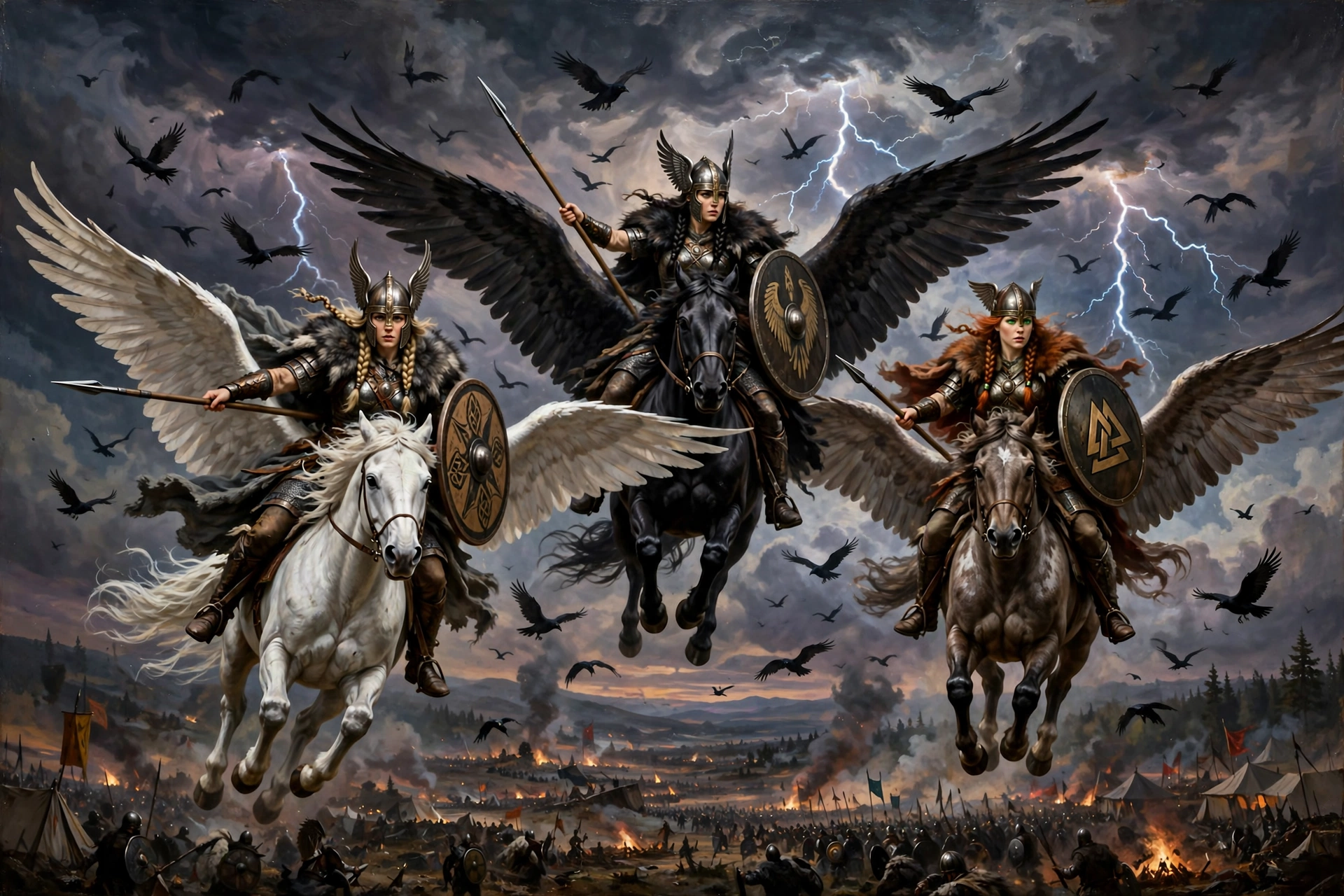
The Amazons, the queens who beat empires, and Odin’s choosers of the slain — the longest table of fighters on this list, and every name a real queen, heroine or valkyrie.
| Name | Origin | Meaning | Note |
|---|---|---|---|
| Penthesilea | Greek | Amazon queen who fought Achilles at Troy | Mourned by the hero who killed her |
| Hippolyta | Greek | Amazon queen of the famous girdle | Her belt was Heracles’ ninth labour |
| Antiope | Greek | Amazon queen, mother of Hippolytus | Carried off by Theseus in the myths |
| Melanippe | Greek | Amazon warrior, ‘black mare’ | Sister of Hippolyta in the war lists |
| Orithyia | Greek | Amazon queen of the war bands | Led the Amazons against Athens |
| Myrina | Greek | Amazon queen who conquered in Libya | Founded cities across the Aegean |
| Thalestris | Greek | Amazon queen who visited Alexander the Great | Her story thrilled the ancient world |
| Camilla | Roman | Volscian warrior maiden of the Aeneid | Could run over corn without bending an ear |
| Boudica | Celtic (British) | Queen who burned Roman London | The Iceni’s great avenger |
| Tomyris | Scythian | Queen who defeated Cyrus the Great | Plunged his head into a skin of blood |
| Zenobia | Palmyrene | Warrior queen of Palmyra | Defied Rome and ruled the East |
| Artemisia | Greek | Warrior queen of Halicarnassus | Fought for Persia at Salamis |
| Atalanta | Greek | Fleet huntress of the Calydonian boar | Only the swiftest runner could win her |
| Deianeira | Greek | Man-destroyer | Her poisoned gift killed Heracles |
| Andromache | Greek | ‘Battle of men’ | Hector’s wife, Troy’s great war widow |
| Brynhildr | Norse | Armoured battle-maid, a valkyrie | Tragic heroine of the Volsung saga |
| Sigrun | Norse | Victory-rune, a valkyrie | Loved the hero Helgi across two lifetimes |
| Hildr | Norse | Battle itself, a valkyrie | Her name is the Old Norse word for battle |
| Gondul | Norse | Wand-wielder, a valkyrie | Stirs up the battle of the gods in saga |
| Skogul | Norse | Shaker, a valkyrie | Chooser of the slain for Valhalla |
| Reginleif | Norse | Heritage of the gods, a valkyrie | Listed among Odin’s wish-maidens |
| Randgrid | Norse | Shield-destroyer, a valkyrie | A name that promises broken shields |
| Herja | Norse | Devastator, a valkyrie | Kin to the Germanic goddess Hariasa |
| Mist | Norse | Mist, a valkyrie | Rides out through storm and cloud |
| Kara | Norse | The wild one, a valkyrie | Flew singing over her lover’s battles |
| Skuld | Norse | Future — the youngest Norn, also a valkyrie | Weaver of fate and chooser of slain |
| Gunnr | Norse | Battle, a valkyrie | Her name is simply ‘war’ |
| Hrist | Norse | Shaker, a valkyrie | Named in the Grimnismal lists |
| Hlokk | Norse | Battle-noise, a valkyrie | From the din of combat |
| Goll | Norse | Tumult, a valkyrie | Her name means battle-cry and noise |
| Geironul | Norse | Spear-charger, a valkyrie | Among the oldest valkyrie lists |
| Hjorthrimul | Norse | Sword-tumult, a valkyrie | Named in the Lay of the Valkyries |
| Sanngridr | Norse | Very fierce, a valkyrie | Her temper is written in her name |
| Svipul | Norse | Changeable, a valkyrie | As shifting as the battle itself |
| Geirdriful | Norse | Spear-flinger, a valkyrie | Named in the Lay of the Valkyries |
| Skeggold | Norse | Axe-age, a valkyrie | A name from the world’s violent ages |
| Olrun | Norse | Ale-rune, a swan-maiden valkyrie | Wife of Egil in the Volundr lay |
| Alvitr | Norse | All-wise, a swan-maiden valkyrie | Wed the smith Volundr |
| Amanirenas | Nubian | One-eyed warrior queen of Kush | Fought Rome to a negotiated peace |
| Scathach | Irish | The shadowy one, trainer of heroes | Taught Cu Chulainn on the Isle of Skye |
| Aoife | Irish | Warrior queen who fought her own sister Scathach | A radiant name with a fighter’s story |
| Maeve | Irish | ‘She who intoxicates’ — Queen Medb of Connacht | Launched the Cattle Raid of Cooley |
| Nemain | Irish | Frenzy — goddess of battle panic | Her shriek scattered armies |
| Badb | Irish | Crow goddess of battle | One of the Morrigan’s three aspects |
| Macha | Irish | Battle goddess of Ulster | Cursed the men of Ulster with labour pains |
Celtic and Forest Goddesses of the Wild
The goddesses Rome met at the edge of the world: battle-crows, bear mothers, grove spirits and one prophetess who frightened an empire.
| Name | Origin | Meaning | Note |
|---|---|---|---|
| Andraste | British Celtic | War goddess of the Iceni | Boudica sacrificed to her before battle |
| Agrona | Celtic | Goddess of slaughter | Her name may live on in Welsh rivers called Aeron |
| Cathubodua | Gaulish | Battle-crow war goddess | Gaul’s sister-figure to Ireland’s Badb |
| Artio | Celtic | Bear goddess | Her bronze statue stood at Muri in Switzerland |
| Arduinna | Celtic | Goddess of the Ardennes forest | Rode a wild boar through her woods |
| Abnoba | Celtic | Forest and river goddess of the Black Forest | Honoured at a Roman spa town |
| Nemetona | Celtic | Goddess of the sacred grove | Worshipped from Gaul to Britain |
| Epona | Celtic | Horse goddess adopted by Rome | The only Celtic deity with a Roman feast day |
| Sequana | Celtic | Goddess of the river Seine | Her wild waters drew hundreds of offerings |
| Coventina | Celtic | Goddess of the sacred spring | Her well at Carrawburgh brimmed with coins |
| Brigantia | Celtic | Goddess of the Brigantes tribe | A war-and-craft power of northern Britain |
| Sulis | Celtic | Goddess of the hot springs at Bath | Her curse tablets called down vengeance |
| Nantosuelta | Celtic | Goddess of nature and ravens | Carried a little house on a pole |
| Camma | Celtic (Galatian) | Priestess who poisoned her husband’s murderer | Her vengeance is told by Plutarch |
| Veleda | Germanic | Prophetess who inspired the Batavian revolt | Rome treated her as a living goddess |
Wild and Untamed: Goddesses and Names of the Free
For the daughter who will not be fenced in: hunting goddesses, she-wolves, and two straightforward names that simply mean wild.
| Name | Origin | Meaning | Note |
|---|---|---|---|
| Artemis | Greek | Goddess of the wild hunt and untamed places | No city could ever tame her |
| Britomartis | Cretan | Wild goddess of hunters and fishermen | Leapt into the sea fleeing King Minos |
| Dali | Georgian | Goddess of the hunt and wild beasts | Morning star of the high mountains |
| Devana | Slavic | Goddess of the wild hunt | Poland’s answer to Artemis |
| Feronia | Roman | Goddess of wilderness and freed slaves | Her sanctuary freed the enslaved |
| Silvana | Roman | Goddess of the woods | The feminine of Silvanus |
| Fauna | Roman | Wild goddess of nature and prophecy | Sister-wife of Faunus |
| Lupa | Latin | She-wolf | The wolf who raised Rome’s founders |
| Wilda | Germanic | Untamed, wild | A vintage name coming back into style |
| Vilda | Scandinavian | Wild | Sweden’s straightforward wild name |
Queens of the Underworld
They rule the lands of the dead — and several of them were stolen, tricked or widowed into the job, which makes their power the more interesting.
| Name | Origin | Meaning | Note |
|---|---|---|---|
| Persephone | Greek | Queen of the Dead | Her return brings spring, her absence winter |
| Proserpina | Roman | Queen of the underworld | Rome’s Persephone |
| Melinoe | Greek | Goddess of ghosts and nightmares | Half light, half dark in her ancient hymn |
| Macaria | Greek | Goddess of blessed death | A daughter of Hades |
| Modgud | Norse | Guardian of the bridge to Hel | Questioned Hermod on his ride to the dead |
| Yami | Sanskrit (Hindu) | First woman and lady of the dead | Twin sister of Yama, god of death |
Dangerous Women of Myth, Bible and Legend
Betrayers, usurpers, avengers and one face that launched a thousand ships — the women whose choices wrecked kingdoms.
| Name | Origin | Meaning | Note |
|---|---|---|---|
| Salome | Hebrew / New Testament | The dancer who asked for a prophet’s head | A name wrapped in scandal ever since |
| Delilah | Hebrew | Samson’s betrayer | She cut the hero’s strength away |
| Jezebel | Hebrew | Queen who defied the prophets | Her name became a byword for defiance |
| Herodias | Greek / New Testament | Queen who plotted John the Baptist’s death | Mother of Salome |
| Athaliah | Hebrew | Queen of Judah who seized the throne | The Bible’s usurping queen |
| Jael | Hebrew | The heroine who killed the general Sisera | Called ‘blessed among women’ — with a tent peg |
| Judith | Hebrew | The widow who beheaded Holofernes | The daring avenger of the Apocrypha |
| Calypso | Greek | The nymph who held Odysseus captive seven years | A name of beautiful imprisonment |
| Helen | Greek | The face that launched a thousand ships | Her abduction caused the Trojan War |
| Phaedra | Greek | The queen whose false accusation destroyed Hippolytus | Euripides’ tragic queen |
| Pasiphae | Greek | The queen who mothered the Minotaur | Daughter of the Sun |
Witches and Sorceresses
From Horace’s graveyard crones to the seeress of the Greenland saga, the women who worked magic in the old literature — plus the real woman at the centre of Salem.
| Name | Origin | Meaning | Note |
|---|---|---|---|
| Canidia | Roman | Witch of Horace’s poems | Dug in graveyards by moonlight |
| Erichtho | Roman (Lucan) | Thessalian witch who raised the dead | Epic poetry’s most gruesome necromancer |
| Pamphile | Roman (Apuleius) | Witch who turned herself into an owl | Mistress of Thessalian magic |
| Meroe | Roman (Apuleius) | Witch of Thessaly | Turned her enemies into animals |
| Sagana | Roman | Witch companion of Canidia | Ran howling through the night rites |
| Gullveig | Norse | Witch whose burning began the first war of the gods | Thrice burned and thrice reborn |
| Hyrrokkin | Norse | Fire-smoked giantess and witch | Launched Baldr’s funeral ship single-handed |
| Thokk | Norse | The giantess who refused to weep for Baldr | Her spite kept him in Hel |
| Groa | Norse | Witch and seeress | Sang healing charms from beyond the grave |
| Heid | Norse | The wandering seeress | Told the gods their doom in the old lays |
| Thorbjorg | Norse | The ‘little seeress’ of the Greenland saga | Prophesied in a seidhr ceremony |
| Tituba | Caribbean / American history | Enslaved woman at the heart of the Salem witch trials | Her confession ignited the panic |
Fire and Destruction Names
Chaos by flame: burning angels, volcano-adjacent goddesses and the flame words of eight languages worn as girls’ names.
| Name | Origin | Meaning | Note |
|---|---|---|---|
| Seraphina | Hebrew / Latin | The fiery ones, the highest angels | A name of burning devotion |
| Aithne | Irish | Fire | Also written Eithne in the old tales |
| Edana | Irish | Fire, ardent | A gentle-sounding flame name |
| Nina | Quechua | Fire | A pan-Andean word name |
| Plamena | Bulgarian | Flame | The feminine of Plamen |
| Fiammetta | Italian | Little flame | Boccaccio’s beloved muse |
| Sholeh | Persian | Flame | A lyrical Persian girl’s name |
| Alev | Turkish | Flame | Crisp and modern in Turkey |
| Alinta | Nyungar (Aboriginal Australian) | Flame | Means fire and flame |
| Ignacia | Spanish / Latin | Fiery | The feminine of Ignatius |
Dark and Gothic Names
Not chaos by violence but by shadow: black gemstones, night words and dark-haired names from a dozen languages.
| Name | Origin | Meaning | Note |
|---|---|---|---|
| Raven | English | The black corvid of battlefields | A dark bird long tied to prophecy |
| Ravenna | Italian | The ancient city of Ravenna; a raven-like sound | A gothic favourite ever since Poe’s raven |
| Ebony | English | Deep black wood | A rich, dark nature name |
| Sable | English | Black; the dark-furred animal | A sleek heraldic word name |
| Onyx | Greek | Black gemstone | A bold unisex stone name |
| Vesper | Latin | Evening | The hour when the dark rises |
| Umbra | Latin | Shadow; the darkest core of an eclipse | A scholar’s shadow name |
| Melanie | Greek | Black, dark | A classic hiding a dark meaning |
| Melaina | Greek | The black one | A title of goddesses in their dark aspects |
| Ciara | Irish | Dark-haired, black | A beloved Irish name |
| Duana | Irish | Dark, little dark one | A rare Irish pick |
| Morena | Spanish / Portuguese | Brunette, dark-haired | An everyday name in Madrid and Lisbon |
| Bruna | Italian / Portuguese | Brown-haired, dark | A name-day regular in Italy |
| Nisha | Sanskrit | Night | A short, starry Indian name |
| Shyama | Sanskrit | Dark, black-blue | An epithet of Kali herself |
| Neoma | Greek | New moon | The darkest night of the month |
| Layal | Arabic | Nights | A lyrical plural turned name |
| Samar | Arabic | Evening conversation | Night’s softest hours |
| Nyctimene | Greek | She who stays in the night | Turned into an owl in myth |
Chaos in Literature and Pop Culture
The villainesses, witches and agents of chaos that fiction gave us — several of these coinages (Morticia, Cruella, Narissa) now live in real name registers, flagged honestly as inventions of their authors.
| Name | Origin | Meaning | Note |
|---|---|---|---|
| Harley | English / DC Comics | Harley Quinn, agent of chaos | Once a surname, now pure mischief |
| Wednesday | English / Addams Family | Wednesday Addams | Deadpan queen of the macabre |
| Morticia | Coined for the Addams Family | Morticia Addams | Elegance with a graveyard smile |
| Elvira | Spanish / pop culture | Elvira, Mistress of the Dark | Also a classic Spanish name of older roots |
| Bellatrix | Latin / Harry Potter | Bellatrix Lestrange | Latin for a female warrior |
| Ursula | Latin / Disney | Ursula the sea witch | Older meaning: little bear |
| Cruella | Coined by Dodie Smith | Cruella de Vil | A name built from ‘cruel’ and ‘devil’ |
| Regina | Latin / Once Upon a Time | Regina Mills, the Evil Queen | The name simply means queen |
| Zelena | Slavic / Once Upon a Time | Zelena, the Wicked Witch of the West | Means ‘green’ in several Slavic tongues |
| Morgana | Welsh / Arthurian legend | Morgan le Fay | The enchantress of Avalon |
| Morgause | Arthurian legend | Morgause, queen and plotter | Mother of Mordred |
| Titania | Shakespeare | Queen of the fairies | Uranus’s largest moon shares the name |
| Mab | Irish / Shakespeare | Queen Mab of the dreams | A tiny, mischievous fairy monarch |
| Lydia | Greek / Beetlejuice | Lydia Deetz | The gothic girl who sees ghosts |
| Xena | Greek / television | Xena, Warrior Princess | Greek for stranger or guest |
| Zelda | Germanic / games and literature | Princess Zelda; Zelda Fitzgerald | Roaring-twenties glamour and gaming royalty |
| Callisto | Greek / myth and comics | The nymph turned into a bear | Now also a moon of Jupiter |
| Narissa | Coined for Disney’s Enchanted | Queen Narissa | A sleek villainess coinage |
| Carmilla | Sheridan Le Fanu | The vampire of Karnstein | Predates Dracula by twenty-five years |
| Lenore | Edgar Allan Poe | The lost Lenore of The Raven | Gothic poetry’s beloved ghost |
| Ulalume | Edgar Allan Poe | Title figure of his ballad of grief | Almost no one else bears it |
| Morella | Edgar Allan Poe | The dying, returning lady of his tale | A name of uncanny doubles |
| Berenice | Greek / Poe | Poe’s monomaniac heroine | An ancient queen’s name too |
| Eleonora | Edgar Allan Poe | His beloved of the Valley of Many-Coloured Grass | His last great love story |
| Rowena | Saxon / Poe and Scott | Rowena of Ivanhoe and of Ligeia | A medieval romance staple |
| Madeline | French / Poe | Madeline Usher | Buried alive in the House of Usher |
| Drusilla | Latin / Buffy | Drusilla the vampire | An ancient Roman family name |
| Darla | English / Buffy | Darla, sire of Angelus | A darling turned deadly |
Mischief and Disorder: Word Names from Many Tongues
Five short, charged words — strife, formlessness, the trickster god and the fox spirit — for families who want the chaos in the dictionary entry itself.
| Name | Origin | Meaning | Note |
|---|---|---|---|
| Fitna | Arabic | Discord, strife, civil unrest | A charged word, rarely given — for the boldest brief |
| Tohu | Hebrew | Formlessness, the void before creation | From ‘tohu va-bohu’ in Genesis |
| Hundun | Chinese | Primordial chaos, the faceless one | A winged creature of Chinese myth |
| Loki | Norse | The trickster god | Now given to girls as well as boys |
| Kitsune | Japanese | Fox; the trickster fox spirit | A sly, magical word name |
Short and Sweet Chaos Names
Two to four letters, maximum voltage: wrath, a tormented priestess, a wasted nymph and the restless motion of Noa.
| Name | Origin | Meaning | Note |
|---|---|---|---|
| Ira | Latin | Wrath | Also a beloved name in India and Russia with gentler roots |
| Io | Greek | The priestess tormented across the whole earth | Two letters, endless wandering |
| Echo | Greek | The nymph who wasted away to a voice | Chaos of sound itself |
| Eos | Greek | Dawn, Titaness sister of the sun | A wild morning name |
| Rue | English / Greek | Regret; a bitter herb | Short, sharp and literary |
| Runa | Norse / Japanese | Secret lore, charms | A quiet name with hidden power |
| Zora | Slavic | Dawn | Zora Neale Hurston gave it literary fire |
| Noa | Hebrew | Movement, motion | Israel’s restless, beloved girl’s name |
Modern Word Names for Beautiful Disorder
The newest shelf: dictionary words of rebellion and mayhem that have crossed into the name registers in the last few decades.
| Name | Origin | Meaning | Note |
|---|---|---|---|
| Chaos | Greek / English | Disorder itself | The boldest word name on this list |
| Anarchy | Greek | Without a ruler | A rare, defiant word name |
| Riot | English | A violent public disturbance | Pure punk energy |
| Rebel | English | One who resists authority | A chart-rising modern favourite |
| Jinx | Latin via English | A spell or curse | From ‘jynx’, the wryneck bird of charms |
| Moxie | American English | Energy and nerve | A vintage-American comeback name |
| Pepper | English | The hot spice | Spirited and sparky |
| Trixie | Latin / English | Bringer of joy, with a trickster sound | A showgirl-classic given name |
| Vex | English | To provoke and annoy | A sharp modern coinage from the verb |
| Omen | Latin | A sign of things to come | Dark and portentous |
| Calamity | English / American West | Calamity Jane | A frontier nickname turned name |
How to Choose a Chaos Name
Start with intensity. Goddess and monster names — the Kali, Sekhmet and Medusa tier — carry the biggest stories and the biggest personalities; read the myth before you choose, because a goddess of plague and a goddess of storms raise very different children, at least in the imagination. Storm and nature names are the wearable middle ground: Tempest, Amaya and Zora hint at wildness without announcing it. Short names like Ira, Io and Rue smuggle the chaos in under the radar.
Next, think about sound and spelling. Many of the fiercest names arrive with an unfamiliar letter or a mythological spelling; families have simplified spellings and kept meanings for centuries, and that is a long and honourable tradition. Say the name aloud with your surname, shout it across a playground, and check the nickname it will shrink to.
Finally, honour the source. A name from another culture is a gift, not a costume — learn its pronunciation, know its story, and be ready to tell your daughter both. Some entries on this list are honoured deity names in living religions; those deserve extra respect, and many families keep them for characters rather than children.
Frequently Asked Questions
What is the best girl name that means chaos?
Eris is the purest answer — she is chaos and discord personified, short enough for the playground and heavy with myth. Kali, the Hindu goddess whose dance destroys and renews the world, runs her close, and Tempest is the most wearable English option.
Is Chaos itself usable as a girl’s name?
It is rare but genuinely used, and this list includes it among the modern word names. Most families prefer a name that points at chaos rather than shouting it — a storm name, a valkyrie or a goddess — but if you love the word, its Greek root Khaos started as the void from which everything came, which is a strangely hopeful meaning.
Are there chaos names that are gentle enough for a baby?
Yes. Amaya (night rain), Zora (dawn), Noa (motion), Aura (breeze) and Raina carry wild weather in soft sounds. The storm and short-name tables are full of chaos names that a grandmother can love.
Which goddess is the goddess of chaos?
Greece gives you Eris, goddess of strife; Egypt gives you Isfet, chaos itself, and the lioness Sekhmet in her rage; Mesopotamia begins with Tiamat, the salt-sea dragon; and China honours Hundun, the faceless primordial chaos. The chaos-goddesses section of this list reads like a world tour of them.
What names mean both storm and chaos?
Tempest is the obvious one. Beyond it: Kymopoleia, the Greek goddess of violent sea storms; Aello and the Harpies, whose names mean whirlwind; Oya, the Yoruba orisha of storms and transformation; and Thyella, the modern Greek word for tempest used as a name.
Conclusion
Chaos is not the opposite of order — it is where new order comes from. The void Khaos opened before creation, the storm breaks the drought, and the goddess who dances on the battlefield is the same one mothers call on for protection. A daughter given one of these 330 names is given permission, from her first day, to be a force.
For the neighbouring shades of this energy, browse names that mean vengeance for the settling of scores, girl names that mean storm for the weather itself, and names that mean death and destruction for the darkest shelf of all. The mathematics of chaos is simple enough: read the myth, love the sound — and for a scholarly detour, the story of Eris and the golden apple is the tale that started the Trojan War. May your daughter’s name be the one she deserves: entirely her own.